


 On Thursday, July 18th, SRW representatives attended the USCIRF briefing on the future of religious freedom in Pakistan. Every year, USCIRF releases a report detailing various violations of religious freedom. The situation in Pakistan is particularly concerning with a number of religious minorities being persecuted against. Speakers included Peter Bhatti, a member of the Pakistani Christian community and brother of murdered Pakistani Cabinet member Shahbaz Bhatti, Qasim Rashid, a member of the Ahmadiyya Muslims community, Rahat Husain, a Shia Muslim from the Universal Muslim Association of America, and Jay Kansara, a Hindu and associate director of the Hindu American Foundation.
During the briefing, both violent persecution committed by militants and religious extremists, as well as legal discrimination on the part of the Pakistani government were discussed. The four main religious minorities in Pakistan (Shia, Ahmadis, Christians, and Hindus) all faced religiously motivated violence. The situation facing Shia Muslims is especially bad, perhaps even constituting genocide. In the past year, USCIRF documented over 400 deaths of Shia Muslims targeted by militants and terrorist organizations. While the violence against the other groups is not quite as prevalent, all four minorities face kidnappings, rapes, forced conversions, murders and attacks on religious buildings.
The Pakistani government also systematically discriminates against these minorities. The controversial blasphemy laws in Pakistan targets religious minorities and dissenting Muslims. It allows “dissenting Muslims” who do not agree with the state’s interpretation of Islam to be imprisoned, and many are serving life sentences or are to be executed for their religious beliefs.
Another aspect that was talked about was the education system. Minorities are discriminated against in the education system, and the required textbooks often alienate religious minorities. Discrimination is likely to continue if children are taught at a young age to discriminate against these minorities.
Lastly, Shuja Nawaz, Director of the South Asia Center, Atlantic Council, gave an introductory summary of the situation in Pakistan. He spoke of the many schisms in Pakistani society, including religious, ethnic, and tribal breakups. He talked about how various military and political groups will often manipulate exacerbate these tensions to their advantage. Having these conflicting political and military groups, combined with societal tensions and a weak Pakistani government has led to Pakistan becoming a failing state and of particular concern to the U.S. Commission on International Religious Freedom.
SRW thanks UCIRF for looking into Shia rights violations in Pakistan and hopes to help Pakistani Shia regain their security and dignity.
SRW Attends U.S. Commission on International Religious Freedom Briefing on the Future of Religious Freedom in Pakistan
A month of Peace turned to Month of Blood
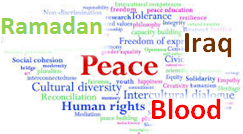 Iraq has witnessed at least four explosions in the first week of Muslims’ holy month of Ramadan.
In Karbala, one of the most important holy cities of Shia Muslims, an explosion near farmer market killed five and wounded 19 others.
Also a suicide bomber exploded himself in the Musayyib mosques in Babul killing 12 and wounding 25.
In Basrah and Kut two cars exploded and killed 11 and wounded 35 Shia Muslims.
Lastly three people were killed and 13 injured in a car explosion in Nasiriyah, Iraq.
The explosions took place in busy areas where civilians attend to shop or pray in the month of Ramadan. Ramadan is one of the most important months in which all Muslims, regardless of their faith, fast. The rituals of this month is meant to bring Muslim closer to each other and spread the spirit of brotherhood, yet Anti- Shia terrorist groups use it to target Shia gatherings.
Shia Rights Watch asks and urges all groups to respect this month and spread peace instead of hatred.
Pakistan, Giving up its Most Valuable Assets

 Six Shia Muslims killed in Quetta Pakistan on July 16, 2013. Among six are Raza Hussain, the owner of Ali Traders, and Muhmmad Idrees an athlete. All targets were killed when heading home to break their fast as Muslims practice this ritual in the month of Ramadan. It is believed the recent killings are related to the trend that targets Shia professionals. Not long ago, Shia Rights Watch reported the new trend of killings that targeted Shia professionals and influential figures in Pakistan. Since then many Shia doctors, lawyers, businessmen, and college professors have been killed. It is unfortunate to witness that Pakistani government lacks interest to protect its citizens. SRW believes well educated and professional figures are assets of nations yet some chose to give up their assets. SRW has contacted Pakistani embassy in Washington DC many times to discuss the Shia rights violation in this country however the embassy refuses to meet and take advantage of the suggestions that could help end the ongoing human rights violations in Pakistan.
Refuse to Pay Tax? Another Type of Human Right Violation

 Most of the times it is believed human rights violations accrue when authorities misuse their power toward their citizen. However the recent article by an Arabic news agency Al-Akhbar, which transltes to All News, totally changes this assumption. According to Al-Akhbar numbers of major appliances importers refuse to pay taxes in Iraq. The sources reveal that LG, Samsung and Al-Hafiz, which are major importers in Iraq, refuse paying taxes to a Shia government.
Refusing to pay tax in a country in which those companies are making multimillion dollar profits is wrong and it should not matter who runs the government!!! Clearly importers are taking advantage of the need of the Iraqi people and unrest in the country to become wealthier, yet they do not want to pay taxes because they do not agree with the faith of the government!?
I do not know about the legal and ethical codes of the mentioned companies, but such important importers are expected to respect the law of the country in which they work or move out if they do not agree with the government.
SRW is not pro or against any government regardless of their faith, however taxes are used to ease the lives of the citizens. Iraq is a country with majority Shia Muslims and most of that population are at or below poverty line. Refusing to pay taxes means LG, Samsung and Al-Hafiz are taking advantage of the government and people but not paying back to help the society. Sources report the companies are not willing to pay taxes because the government is Shia; in this case what LG, Samsung and Al-Hafiz are doing is not just illegal but also Shia rights violation!!!!
SRW invites all to hand in hand help end human rights violation. Refusing to pay taxes in any country is illegal, unethical and now human rights violation.
By Hawraa, A Human Right Advocate and Specialist on July, 16, 2013
Peace in Ramadan
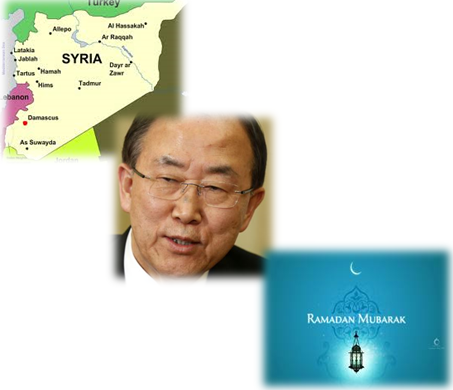
Shia Rights Watch appreciates and supports the recent statement by U.N. Secretary-General Ban Ki-moon. In his statement Ban Ki-moon asked all sides in Syria to put down their weapon in the holy month of Ramadan.
Ramadan is the most important holy month shared by all sects of Islam. During the 30 days of fasting, Islamic nations are encouraged to live in harmony and peace. This month is the best time to bring all parties together and use the blessing of this month to overcome the conflicts and differences. Syrians have lost more than 90000 lives and 6 million others displaced since the start of the conflict in 2011 and this month can be a good reason to bring security and safety back to the country. Syrians should be able to practice the rituals of this month in secure and safe environment.
SRW also encourages all sides in Syria to make it possible for all to enjoy this important holy month is peace.
Attack to Shia Community in Kuwait
Salafis attacked Shia communities as they commemorate the 7th day of mourning for Hassan Shehata in Kuwait. Hassan Shahata was a well-known Egyptian Shia cleric who was killed in a mob attack in his home last week. Shia Muslims usually hold memorials for their deceased on the 3rd, 7Th and 40th day following their death.
The Shia community in Kuwait held a memorial for Hassan Shahata in the private Islamic center of Hussainia Ashour when Salafis attacked them outside the center. A number of attendees were injured during the attack. The injured were transported to a local hospital for treatments.
The center is an important center in which Shia Muslims gather for religious and cultural programs. Some influential Shia clerics, scholars and Kuwaiti Emirs were attending the memorial. The police were called and they arrived at the location but did not take serious actions to stop the conflict. As witnesses reported, the police forces attempted to support the attackers and not the victims.
Many Salafis, like Wahhabis, are known for their hatred of Shia Muslims and Salafis have killed many Shia in different countries. Kuwait has a growing radical Salafi population. Shia Rights Watch is concerned about the Shia population of Kuwait. Kuwait is known for its free society and very few violations of Shia rights have been reported in this country. SRW asks the authorities of Kuwait to investigate the incident and take immediate action so that this will not lead to more Shia rights violation in this country.
New Egypt; Welcome
Morsi ‘s administration one year report is full of violations, crimes and hatreds. Now people can reconsider someone with multicultural understanding and respect.
Now, more than ever, Egypt has the opportunity to build a government diverse enough to meet the need of all its citizens, regardless of their religion, ethnicity, languages and political views. Now that Morsi is not in power anymore, the new authorities, in this case the military, should take advantage of this new starting point and engage all, including minorities, in creating a stable government. Governments in which all citizens feel safe to express their opinions, practice their faiths, take part in government, access education and have job opportunists are historically the governments that succeed.
Egypt is a country with rich history and culture and deserves a country and government that they can rely on.
SRW encourages the new authorities to build a government based on respect to human right and calls on the courts to hold Morsy accountable for the crimes and violations his leadership led too.
It’s time to prove yourself, Egypt.
By Hawraa, a Human Rights Activist and Specialist on July 3rd, 2013
A Shia Child Killed in Dayr Az Zawr
Dayr Az Zawr, a Shia populated city in Syria, witnessed a death of a child as a rocket fell on him. The rocket killed the child and injured another five civilians to day July the 2nd, 2013.
Dayr Az Zawr is the same city in which 60 Shia Muslims were killed and slaughtered on June 12th. Shia of the area have been killed and tortured by anti-Shia terrorists and no media outlet cares to cover the violations.
SRW condemns the Shia killings especially minors. Children must be protected and killing them is certainly a war crime.
Thank You Letter to The Washington Post
Thank You Letter to The Washington Post
Thank You letter to The Telegraph
Thank You letter to The Telegraph
Shia Rights Watch would like to thank The Telegraph news agency for their article published on June 2nd by Richard Spencer. As Shia rights violations are increasing around the word, especially in Middle East, it is critical for news agencies to practice ethically, investigate roots of the problems, and share them with the public.
Al-Qaradawi and people like him spread hatred among people of all societies. Their acts are roots of many sectarian problems that the world in facing recently.
The Telegraph’s decision to cover such news is prove of this agency’s ethical practice and adds to the credibility of the agency.
SRW also wrote a detailed editorial about the article that can be found on the organization’s website

