Welcome to Shia Rights Watch

spot_imgspot_imgspot_imgspot_img
Home Blog Page 57

Four Car Bombs Attacks in Iraq

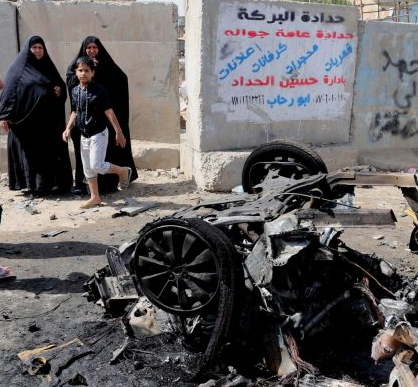
newsToday, 30 were killed and 46 wounded in a series of bomb attacks in Shia populated areas of the Baghdad according to local sources. Four cars exploded: one in Sadr City district, one in Kazimiyah, one in Shaab and one in the Shammaiya neighborhood.

Iraqis lost about 9000 people to terrorist attacks in 2013 and 2014 has been another deadly year so far. Most bombings target Shia populated areas killing many civilians, and injuring even more.

Some claim the attacks are a sign of discontent from the Sunni population towards the Shia government. However civilians are the main target of the attacks says SRW. If the opposition is carrying out the bombings it makes more sense for them to attack the government forces and bases, yet the attacks have been carried out against civilians. SRW believes the attacks that target civilians are a form of anti-Shi’ism and not an anti-government expression.

Water Cut Off in Iraq: Inhumane Treatment Suggested by Deilami

Taha Deilami, an Iraqi cleric, called on Al Anbar Province residence to cut off water to Shia populated cities, especially in south Iraq.

According to him, residence of Al Anbar Province that is equivalent of one third of the area of ​​Iraq are Sunni and the area must be free from any Shia. Historically, the province was known as the Brigade Dulaimi before 1961. The province borders Salahuddin and Nineveh on the north, Syria on north-west, Jordan on the West, Baghdad on the east, Saudi Arabia on the South and Karbala and Najaf on south-east.

Deilami claimed, in his TV show on Wesal channel, if the Sunni cut off the flow of Euphrates river water many people would die.

As a result, on April 7th, ISIS blocked flow of Euphrates river water from the central and southern Iraq leaving many farmers and residents of the area with no water.

Anti-Shia clerics and influential public figures have been using their popularity to encourage sectarian violence and spread hatred among people in Middle East. Taha Deilami, Youssef al-Qaradawi, Saad al-Durihim, A’ajami and many other are enablers whose speeches resulted in many killings and human rights violations. Such people must be held responsible for the crimes they encouraged and be investigated by international criminal courts, says SRW.

Iraqis who live under the poverty line, lost many family members, lack security and freedom now are facing water cut off thanks to the Taha Deilami and ISIS.

Shia Rights Watch strongly condemns such inhumane act of ISIS and urges Iraqi government to hold Deilami responsible for the water cut off and restore the water flew immediately.

Universal Empathy: Promising Solution

Need to develop universal human rights respect and empathy can be a promising solution to the growing oppression around the world.

Historically many oppressor governments and regimes used foreigners as soldiers to implement so called security rules, to torture in prisons, to investigate antigovernment movements and more. Moreover, they use foreigners as labor forces, as it is usual in most Gulf countries, for examples:

  • Bahraini inmates have always complained that their guards do not speak and understand Arabic and therefore could not response to their needs,
  • In the unrest of Iran during 2009/10 election , protestors stated the government used Lebanese soldiers to suppress them,
  • Pakistani forces are used in Saudi Arabia and Bahrain to fight with pro-democracy protestors,
  • In the conflict of Syria people from all nationalities are fighting pro and against government.

And the list goes on and on.

Relying on forces from outside is a politically important strategy by countries with most human rights violations. This strategy factors out the important element of mercy and empathy among people who share same ethnicity or nationality. Soldiers who do not understand the language of the protestors do not understand the rationale behind the protest, cannot understand the prisoner when he/she is starting to be innocent, cannot respond to the medical need of the inmate after torture and so on. Besides using foreigners as forces, these governments use foreigners as labor force in order to avoid labor unrest that could impact the economy of the country.

Countries with dependency on foreign labor and political forces such as Bahrain lessen their natives’ role in political and structure of their country which is a clear violation to the basic rights of the people.

Now that governments “use/abuse” people against their fellow human beings, it is up to us, as citizens of one world, to stand up and develop universal empathy toward each other especially when we do not share same background, ethnicity and faith.

The belief that governments and authorities are the most powerful forces to change the world is a myth, at least to me as a human rights activist. Most of the times, in order to spread peace and freedom we do not need to follow governments because they have their own political agendas, but we need to follow our hearts. After all we are all citizen on one world and we all have empathy towards each other.

When we empathize we become the most powerful force that can spread peace and freedom.

 Hawraa Zakery, Human Rights Researcher           on April 8/2014

14 Killed in Hospital Bombing

On Wednesday June 4th, a car bomb exploded at a busy coffee shop right outside the main gates of the Hilla General Hospital killing 14 and wounding another 58. Many homes and shops were also damaged by the explosion. The coffee shop is known to be a place where patients and their visitors eat and rest.

Although no one has come forward to claim the bombing, one security official believes that it was the Sunni militant organizationIslamic State in Iraq and the Levant (ISIL). The Shia community has been under continuous attack by extremists, and now attacking hospital patients and their visitors adds another layer to the human rights violations.

SRW condemns the vicious attacks on two mosques in Sana’a

Shia Rights Watch vehemently condemns the vicious attacks on two mosques in Sana’a, Yemen on Friday March 20, 2015. The suicide bombings at the Badr and Hashoush which killed over 130 are some of the worst attacks against Shia in Yemen in years. The previously unknown branch of ISIS in Yemen claimed responsibility for this attack which is worrisome due to their vast record of anti-Shiism in Iraq and Syria. The Yemeni government, with assistance from the international community needs to do all in its power to secure places of worship from future attack. The latest attacks are pushing the nation closer to civil war and those involved in the conflict should heed the words of the UN Envoy to Yemen and de-escalate rhetoric and “exercise maximum restraint, and refrain from provocation”.

Bahraini Government Sentencing Shia Clerics

A Bahraini court sentenced a Shia cleric, Sayid Kamil Al Hashimi, to 3 years of imprisonment. Al Hashimi, who has advocated for the freedom of expression and religion, is accused of insulting the king by the court.

Al Wefaq National Islamic Society said the court’s ruling represents a “collapse of justice” and shows the judiciary’s lack of integrity.

Bahraini courts and judges are not qualified based on international standards and cannot sentence activists behind closed doors, says SRW. During the past three years hundreds of civilians and human rights activists have been sentences or fined in Bahraini courts, most of which could not have lawyers. The judicial system of Bahrain has violated many rights of prisoners and inmates by denying their rights to fair trial, therefore questioning the courts credibility. Violations of Shia rights as lawful citizen of Bahrain has been a concern and the government must be held responsible.

SRW condemns the violations in Bahrian and demand immediate release of Al Hashimi and others like him.

Al Azhar University Joins Anti-Shia Groups

Al Azhar University, the most important institute of Egypt, expelled one of its well-known Quran Reciters. Sheikh Ahmed el-Tayeb, the head of Egypt’s Al-Azhar University expelled Farajol Lah Shadhli” فرج الله الشاذلی” from this university because he has recited Call to Prayer in Iraq according to Shia Islam. El-Tayeb claimed “Al Azhar represents Sunni school of though and does not allow any other sect to intervene in their affairs.”

The video of the Call to Prayer recitation is uploaded on YouTube and many anti-Shia people degraded Shadhli for his decision.

SRW condemns the discriminatory decision of the leaders of Al Azhar University and believes this university has lost its credibility in educational fields. “Education embraces openness, diversity and respect and clearly Al Azhar University does not support such concepts”, says director of SRW, Mustafa Akhwand.

Same university has expelled students in past because of their Shia faith. Al Azhar University and leaders of Egypt must realize Egyptian Shia share their language, ethnicity and values and the must enjoy the same citizen ship rights as non-Shia. Discriminations and hatreds is a sign of incompetency of leaders.

Data on People Killed in Bahrain

Bahrain Center for Human Rights (BCHR) has published a list of people killed in Bahrain since February 2011. The data that was posted on the organization’s web site on February 2014 specifies as many as 100 deaths of civilians and activist who were killed by government forces.

The anti-Shia government of Bahrain has used direct shots, teargas, torture, and denial of medical attention in order to suppress the peaceful pro-democracy  protest in this country.

Shia Muslims, that make the majority of the population in Bahrain, have been denied equality and have been treated as second class citizens who have no access to higher education and employment. In fact, since the peaceful protest, many of the civilians’ citizenships have been evoked, many were arrested and as the list details, many lost their lives.

SRW condemns the violence that the Bahraini government is using against its Shia population. SRW, along with other human rights organizations, has been advocating for the rights of Shia Muslims. It is unfortunate that the government and some NGOs ignore the situation of Shia Muslims and accuse this population of dependency on Iranian government. SRW declares that Shia are of different nationalities and are loyal to their countries. Such accusation is faulty and must not be a reason to violate Shia rights.

SRW believes nonviolence is the best method to advocate for rights and urges the Bahraini government to treat all its citizens equally in order to ease the unrest in this country. Although the king promised reform, no actual action was taken to bring freedom and peace to Bahrain.

The list can be accessed through the BCHR website.

Explosion in Hillah Claimed 30 lives

A suicide car bomb killed at least 30 people in the Shia dominated city of Hallah.

A car exploded near the entrance of the Hillah during morning rush hour killing 30 and wounding 150 people.

According to UN about 1,400 people have been killed in Iraq in January and February of  2014. The ongoing violation against Shia Muslims of Iraq has claimed many lives and has created a highly unsafe environment for vulnerable populations, such as children and elderly who cannot go to school, have access to healthy water, food and medication and even lost their caregivers.

SRW condemns the violations, especially when all bombings target civilians.

Iranian Government Arrested Seyed Hussian Fali

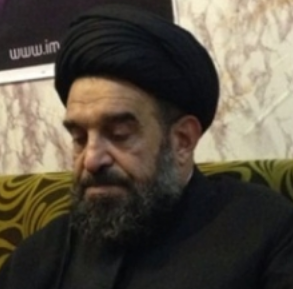
faliIranian government arrested one of the influential clerics yesterday, March 9th. Seyed Hussein Fali was arrested at the Tehran Imam Khomeini International Airport while heading to Kuwait as he usually does.

At the airport he was informed that he cannot exit the country then and was taken to detention while handcuffed. There is not update on his statues as of yesterday or the reason of his arrest. His children and family are prevented from visiting him.

Seyed Fali is one of the well-known peaceful clerics in both Iran and Kuwait. His arrest violates his rights to freedom of movement, and must be explained by the government, says SRW.

Arbitrary arrest of Shia Muslim clerics in Iran has been a concern to many human rights organizations. The government has continuously pressured influential clerics and violated their rights to freedom of expression, movement, and religion.

SRW is following up with the US Department of States to investigate the case. This organization condemns the Iranian government’s illegal pressure on Shia clerics and demands immediate release of the Seyed Fali.

UN Complaint