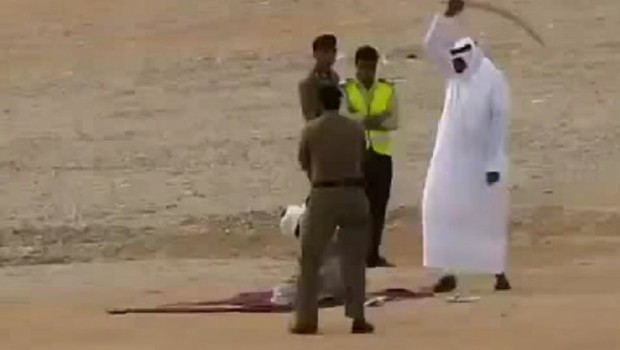
Welcome to Shia Rights Watch

spot_imgspot_imgspot_imgspot_img
Home Blog Page 21

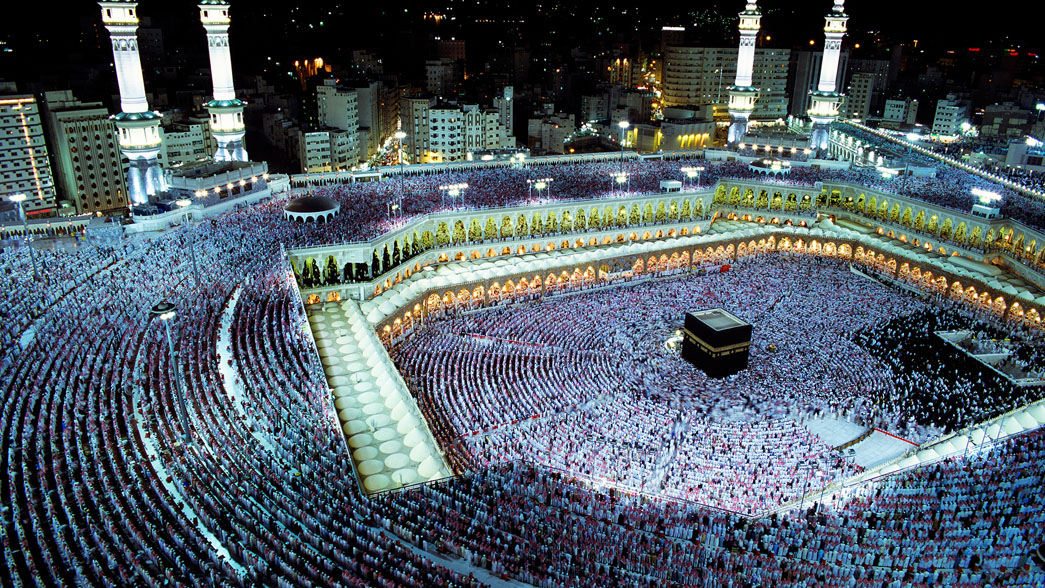
Hajj 2017 Travel Advisory

With the upcoming Hajj Travel season approaching, travel within Saudi Arabia remains alerting for Shia Muslims making the pilgrimage. The ability of foreign Embassies to assist Shia facing difficulty is extremely limited and difficult. Shia Rights Watch (SRW) has also faced extreme difficulty in assisting Shia in Saudi Arabia who are in immediate danger of being harmed.

Over the past there has been a consistent practice of Shia pilgrims in Saudi Arabia being targeted by Saudi law enforcement agencies for unexpected searches, summons, imprisonment and harassment. The pilgrims are also at high risk for being victims of violent crimes inflicted by other pilgrims, or law enforcement agencies themselves.

Each year numerous complaints are made by Shia Muslims, particularly clerics, over the treatment received during the Hajj pilgrimage. Many of the complaints highlight mistreatment by Saudi officials towards Shia Muslims. The complaints detail a systemic targeting by Saudi officials; practices include stopping, searching and harassing the Shia pilgrims. Some pilgrims were held and questions for hours upon arrival to Medina airport. During previous Hajj seasons pilgrims were exposed to sexual harassment while being searched at the airport. Shia groups have also consistently  complained about being placed in lower quality tents/residence, and receiving maltreatments.

SRW has been putting forth an effort to bring awareness to the issue, and reduce the number of threats and violations towards Shia Muslims during the 2016 Hajj Season. Recently SRW has sent a letter to foreign Embassies located across Saudi Arabia. The letter encouraged Embassies to be alert, and take precautionary steps to protect their Shia citizens, and have  policies in place to assist these citizens should they be harmed or in immediate danger.

In a continuing effort to ensure a safe and holy Hajj pilgrimage, SRW invites Shia Muslims to be alert and take following steps if they are faced with any violations, threats or harassment while in Saudi Arabia:

  • Carry a copy of your passport at all times ( if you are traveling with group, you will not have access to your passport, therefore carrying a copy of it is critical),
  • Carry contact information of your country’s embassy in Saudi Arabia at all times,
  • Contact your embassy immediately to report a violation you or your family member faced,
  • Use #Hajj2017  to share your experience with the rest of pilgrims,
  • Contact your trusted SRW representative to receive advocacy support.

SRW urges the Saudi authorities to do what they can to serve and protect all pilgrims this Hajj season, regardless of their political or theological differences. Unity and human dignity is a central message during Hajj, and it is our hope that the Saudi authorities uphold this message.

SRW wishes everyone a holy and safe Hajj pilgrimage.

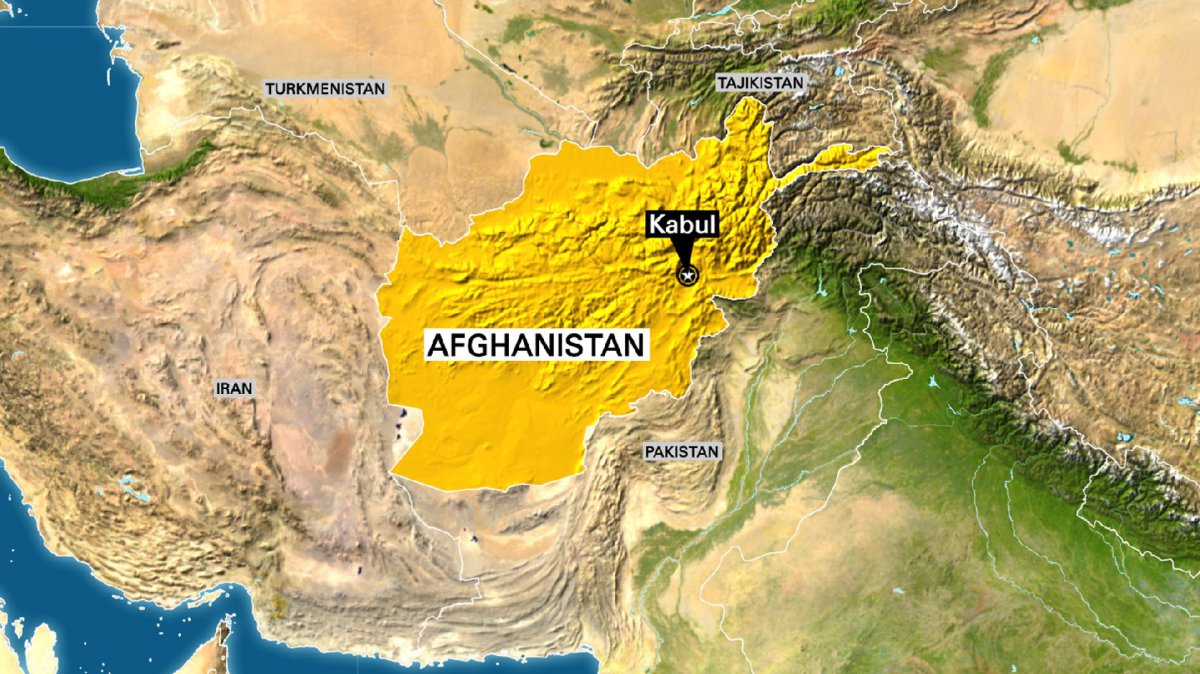
Afghan Shia under Attack, another 70 Killed

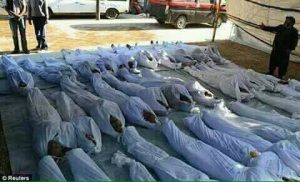
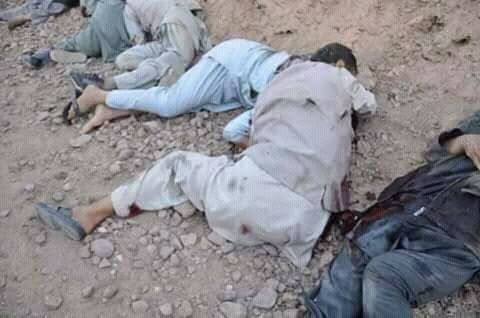
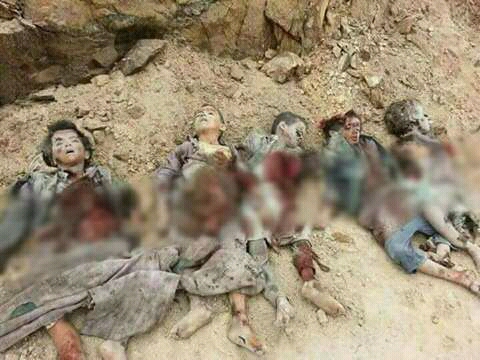
Brutal massacre on civilians in the northern province of Sar-e Pol, Shia-majority village of Mirza-Walang, killed 70 and wounded tens.

According to local activists, several mosques are also burned and a number of villagers taken hostage. Local officials say a combination of Taliban and ISIS terrorists were involved in the attack.

1800 Shia families are under siege in Mirza Walang since last year and authorities have failed to help the residents.

Attack to Shia populated areas of Afghanistan has increased. On August 1, 2017, two suicide bombers attacked a Shia mosque in the western Afghan city of Heart killing as many as 29 individuals and wounding up to 64.

In the month of July, 30 Shia were killed and 42 wounded in a suicide car-bomb in heavily populated Shia district of Kabul.

According to UN, more than 1,700 civilians have been killed in attacks in Afghanistan so far this year, many of which belong to the minority Shia community.

As SRW condemns all killing and acts of violence, this NGO emphasizes the need for minority rights advocacy as most human rights violations in the world are inflicted upon minority groups.

We also urge the Afghan government to take immediate action to protect Shia populated areas to prevent further attacks.

Our heart goes out to families and community members of all victims of terror, and we invite international committees to stand up for minority rights.


Shia Rights Watch-Afghanistan
Shia Rights Watch-Afghanistan Shia Rights Watch-Afghanistan


Letter to Prime Minister of CANADA

Canada Made weapon used in Saudi

2017-08-04

Respected Prime Minister Trudeau,

Canada has long been recognized for its peace-keeping role around the world. Canadian values of freedom, respect for human rights and cultural differences and a commitment to social justice has developed this country to a welcoming and inclusive nation.

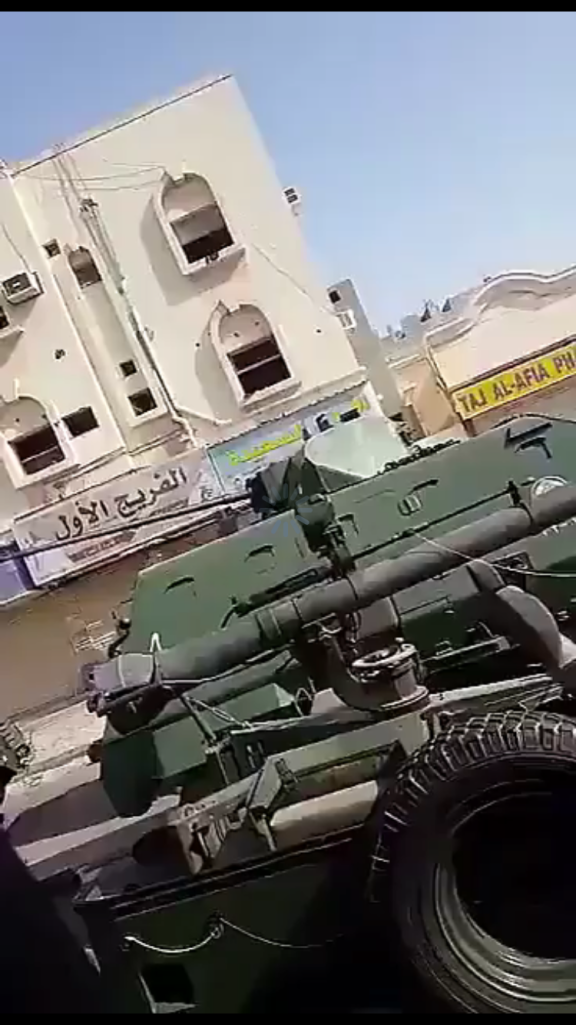
However, a recent elevated violent crackdown on civilians in an eastern province of the Saudi kingdom using Canadian-made arms has raised concerns regarding upholding Canadian values at international level.

At least eight people have been killed, tens arrested, and many wounded in the eastern Saudi town of Awamiya as government forces conduct an operation against pro-democracy Shia minority. Hundreds of people have reportedly been displaced, and Saudi government forces have been firing indiscriminately on local homes and businesses as it lays siege to the town.

According to the Globe reportimages shared on social media show Saudi forces employing Gurkha RPVs, made by Terradyne Armored Vehicles near Toronto, and Canadian-made armored vehicles.

In 2014c Ottawa first announced a CAD $15-billion arms export contract with the kingdom under Prime Minister Stephen Harper and your government has since put its support behind the deal as well.

As a human rights activist and on behalf of the Shia Rights Watch (SRW), I am writing to ask you to suspend arm deals with Kingdom as Saudi authorities are misusing Canadian-made military equipment to oppress its citizen.

Usage of such equipment on civilians in addition to limiting their access to medical resources, sieging the city and raiding homes and businesses are some serious human rights violations, and Canada should not be part of such action.

SRW urges you to stand up for human values and conduct an investigation in that regards. Also, we invite you to stand up for human rights and dignity by suspending any arms deal with Saudi Arabia.

As human rights defenders, we at SRW believe your call on the Saudi authorities sends a powerful message to all leaders and presents Canadian values of putting human rights first.


Sincerely

Mustafa Akhwand

Director of Shia Rights Watch


Response:

Dear Mr. Akhwand:


On behalf of the Right Honourable Justin Trudeau, Prime Minister of Canada, I would like to acknowledge receipt of your correspondence regarding arms sales to Saudi Arabia.


Please be assured that your comments, offered on behalf of Shia Rights Watch, have been carefully reviewed. I have taken the liberty of forwarding your email to the Honourable Chrystia Freeland, Minister of Foreign Affairs. While the Prime Minister appreciates being made aware of your concerns, he will leave the issue to be considered by Minister Freeland.


Thank you for writing to the Prime Minister.


Saudi Arabia Update: Ongoing Siege of Al Awamiyah

The end of last month saw a renewal in violence in the city of Al Awamiyah located in the eastern province of Qatif in Saudi Arabia. This area has been under extreme lock-down since July 26th, and 8 killed so far. The majority Shia population has been promised safe conduct of leave. Before, however, soldiers milled the streets firing at anyone walking by. Vehicles packed with luggage exited the city hanging white T-shirts as white flags with hopes that soldiers won’t fire upon said vehicle. A group of Asian migrants were forced to strip and lie on their stomachs in the middle of the street. Al-Musawarah, a neighborhood with structures dating back to the Ottoman Empire, is falling victim to Saudi bulldozers.

In February of 2011, this region was the source of Shia protests, calling for equality and democracy. The government cracked down on the protestors, and in 2014, Riyadh redefined an anti-terrorism law to target activism. Doing so allowed government activists and critics to be sentenced to death.

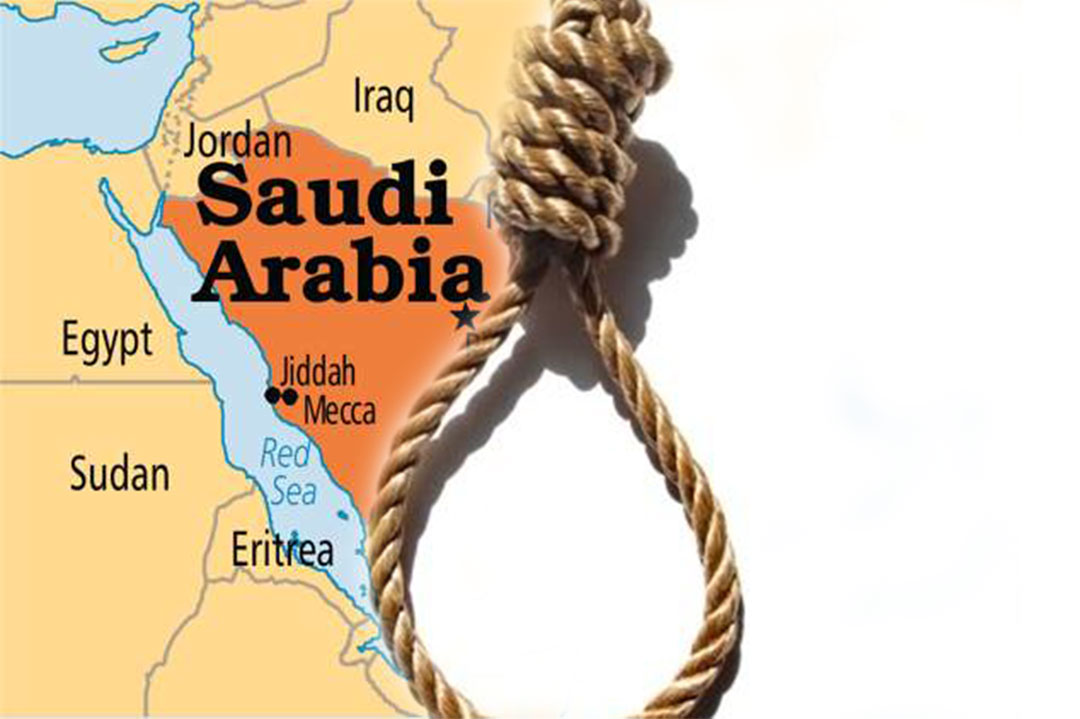
So far at least 66 people have been executed in Saudi Arabia since the start of 2017 as of July 24th and following 14 Shia waiting to be executed:

  1. Hussain Muhammdal-Muslim
    2. Muhammad Mansur al- Mansure
    3. Mustafa Ahmad Darwish
    4. Fazil Hussain Labbad
    5. Saeed Mihammadal-Sakafi
    6. Salman Amin al-Quraish
    7. Mujtaba’a al-Sweikat
    8. Muneer Abdulah al-Adam
    9. Abdulah Salman al-Sarih
    10. AbdulAziz Hassan al-sahwi
    11. Ahmad al-Rabia
    12. Ahmad Feisal al-Darwish
    13. Hussain Hassan al-Rabia
    14. Abdula Hani al-Tarif


On 10 May, 2017, masked Saudi special security forces and bulldozers surrounded the historic neighborhood with the intention of raiding the area, forcing out the inhabitants and bulldozing their homes. Roads were blocked, preventing evacuation, and snipers were deployed on building rooftops, firing either aimlessly or into family homes.

The Saudi government justified their actions by stating that the buildings of the district needed repair and were on the verge of collapsing. The inhabitants, however, stated that restoration projects could have salvaged the situation, pointing out that the government had restored buildings in other neighborhoods without total demolition. Even the United Nations condemned Saudi demolition of historic buildings on 24 May, saying that “the work erased cultural heritage and violated human rights.”

Today, Saudi forces have renewed their offensive of the city, lobbing mortars and even artillery in order to destroy more homes, and they are brazenly and arbitrarily walking the streets shooting at civilians including women and children. Not only have homes been targeted but also essential infrastructure, limiting basic needs such as electricity. Just as Riyadh had done with the law, the government changed the rhetoric from “restoration” to “anti-terrorism” in order to justify the use of arms.

Shia Rights Watch calls an end to Saudi hostilities, and for the government to respect the human rights of the citizens it is supposed to protect. Al Awamiyah is an enclave of a Shia minority, but those minorities are still citizens to the Saudi government. In order to prevent a long-term conflict that could only hurt Saudi Arabia, the government must recognize that the solution is not violence.


Our Heart Goes out to Afghanistan

Our Heart Goes out to Afghanistan

We, at Shia Rights Watch, are deeply saddened by the ruthless targeting of Afghan Shia by two suicide bombers attacked a Shia mosque in the western Afghan city of Herat on August 1, 2017. The attack was reported to have killed as many as 29 individuals and wounded up to 64.

Afghan Shia have been attacked and killed for decades and such attacks have elevated since the beginning of 2017. In the month of July, 30 Shia were killed and 42 wounded in a suicide car-bomb in heavily populated Shia district of Kabul. More than 1,700 civilians have been killed in attacks in Afghanistan so far this year, many of which belong to the minority Shia community.

As we condemn all killing and acts of violence, SRW emphasizes the need for minority rights advocacy as most human rights violations in the world are inflicted upon minority groups.

We also urge the Afghan government to take immediate action to protect Shia populated areas to prevent further attacks.

Our heart goes out to families and community members of all victims of terror, and we invite international committees to stand up for minority rights.

AntiShiism July 2017

[gview file=”http://shiarightswatch.org/wp-content/uploads/2017/08/Shia-Rights-Watch-AntiShiism-July-2017.pdf”]

Incidents of Anti-Shiism in July, 2017

Monthly Analysis: July 2017

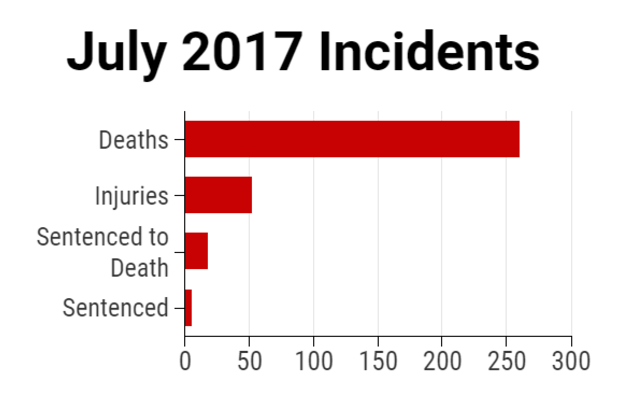
The 20 attacks that occurred in July left the Shia population in a position susceptible to human rights violations. Despite the overall decrease in casualties in July from June of 2017, 262 individuals were killed and 53 were wounded. These large numbers bare witness to the continued systematic targeting of the Shia Muslim population around the world. The violations of human rights range from arrest and detainment, to sexual abuse and torture in prisons, and as seen this month, mass execution.

Shia Rights Watch (SRW) has compiled a list of the reported attacks that occurred in July, confirmed through extensive research and collaboration with Shia rights activists around the world. This report will detail the reported instances both physical and psychological, including deaths, injuries, sentencing, and tortures.

The cases detailed have occurred across several countries including: Afghanistan, Azerbaijan, Bahrain, Iraq, Nigeria, Pakistan, Saudi Arabia, and Syria. Further attacks and human rights violations may have occurred in other places, however, this list consists of the cases recorded by SRW researchers. Incidents often go unreported due high risks and fear of attack and/or further social discrimination.

Iraq

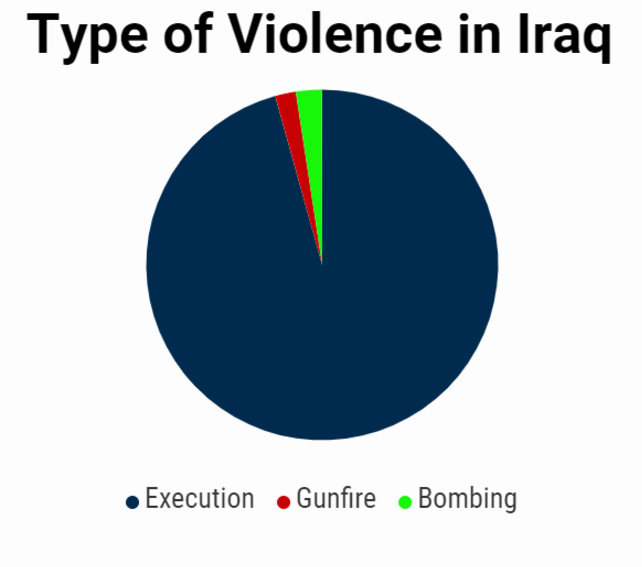
Fewer numbers of attacks and casualties have been reported in the month of July in Iraq. However, the casualties are much larger due to isolated massacres conducted by ISIS in small pockets of power such as Tal Afar and Hawija. Tal Afar witnessed a systematic massacre of 200 civilians on July 5th. Such an attack can be explained as a way to reassert ISIS’s dominance after their increasing losses in Mosul.

ISIS first declared Mosul its Islamic Caliphate in 2014, and Iraqi Prime Minister Haider al-Abadi declared victory in the city on July 9 after the strenuous three-year battle for control on. The Iraqi army forced the group to retreat from the city, and has pushed ISIS into cities like Tal Afar. The Islamic State is now consolidating power in Tal Afar and it remains the closest ISIS-controlled urban area the so-called caliphate that can be used to launch terror operations back into Mosul.

To the southeast, the capital city of Baghdad witnessed seven attacks in July. Improvised explosive devices (IEDs) and adhesive explosive devices (AEDs) remain a reality in the city. This is a sharp decline from the twelve attacks in June which specifically targeted busy Shia areas. The cooling down of attack efforts may be attributed to the end of Ramadan, which ISIS claims to be the “holy month of Jihad.”

The end of Ramadan, paired with the drastic decline in Islamic State power, may be the cause of the decreased number of attacks against the Shia population in July. However, the massacre at Tal Afar provides a grim portrayal of how ISIS might continue to operate as it loses control in areas throughout Iraq and maintains its control over its remaining footholds.

Bahrain

The ethnic and religious backgrounds of Bahrain intertwine the political, economic, and social realms of influence. Bahrain is neighbored by the Middle East’s most prominent Muslim nations: the Kingdom of Saudi Arabia to the west, the Islamic Republic of Iran to the north and east, and the State of Qatar to the southeast. The influence from these powerful neighbors, along with the unique history of the region, explicate the ethnic and religious composition of the country. While the exact religious demographics are still unknown and a highly contentious issue, it is estimated that of the Muslim population, roughly 70% are Shia and 30% Sunni. Despite this uneven divide, the government is ruled by a Sunni royal family, and a human rights dilemma has emerged out of this power dynamic. The cases reported in July displayed the continuation of human rights violations against Bahraini Shia Muslims and the relentless government pushback against rising humanitarian concerns.  

Prominent human rights activist Nabeel Rajab received a two-year sentence on July 10th after being accused of spreading ‘fake news’ about Bahraini authorities. This sentencing caused outrage by several human rights organizations, including Amnesty International and Human Rights Watch, and came shortly after the release of Torture in Bahrain: A State Behavior & A Systematic Policy, a report condemning the torture of prisoners by five human rights organizations within Bahrain.

Yousef Ali Riza reported sexual harassment by guards in his prison cell on July 3rd, the same day that Ebtisam al-Saegh was detained the second time for government criticism on social media. Al-Saegh was previously held in May where she reported torture and sexual assault. She started an open-ended hunger strike on July 11th, but by the 25th she was reported to have lost eleven kilos. Further diagnosis of her health showed a fracture in her right arm sustained from previous torture.

Continued reports of human rights infractions demonstrate the need for reform in Bahrain’s treatment of prisoners and expose the need for global attention on this issue. The Bahraini authorities arrested Shia cleric Sheikh Hani al-Banaa’ while he was visiting his detained son in Dry Dock Prison on July 3rd. Al-Banaa’ was released after being held in the prison for nine days. Another prisoner, Hussein Mohamed Habib died on July 5th after being arrested and subjected to severe torture and abuse in prison in March 2011.

Unfortunately, mistreatment of Bahraini citizens extends from what has occurred in prisons. On July 20th in the northwestern coastal town of al-Budaiya, state troopers stormed the house of Sheikh Bashar al-Aali and arrested the cleric without providing any reasons. Another situation occurred in July 28th, where Bahraini authorities charged 60 Shia for forming a group against the king. These individuals were accused of “forming a terrorist group,” and show the continued suppression of government opposition.

In addition to the reprehensible treatment of prisoners, many Bahrainis have lost their citizenship. By July 8th, 103 people had citizenship revoked or denied during 2017. On July 22, the wife of Sheikh Abdullah Al-Deqaq lost her citizenship after refusing to spy on her husband. The denial and revoking of citizenship has seemingly become the way in which the Bahraini government suppresses their critics. Loss of citizenship in combination with the growing detention of human rights advocates and their ill-treatment while in prison reinforces the regime’s systematic crackdown on minority populations and Shia Muslims in the country.

Pakistan

Although less casualties have been reported in Pakistan since the end of Ramadan, the Shia minority feel no more secure. More than 2,000 Shia have been killed in Pakistan since 2002, and the incidents in July show this number continuing to rise. Groups like Lashkar-e-Jhagvi, an extremist Sunni militant group, have pledged: “all Shias are worthy of killing and the intention is to make Pakistan their graveyard,” according to an open letter they wrote to the Hazara people in Baluchistan.

           Recently, two Shia brothers were arrested without declared charges, rendering the arrests illegal. There has yet to be a statement, but the two brothers are under “enforced disappearance,” according to local activist.

Also, just 25 miles south of Quetta, in Baluchistan, a group of Hazara Shia were on their way to the port city of Karachi on July 19. A drive-by shooter pulled up and riddled their vehicle with bullets. Three men and one woman were killed.

The fear generated by attacks similar to this one have caused some Shia to avoid traveling alone. Even the government fears that people of the Islamic sect travel at their own peril. This July, around 1,000 Shia on their way back from pilgrimage from holy sites in Iran and Iraq found themselves unable to continue at the border between Iran and Pakistan in the border town of Taftan. The pilgrims found themselves with the option of having to continue through hostile territory that is extremely dangerous for Shia without protection. They refused, and the Pakistani government is currently rallying forces to send as escorts, but the effort is taking long. Conditions are breaking down, but the pilgrims would rather put up with the harsh environment than risk traveling through Pakistan unguarded.

Pakistan is growing increasingly dangerous to the livelihood of Shia Muslims. ISIS’s growing influence in Afghanistan is emboldening Pakistani Deobandi groups to act in likeness with ISIS’s cruelty. Their intention to annihilate the Shia population is daunting considering the Shia make up one third of Pakistan, but that’s not discouraging some from picking them off little-by-little. The Pakistani government needs to further engage this issue by implementing special protection in Shia-dominated towns like Quetta in Baluchistan. If neglected, the issue can easily find its footing on a slippery slope to sectarian violence.

Saudi Arabia

Al Awamiyah, in the Qatif region of eastern Saudi Arabia, remains a contentious town as Saudi forces maintain their siege. The town itself dates back to the Ottoman Empire 200 years ago, and the town’s historic center is being demolished. The constant raids have injured large numbers of civilians, and Saudi forces have responded to protests with a tight crackdown against its opposition.

The Kingdom carried out four executions of Shia Muslims for their participation in protests in Al Awamiyah.  This area has been under extreme lock-down since July 26th. 

The Shia population has been promised safe conduct of leave. Before, however, soldiers milled the streets firing at anyone walking by. Vehicles packed with luggage exited the city hanging white T-shirts as white flags with hopes that soldiers won’t fire upon said vehicle. A group of Asian migrants were forced to strip and lie on their stomachs in the middle of the street. Al-Musawarah, a neighborhood with structures dating back to the Ottoman Empire, is falling victim to Saudi bulldozers. 
Saudi raids continue in the region, as just days later, two men were shot and wounded on 11 July. On July 13th, a court in Saudi Arabia has postponed the trial of Shia cleric Sheikh Hussein al-Radhi over his pro-democracy comments as Riyadh presses ahead with its heavy-handed crackdown on members of the Shia community. In another raid on July 15th, Hassan Abdullah, Ja’far Mubayrik and ‘Saadiq Darvish were killed by Saudi forces.

Saudi troops, equipped with heavy weapons, attacked Al- Awamiyah town, damaging and destroying several homes, business and historical sites. Residence were asked to stay home while the government shut down their internet and phone lines. Two Shia reported killed during the attack on July 26th. Just four days later, three men were killed in a raid in a parking lot. On July 29th, Saudi snipers shot and killed Ali Mahdi al-Sobeiti and Hussain Abdullah al-Sobeiti on the road to an Awamiyah.

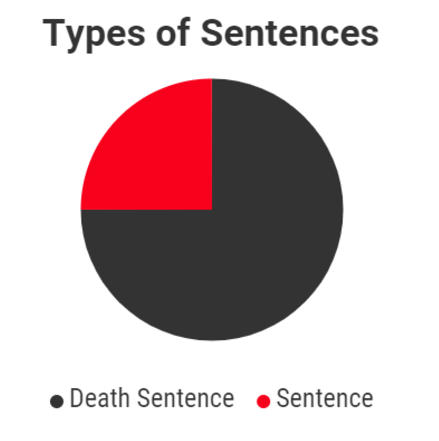
The Saudi Arabian Supreme Court upholds the death sentences of 14 Saudi Shia after an unfair mass trial and it is a worrisome reminder of the country’s lethal crackdown on dissent. Fourteen Shia waiting to be executed are following:

  1. Hussain Muhammd al-Muslim
  2. Muhammad Mansur al- Mansure
  3. Mustafa Ahmad Darwish
  4. Fazil Hussain Labbad
  5. Saeed Mihammad al-Sakafi
  6. Salman Amin al-Quraish
  7. Mujtaba’a al-Sweikat
  8. Muneer Abdulah al-Adam
  9. Abdulah Salman al-Sarih
  10. AbdulAziz Hassan al-sahwi
  11. Ahmad al-Rabia
  12. Ahmad Feisal al-Darwish
  13. Hussain Hassan al-Rabia
  14. Abdula Hani al-Tarif

The lack of proof of serious allegation is a serious development, as SRW, Human Rights Watch and Amnesty International point out a sharp rise of death sentences for Shia Muslims carried out by the Kingdom.

Syria

The town of Hama was home to death of two Shia women and the injury of 11 others as a suicide bomber detonated his vest. Sources report the diffusion of two other bombs at the site. The bomb caused extensive damage to the Imam Muslim Mosque and a bus station nearby.

In 2017 alone, there have been over 240 deaths as a result of anti-Shiism. The attacks were propagated by anti-Shia extremists taking advantage of the social and political distress in the nation.

Nigeria

On Friday, 7 July, the Federal High Court in Nigeria rejected the suit of Shia cleric

Ibrahim Zakzaky. Zakzaky brought forth a suit through which he meant to sue the Nigerian government for $5.6 million in damages over a December 2015 attack in which the Nigerian government killed 347 Shia Muslims including Zakzaky’s three children in the city of Zaria in the northern state of Kaduna. The dead were then buried in a mass grave.

The Shia population is a small minority of the Muslim population. The demographics of all Nigeria include 50% Christians and 50% Muslims.

Afghanistan

A car filled with explosives rammed into a bus and detonated killing 24 people and wounding 40. The attack occurred near a prominent Shia cleric’s house, so it is unclear whether the bus was the actual target. June saw two other attacks targeting the Shia population.

The Hazara ethnic group make up a large portion of Afghanistan’s Shia population. For decades, the Hazara have been under attack by extremist organization and have lived a marginalized life. Increased attention is needed on the case of Hazara’s when addressing anti-Shiism in Afghanistan.

Kuwait

Late July, Kuwaiti officials suspended license for a locally operated Shia TV station, ceasing their operations. While Kuwait historically has displayed acceptance and inclusion for their Shia population, a recent increase in targeting of Shia media and scholars can be seen.

Shia Rights Watch in concerned of increasing actions limiting the freedom of speech in Kuwait.

Conclusion

The month of July stood witness to just over 260 deaths and with 53 injuries as a result of anti-Shiism. SRW estimates the death rate to increase as many of those injured were in critical condition and treated in areas with limited medical resources.

Shia Muslims continue to live in fear as they are ostracized in their home nations, and arrests of Shia activists and scholars continue in the Gulf states and the surrounding nations. The increased incidents of anti-Shiism are consistent with those estimated in previous reports. With arrests and ill-treatment of prominent activists such as Ibtissam al-Saegh and Nabeel Rajab, anti-shiism remains as strong as ever.  

In Saudi Arabia, the siege in al-Awamiya continues. Despite international efforts, the death count continues to rise. Many of those killed by government shootings are women, children, and immigrant workers. Activists and humanitarians are standing up to the injustice, but are facing the backlash from governments and other major actors. Shia Rights Watch calls for governments across the region to increase protections on Shia and other religious minorities, and to reverse and stop all ill-treatment of these populations. SRW urges the Saudi government to reverse their sentences condemning fourteen protesters of the al-Awamiya raids to death. Shia Rights Watch demands the release of all pro-democracy activists and religious scholars in the Gulf nations. Further, Shia Rights Watch condemns the siege on Awamiya and warns of the dangers of continued marginalization in the Kingdom of Saudi Arabia, and across the region.

Saudi Arabian Supreme Court upholds the death sentences of 14

Shia Rights Watch_Saudi Executing Shia

The Saudi Arabian Supreme Court upholds the death sentences of 14 Saudi Shia after an unfair mass trial and it is a worrisome reminder of the country’s lethal crackdown on dissent. Saudi Arabia has made it clear that freedom of any kind is not tolerated. Any sort of domestic dissent is managed in the worst of ways.
Saudi Arabia’s authorities have displayed their commitment to the use of the executions as a weapon to crush dissent as at least 66 people have been executed in Saudi Arabia since the start of 2017 as of July 24th.
Fourteen Shia waiting to be executed are following:

1. Hussain Muhammd al-Muslim
2. Muhammad Mansur al- Mansure
3. Mustafa Ahmad Darwish
4. Fazil Hussain Labbad
5. Saeed Mihammad al-Sakafi
6. Salman Amin al-Quraish
7. Mujtaba’a al-Sweikat
8. Muneer Abdulah al-Adam
9. Abdulah Salman al-Sarih
10. AbdulAziz Hassan al-sahwi
11. Ahmad al-Rabia
12. Ahmad Feisal al-Darwish
13. Hussain Hassan al-Rabia
14. Abdula Hani al-Tarif

Mujtaba’a al-Sweikat, was only 17 when he was sentenced to death. He had planned to visit and attend Western Michigan University but was detained by airport authorities in Saudi Arabia for allegedly attending a pro-democracy rally.
The exact date of the execution is not announced yet and there is a chance that it won’t be until after the execution that the world will hear about it. Sheikh Nimr al-Nimr was quietly executed on January 2, 2016, as the world was busy celebrating New Year.
Once covered-up crackdown against Shia is now the largest military campaign in Saudi Arabia and the world is watching.
Not only does Saudi Arabia use its funds and influence to thwart dissent domestically, it also imposes its beliefs on Shia populations in the region: Saudi-backed forces in Bahrain, airstrikes in Yemen, and founding Wahhabi school around the world have resulted in mass violations toward this population in and outside this Kingdom.
“As human rights activists I believe it is time for the international committees and world leaders to stand up for human rights and remind Saudis of our values,” says Mustafa Akhwand the director of Shia Rights Watch.
“We are responsible to take all actions to stop the execution of these 14 Shia men. Such action of Saudi kingdom is only another sign of weakness and incompetence” he continued.

Shia Rights Watch condemn the action of violence and Anti-Shiism carried by Saudi authorities demanding equal rights to Shia Muslims in Saudi Arabia.

Bi-Annual Anti-Shiism Report

Shia Rights Watch_AntiShiism

Intro

The first half of 2017 has been a turbulent time for Shia Muslims all over the world. Anti-Shiism, or the active targeting of Shia Muslim to limit their visibility and expression, was prevalent in across the globe.

Shia Muslims, including their sub groups, make up approximately 50% of the total Muslim population. Although exact data of Shia demographic remain impossible to collect due to extreme marginalization, a study of current cases of anti-Shiism have been documented by Shia Rights Watch researchers and activist.

This report is a compilation and analysis of trends in anti-Shiism in the six months of January to June 2017.  In this report, cases of anti-Shiism in the nations of Bahrain, Saudi Arabia, Syria, Iraq, Iran, Pakistan, and Madagascar are examined. Violations include arrests, vandalism, deaths by unnatural means, and injuries.  It is important to note that Shia rights abuses listed in this report are a summary of incidents that have reached SRW. Violations are not limited to those in this report. More information can be found on ShiaRightsWatch.org.


Gulf Nations

Anti-Shiism in Gulf nations has skyrocketed after the Arab Spring of 2011. In fears of an up rise, Gulf countries, specifically Bahrain and Saudi Arabia have increased limitations on their critics.   Pro-rights protests in these nations are thwarted with the utmost violence.

Bahrain
Shia Rights Watch_AntiShiism

The Kingdom of Bahrain has been home to systemic suppression of human rights. Bahrain is a Shia majority nation headed by a non-Shia monarchy. Unlike democratic efforts of other Arab countries in the Middle East, efforts for rights and recognition have remained unnoticed for Bahraini citizens.

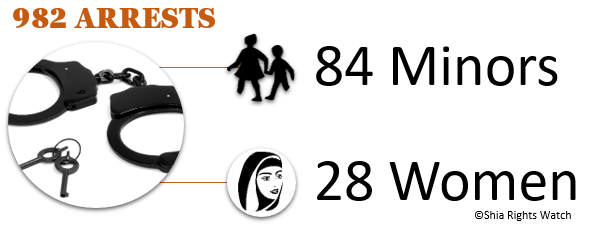
The six month period between January and June 30, 2017, a total of 982 people has been arrested. Arrests were with aims to suppress protests. Some were arrested in peaceful protest and others by night time raids. Bahrain has shown little mercy in suppression as 84 of those arrested are minors, and 28 are women.

Approximately 30% of the total arrests, 286, were in a single day in Diraz, Bahrain. On May 23, an armed attack on protesters killed five and wounded dozens. Protestors had arranged a sit in around the home of Sheikh Isa Qassim, who was sentenced to one year in prison and revoked of citizenship earlier that month. After Qassims arrest, the town of Diraz was blockaded, and residents were subject to checkpoints and travel restrictions. Phone and internet lines were cut off for significant hours in the day to limit media contact.

-Protest Met with Violence-

Although protests and demonstrations have been peaceful and demonstrators are unarmed, Bahraini forces meet them with the utmost violence. Bird shot pellets used by forces have led to the death and permanent injury of many protestors and bystanders. Travel restrictions and discrimination have left those injured without medical care as ambulances cannot enter the town and hospitals are ordered not to treat injured protestors. Those arrested report harsh torture and violence in detainment. Ebtissam al-Saegh, a prominent activist has testified sexual assault and coercion of false confessions. Human rights activists striving for democracy in Bahrain report verbal and physical assault as well as threats to thier dignity and even family.

The government’s unwillingness to engage in dialogue has created a rift between it and its citizens. Sources say, Bahraini citizens, do not trust the government. This mistrust, one can relate to the lack of sufficient representation in legislation and years in the suppression of rights by officials. Furthermore, sources report that the extent of Saudi involvement in Bahrain undermines the Bahraini government. Many feel as though dialogue with Bahraini officials are insignificant as officials are under the influence of Saudi policy.

-Future of Bahrain-

With many children and women under arrest, the future of Bahrain is widely destabilized. Children arrested are not able to attend school and in many cases, are not given the opportunity to make up missed work. The current lack of national stability because of direct violence creates an opportunity for foreign involvement in Bahrain. Mistrust and lack of cooperation among protestors and the government have also led to a shift in national identity. SRW predicts a decreased rate in Bahrain’s educated population. Further, due to the increased detainment of women and the high rate of mortality for Shia men, SRW predicts a rise in single parent families and even orphan children. These predictions are further supported by the approximate 780 sentenced Bahraini citizens and the revocation of 92 others. To this point, over 60 people have been given life sentences. The numbers are expected to rise as Bahrain has issued death sentences for many activist despite a de facto moratorium on the death penalty.

Saudi Arabia

Although Shia in Saudi Arabia have practiced their faith in hiding and have lived under marginalization for decades, the last six months note augmentation of violence against this population.

Shia in Saudi Arabia have lived under pressure to conform to the nation’s extremist ideology and forgo their own identity. Since the origin of the kingdom, Shia Muslims have been marginalized; their towns provided the least government funds- lacking in infrastructure and maintenance. Despite their living quarters being home to one of Saudi’s largest oil drills, Shia Muslims are left in the worst of the nation’s conditions of life. Drilling has caused air, and noise pollution and the citizens of the Eastern province are allowed minimal say in policy. While they at least make up over 20% of the population, Shia Muslims lack adequate representation in the government.

-Sources of Anti-Shiism-

Anti-Shiism in Saudi Arabia is fueled by social and religious indoctrination. In numerous cases, Saudi clerics have announced Shia Muslims as outsiders and have deemed them unequal to the nation’s majority Wahhabi population. These beliefs are furthered through educational books and lessons. Information on sources of anti-Shiism can be found on ShiaRightsWatch.org
Shia Rights Watch_AntiShiism

-Continued Violence-

In the first six months of 2017, the nature of anti-Shiism in this nation shifted. What was once a structural and cultural discrimination becoming direct violence. In mid-May, a siege in the town of Al-Awamiyah became a public attack on this religious sect.  The siege began around 3 am. All entrances to the city were closed, and forces shot at buildings and automobiles. Residents were forced from their homes and business were closed.

The government’s claim of aiming to “renew the district” is undermined by social media hashtags and trends used by Saudi forces calling for a “cleansing” of the kingdom from Shia.

The government is threatening the identity of Shia Muslims by demolishing historical sites in Al-Awamiyah. With the demolishment of the al-Baqee cemetery in 1925, Shia in Saudi Arabia lives in fear of not having a presence in their home nation. Further, the decision to “renew” was taken without any representation from the residence, thus adding to their unwillingness to trust the government’s claims.

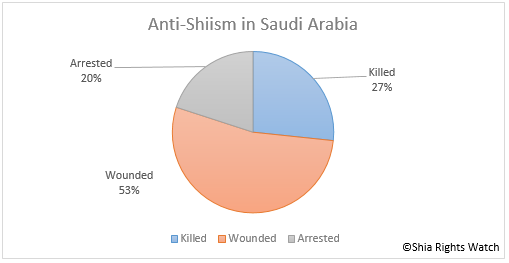
In attempted to maintain order, forces shot indiscriminately at civilians. The death toll in Saudi Arabia has reached 20. Javad al- Dagher of two years and his family were among those killed. Over 40 people have been wounded in the strife; 15 others have been arrested and face the harsh and unforgiving climate of Saudi prisons. Until now, 14 people have been sentenced to death.

-Regional Instability-

Anti-Shiism in Saudi Arabia has not only incited conflict in the nation; it has led to regional instability. Some state the source of anti-Shiism in Saudi Arabia is fear of Iranian expansion in the region. However, Shia in Saudi Arabia, as well as other nations in the region, have renounced such association.  By pressuring their citizens and falsely associating them with a foreign power, Saudi Arabia is increasing insecurity in the Middle East.

Pakistan
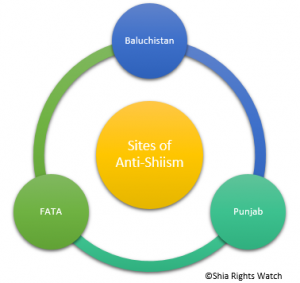
Shia Rights Watch_AntiShiismPakistan stood witness to the death of 193 and wounding 466 others. Incidents of anti-Shiism occurred mainly in the Federally Administered Tribal Area (FATA), Punjab and Baluchistan.


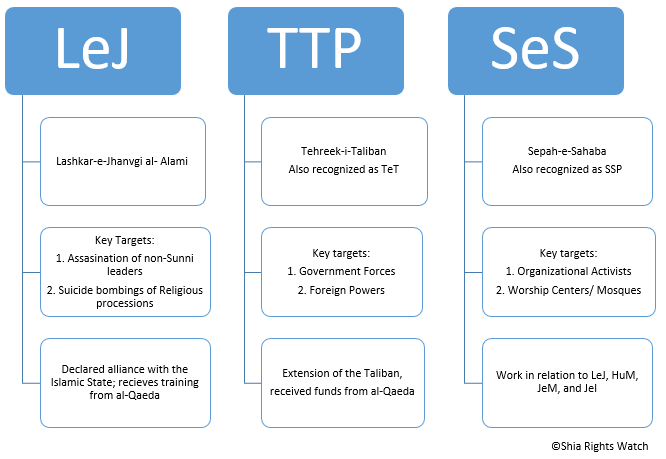
Attacks were carried out by LeJ, TTO, and SeS. Regions of high incidents of anti-Shiism span Pakistan and are mainly cities with a semi-open border with Afghanistan. All attacks occurred in public locations. Both attacks in Parachinar, Kurram Region, occurred in densely populated regions of town.


The targeting of a single population by a number of the nation’s biggest terror organizations points to an existing collective culture of anti-Shiism in which different groups compete to be the most successful.  The willingness of these groups to put aside rivalry and work together in orchestrating attacks show the extent of cultural violence against Shia Muslims.

The lack of justice in cases against minority groups in Pakistan are due to existing discrimination within police forces. Many activists have reported a slow cases processing and lack of follow-up on incidents of anti-Shiism.

-Undiscovered Powers-

After the June 24 attacks in Parachinar, governor Iqbal Zafar, on behalf of Prime Minister Nawaz Sharif, distributed Rs 500,000 (appx $5000) to those injured and Rs 1,000,000 (appx $9000) to families of lost loved ones. Compensations came after cross-country protest. Shia Rights Watch estimates, at a minimum, $780,000 was given out by Iqbal Zafar. The Pakistani government aims to compensate death of human life with money, not understanding that conflict cannot be resolved by monetary means. The money handed out to victims of the Parachinar attacks was a means of suppressing protests. The government’s actions display a lack of understanding of the Shia population as Shia in Pakistan are educated and in the position of power as lawyers, doctors and policy makers- money is not a limited resource for many.

Shia Muslims in Pakistan inhabit geopolitically significant areas. Baluchistan, for instance, is rich in natural resource reservoirs and is a key strategic region for Pakistan-Afghanistan diplomacy. Punjab is one of the most economically prosperous regions of Pakistan. Instability in any of those regions creates instability in the area, and thus with the pressures of neighboring countries, the government of Pakistan does the most to reinstate order.
Shia Rights Watch_AntiShiism

However, counter terrorism effort is misplaced. On June 11, Taimoor Raza was sentenced to death over Facebook content in Okara, Punjab by a “Prevention of Electronic Crimes Act of 2016” which aims to restrict cybercrime offenses. Pakistan’s officials fail to provide effectual security and prevention of hate-crime against Shia communities. Officials are willing to provide monetary compensation to limit social unrest. Shia Rights Watch suggests increased efforts of crime prevention and increased education. Thus, far, post-conflict compensation has been far more expensive that any peace-building effort, and until steps are taken to limit the growth of extremism, in stability in Pakistan will continue.

Syria

Shia in Syria populate the cities of Deir al-Zour, Haoula, Khan al-Asad, Idlib, Nubul, al-Zahra, Hama, al-Foua, Keferya, Homs, and Zarzur. To this point, the conflict in Syria has led to the death of over 400,000 people, a significant portion of which are Shia Muslims in addition to political conflict, Shia in Syria suffers from targeted killing by active terror groups such that of ISIS.
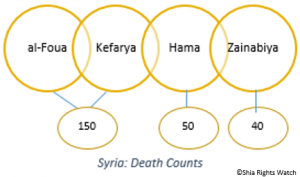
Shia Rights Watch_AntiShiismDiscreet numbers of anti-Shia incidents are limited due to the turbulent status of the nation. However, despite limitations, SRW estimates continued targeting of Shia Muslims as per ground sources as well as the statistical prevalence of attacks on Shia towns and cities.

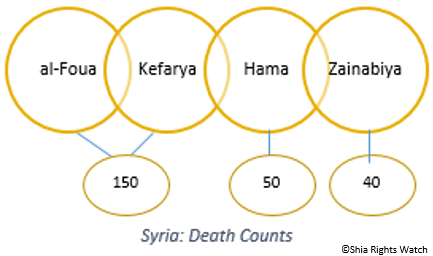
The largest reported incident of anti-Shiism was in the village of al-Foua, and Kefarya in which a suicide bomber targeted a bus carrying children evacuated from the town- 150, 72 of which were children, were found dead because of the explosion.

Sources in Syria report an attack on the city of Hama as the next largest reported attack in Syria. Of the 50 killed, 24 were women and children. Medical personnel in nearby hospital report death by blunt force trauma by rocks and stones. Despite immense efforts, retrieval of bodies was not possible as many of the bodies were dismembered beyond recognition. The extent of damage to the deceased points to an ideology that views Shia as non-human.

Among incidents of anti-Shiism are double bombs killing 40 Iraqi pilgrims visiting the Zainabiya Shrine and wounding 120 others.

ISIS and their affiliates are fueled by anti-Shia sentiment taught by the Wahabi school of thought. The coordinated attacks which target pilgrims and evacuees point to an anti-Shia agenda consistent with the Wahhabi ideology.

Iraq

Iraq remains one of the most turbulent locations for Shia Muslims. ISIS infiltration and lack of government security create an opportunity for anti-Shiism. In the first six months of 2017, 260 people have lost their lives, and approximately 250 people have been injured as a result of anti-Shia sentiment.

Consistent with a five-year trend, Shia neighborhoods of Baghdad remain one of the most targeted areas. As early as January, suicide bombings claimed the life of 20 and injured more than 60 people in a marketplace in the district of Jamila. A week later, a car bombing killed 48 and left tens of others injured.

Karbala was also home to Shia Muslims killed in the past six months. In the Musayyib district, east of Karbala, a woman detonated her vest killing 34. On the same day, a bomb at the entrance of the city killed 4, and a failed explosive was cleared from the holy Shrine located in Karbala.

Same day bombings are signs of existing extremist networks that remain prosperous despite anti-ISIS efforts.

Iraq is home to many important Shia shrines and historical sights. These locations ensure a constant influx of Shia Muslims to the nation. Thus, Shia Rights Watch calls for a plan of security that is unique to this nations traveler entry.

Iran

In the first half of 2017, the world stood witness to an explicit expansion of ISIS forces. Early June, ISIS forces detonated explosives in two key political locations in Iran: the parliament and the Khomeini Mausoleum. The setting of the incident was highly symbolic to the Revolution of 1979.


Terrorists entered the administrative building as constituents, some women, and detonated explosive vests killing 12 and wounding 40 others. ISIS later released video accounting for their time within the parliament building inducing fear of increased ISIS activity in the nation.

In addition to increased tensions in the region, this incident was a show of anti-Shiism as ISIS forces targeted one of the most Shia populated countries in the Middle East.  Attacks in Iran point to a definite shift an anti-Shiism.


Madagascar

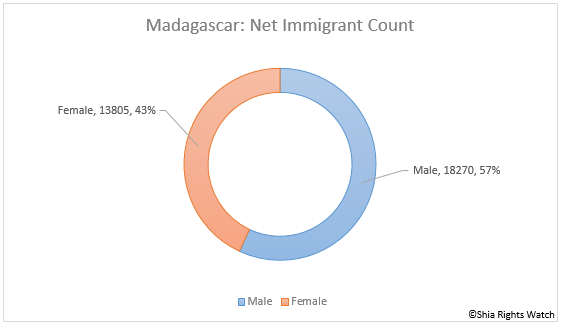
Due to the islands vast resources, Madagascar has been home to increased Muslim immigration. Mid-May, Yanish Ismail, son of a prominent Shia businessman was kidnapped by 14 armed assailants as he was attending a funeral.

Ismail’s case is the second incident of anti-Shiism in the past five years. SRW fears a wave of anti-Shiism in this nation. Roots of hate crimes, SRW predicts, spreads from existing anti-Shiism in other countries.
Shia Rights Watch_AntiShiism

Afghanistan

From January to June 30, 17 lives were lost, and 23 were injured as a result of anti-Shiism.   Of total incidents, 65% of attacks occurred in the month of June. Early June, a motorbike bomb detonated outside Jama Mosque of Herat, killing 7 and wounding 16. Later that month, a terrorist targeted a Shia mosque outside of Kabul. After exchanging fire with police, he entered the mosque kitchen and detonated his explosive vest. The incident led to the death of four and left seven others injured.

The Hazara ethnic group are frequently targeted as they are identified in features and widely recognized as Shia Muslims. Structural anti-Shiism in Afghanistan has led to a lack of protection and prosecution of this ethnic community.

Mass exposure was guaranteed in both attacks as terrorists targeted Shia mosques, and that in the month of Ramadhan. Muslims regard Ramadhan as a holy month. However, anti-Shia organizations such that of ISIS and the Taliban do not consider Shia as Muslims. Previous to Ramadhan, in a speech, ISIS leaders renounced Shia, called for their cleansing and promoted the month of Ramadhan as the best month for anti-Shia action.


Global Trends of Anti-Shiism

A macro-scale analysis of cases of violence against Shia Muslims shows significant trends. Such patterns can be used to analyze Anti-Shiism and plan peace building endeavors.

Analysis of anti-Shia cases points to widespread cultural violence because of miseducation. For decades, the Wahhabi school of thought has promoted education dehumanizing Shia Muslims. Some historians have identified the political and economic basis of such education. More information on historical cases of anti-Shiism can be found on ShiaRightsWatch.org. Anti-Shia education can be found in the Middle East and North Africa, and such education has become a cultural feature. A culture that undermines Shia Muslims as human-beings with fundamental rights has allowed hate-crime by a violent group to prosper. In addition to ideological targeting, anti-Shiism occurs because of misrepresentation of Shia Muslims. For instance, sources report anti-Shiism in immigrant populations who see Shia Muslims as the source of insecurity in their jobs. Their lack of awareness of who the Shia are lead them to criminalize Shia and the Shia struggle for recognition.

In some cases, explosions are coordinated by time, date and location. Synchronization, analyst claim, tells tales of existing networks and communications among different terror organizations with a shared ideology. The fact that most the attacks were suicide bombers point to the extent at which attackers hold the anti-Shia ideology.

The setting of attacks is in confirmation that attacks reported in this report were not random, but targeted towards mass Shia populations. Attacks are aimed at limiting Shia visibility and expression.


Anticipating the Next Six Months

Prosecution of agents of Anti-Shiism is practically non-existent in the aforementioned nations. In states in which the national government leads anti-Shia efforts, justice seems far-fetched for many. In Pakistan and Iraq, anti-terrorism efforts do not meet minority efforts thus endangering Shia constituents.

Shia Rights Watch anticipates a spread of anti-Shiism to other regions of the world. In both Europe and South Asia, incidents have been seen. Although these events were isolated, they did cause infrastructure damage, physical and psychological damage to Shia Muslims in those areas. Details on incidents in South Asia and Europe can be found on ShiaRightsWatch.org.

Incidents of anti-Shiism will continue to rise in the next six months unless efforts to decrease hate crimes are taken. Incidents of anti-Shiism tend to grow in holy months, especially in Moharram, a month many recognize as the corner-stone of the Shia identity. Moharram begins in September 2017, and with it, Shia processions will be in danger of violence unless measures to protect this population takes place.

-Suggestions-
  • Dialogue between governments and constituents
    • Both activists and government officials must realize dialogue and cooperation are the only means of building understanding and coexistence in their nations. Common aims must be identified and used as the basis for building a prosperous nation.
  • Increased activism of Shia Muslims in their communities
    • As the most powerful force against anti-Shiism, Shia Muslims must empower their communities for self-expression. Shia Muslims must build a presence in their nations by being ideal citizens in their countries in the international communities.
  • Education on human rights for all minority populations
    • Minority communities must be aware of their rights as given by the United Nations Declaration of Human Rights and their nation’s constitution. Minority populations must be able to recognize discrepancies in their rights and take peaceful steps in raising awareness.
  • Raising accurate media coverage
    • The media is a major medium for raising awareness and education. Shia Rights Watch calls upon media outlets to check accuracy and provide un-biased coverage of Shia Muslims.
    • Shia Rights Watch further encourages active Shia communication with local and international news sources. Shia communities are the best first line defense against anti-Shiism, thus they must work with media outlets to raise awareness in regards to their communities and remove misconceptions.


Letter to President Trump Calling for Immediate Intervention in Saudi Arabia

Letter to President Trump calling for immediate intervention in Al-Awamiyah, Saudi Arabia. 

Respected President Trump,

Representing the United States of America as its president means standing up for American values, values that are based on democracy, freedom, dignity and human rights.

As a human rights activist and on behalf of the Shia Rights Watch (SRW), I am writing to highlight the need for your immediate intervention in Saudi Arabia.

Although Saudi Shia have been historically marginalized, discriminated and violated in their own land, recently the oppression and discrimination towards them has increased in the form of the largest military campaign in the history of this country.

Al Awamiyah, the main Shia area, has been under siege. Many homes and businesses have been destroyed; children and women have lost their husbands and fathers.

As it is open to all, Saudi authorities have been raiding the Shia populated areas of the country, arresting pro-democracy activists and charging them with brutal punishments.  Instead of focusing on combating ISIS, Saudis have been attacking their own citizens to distract international attention from ISIS. This kingdom has not sentenced a single ISIS fighter but is constantly beheading Shia protestors. In fact, 14 more Shia were sentenced to death recently.

Lack of democracy, no access to medical resources and education, rising number of arrests and killings, economic disaster, and extreme change to the social structure of the Shia populated areas of the Saudi Arabia is concerning and requires your attention.

SRW urges you to stand up for human values and contact King Salman asking him to stop ongoing oppression of its people. We would like to highlight the fact that as the US President you have the power and influence to end Saudi’s oppression and bring their focus back to combating ISIS.

As American citizens and human rights defenders, SRW believes your call on the Saudi King sends a powerful message to all leaders and presents American values of putting human rights first and fighting real terrorists and a common enemy, ISIS.

Sincerely,

Shia Rights Watch 

UN Complaint