


Welcome to Shia Rights Watch

spot_imgspot_imgspot_imgspot_img
Home Blog Page 6

Incidents of Anti-Shiism, February 2024

Incidents of antishiism

Shia Rights Watch releases its monthly report on the most prominent human rights violations committed against Shia Muslims for the period from February 1 to March 1, 2024.

The report reviews numerous terrorist operations carried out by extremist groups against Shia Muslims, along with acts of repression and abuse practiced against them by certain regimes and governments.

The organization confirms that it relied on its own sources and some public sources, such as individuals and groups active in the field of freedoms and human rights in the countries where these violations occurred.

The organization notes that it refrained from mentioning some violations due to the lack of confirmed evidence, despite being certain of the occurrence of these violations in some countries. It emphasizes that it does not seek political or profit-oriented goals, but rather aims to achieve the justice and equality that human societies aspire to.

Countries in Alphabetical Order:

Pakistan

5/2: Deaths and Injuries from a Bombing in Dera Ismail: A terrorist group attacked a police station in the Shia-majority city of Dera Ismail in Khyber Province, killing ten people and injuring six others, including children.
7/2: Dozens Killed and Injured in Election Center Bombings in Quetta: Two ISIS terrorist attacks on election centers in Quetta killed over thirty people and injured dozens more.
20/2: Security Forces Besiege Shia Town: Security forces besieged the Shia town of Parachinar, arresting dozens of residents who opposed the demolition of homes and deforestation around the town on sectarian grounds.

Bahrain

5/2: Arrest of Minors from Sitra: Security forces arrested minors Mahmoud Abdul Ali and Sadiq Habib from Sitra.
6/2: Arrest of Minors from Al-Eker: Security forces arrested minors Abdullah Ali and Mohammed Jalal from Al-Eker.
6/2: Arrest of a Minor from Al-Ma’amir: Security forces arrested minor Mahmoud Aman from Al-Ma’amir.
13/2: Arrest of Four Young Men from Karrana: Security forces arrested four young men from Karrana during a raid.
14/2: Authorities Suppress Peaceful March: Security forces suppressed a peaceful march in Al-Daih, followed by arrests and persecution of participants.
15/2: Arrest of Minors from Sanabis: Security forces arrested minors Sayed Ahmed Al-Falah and Reda Khaled from Sanabis.
15/2: Arrest of Two Young Men from Al-Daih: Security forces arrested Abbas Fadel and Haider Radhi from Al-Daih.
15/2: Arrest of a Young Man from Sanabis: Security forces arrested Jaafar Al-Halwaji from Sanabis.
15/2: Arrest of Two Young Men from Al-Daih: Security forces arrested Muntadhar Mohammed Al-Khair and Ali Mohammed Al-Khair from Al-Daih.
16/2: Arrest of a Minor from Karrana: Security forces arrested minor Yasser Ammar Ibrahim from Karrana.
16/2: Arrest of a Young Man from Al-Kharijiyah: Security forces arrested Ammar Saleh Al-Momen from Al-Kharijiyah.
17/2: Arrest of Two Young Men from Al-Maqsha: Security forces arrested Sadiq Al-Masjan and Hussain Al-Muwali after raiding their home in Al-Maqsha.
20/2: Arrest of a Minor from Sitra: Security forces arrested minor Mohammed Jaafar Al-Kuwaiti from Sitra.
22/2: Raid and Arrest of a Minor in Ras Al-Rumman: Security forces raided Ras Al-Rumman, arresting minor Hashim Sayed Naama Al-Wadaei after raiding his home.
23/2: Raid and Arrest of a Minor in A’ali: A security force raided the home of minor Mohammed Hussain in A’ali and arrested him.

Saudi Arabia

1/2: Execution of a Detainee from Al-Awamiyah: Security forces executed Hajj Aoun Abu Abdullah from Al-Awamiyah in Qatif Province, after holding him in prison for over four years.
7/2: Arrest of Ten Young Men from Qatif: Security forces arrested ten young men from Qatif Province for chanting cheers during a soccer match coinciding with Shia religious holidays. Observers reported that over 200 citizens were summoned for arbitrary questioning.
8/2: Execution Sentences for Two Young Men from Qatif: The so-called Specialized Criminal Court sentenced Hassan Salman Al-Qabbat and Mohammed Maki Shamlani from Qatif to death.
10/2: Sectarian Punishments by the Ministry of Sports: The Saudi Ministry of Sports dissolved the board of directors of the Safwa Club in the Eastern Province, imposed a fine of 200,000 riyals on the club, and banned fans from attending five matches due to religious chants by supporters.
14/2: Deliberate Killing of a Young Man from Qatif by Vehicle: A military vehicle deliberately ran over Ahmed Ashour from Qatif while he was riding a motorcycle. Human rights sources revealed that authorities are pressuring his family to forgo their right to prosecute the perpetrators.
Unveiling the Persecution, Shia rights violations (January 1 – February 1, 2024)

A Stark Snapshot of Human Rights Violations

Shia Rights Watch has released its monthly report, presenting a disturbing overview of the human rights violations endured by Shia Muslims from January 1 to February 1, 2024. This report details a series of terrorist attacks, arbitrary arrests, and systemic repression in various countries, highlighting the urgent need for international intervention to protect this vulnerable community. This analysis delves into the key incidents documented by Shia Rights Watch, underscoring the severity and breadth of these violations.

Iran: Devastating Bombing in Kerman

The report begins with a harrowing account of a double terrorist bombing in Kerman, Iran, on January 3. This attack resulted in over 100 deaths and 200 injuries, marking one of the most lethal incidents within the reporting period. The sheer scale of this atrocity underscores the persistent threat faced by Shia Muslims in regions plagued by extremist violence. This bombing not only caused immediate loss of life and injury but also instilled a deep sense of fear and insecurity within the Shia community in Iran.

Afghanistan: Targeted Attacks in Kabul and Herat

In Afghanistan, Shia Muslims continue to be prime targets for terrorist groups. On January 7, an explosive device planted inside a bus in Kabul’s Dasht-e-Barchi area killed two and injured fourteen. This was followed by another bombing on January 9 in Herat, where a roadside bomb targeting a bus of Shia students killed two and injured five. These attacks, concentrated in Shia-populated areas, illustrate the calculated efforts of extremist groups to disrupt and terrorize Shia communities, particularly students and civilians.

Pakistan: Sectarian Violence in Mamund

The report highlights a brutal attack in northern Pakistan’s Mamund area on January 10. An explosive device planted by terrorists killed five people and injured twenty-two. This incident is part of a broader pattern of sectarian violence in Pakistan, where Shia Muslims frequently face targeted attacks. The high casualty figures from this single attack highlight the deadly impact of sectarian terrorism in the region.

Bahrain: Systematic Repression and Arbitrary Arrests

Bahrain’s section of the report reveals a troubling pattern of arbitrary arrests and repression against Shia individuals. Starting from January 1, the report documents the arrest of Muslim Aqeel Habib from Sitra, followed by the arbitrary summoning of six elderly individuals for questioning. Subsequent arrests include young men from Bilad Al-Qadeem, minors from Sanabis and Sitra, and another young man from Al-Mussalla. These arrests reflect a systematic effort by Bahraini authorities to intimidate and silence the Shia population, particularly targeting youth and community leaders.

Kuwait: Foiled Terrorist Attack Plots

In Kuwait, the report documents a significant security operation on January 25, where authorities arrested three terrorists planning attacks on Shia Hussainiyas and mosques. This successful intervention highlights the ongoing threat posed by extremist groups in Kuwait and the critical importance of proactive security measures to protect Shia places of worship and gatherings.

Syria: Attacks on Shia Pilgrims

The report details an alarming attack on Shia pilgrim convoys in Syria on January 28. Extremist groups in the town of Al-Hari, near the Al-Bukamal border with Iraq, targeted convoys heading to the shrine of Sayyida Zainab, resulting in multiple injuries and the destruction of several buses. This attack underscores the heightened risks faced by Shia pilgrims in conflict zones, where extremist groups exploit instability to carry out sectarian violence.

Iraq: Persistent Threats from ISIS

In Iraq, the threat from ISIS remains significant, as highlighted by several incidents. On January 6, ISIS attacked the Zarka area in Salahuddin, killing two and injuring three. Another bombing in Diyala on January 9 injured two people, and an ISIS attack in Baiji on January 14 killed three and injured two. These incidents reflect the ongoing danger posed by ISIS, particularly to Shia communities in Iraq’s contested regions.

Conclusion: A Call to Action

The Shia Rights Watch report provides a comprehensive and disturbing snapshot of the human rights violations faced by Shia Muslims. From large-scale terrorist attacks to systematic repression and arbitrary arrests, the documented incidents underscore a pervasive pattern of persecution. Shia Rights Watch’s meticulous documentation is crucial for raising awareness and mobilizing international efforts to address these injustices. The global community must urgently respond to these violations, advocating for the protection and rights of Shia Muslims and striving to achieve justice and equality.

Incidents of Anti-Shiism, January 2024

Incidents of antishiism

Shia Rights Watch releases its monthly report on the most prominent human rights violations committed against Shia Muslims for the period from January 1 to February 1, 2024.

The report reviews numerous terrorist operations carried out by extremist groups against Shia Muslims, along with acts of repression and abuse practiced against them by certain regimes and governments.

The organization confirms that it relied on its own sources and some public sources, such as individuals and groups active in the field of freedoms and human rights in the countries where these violations occurred.

The organization notes that it refrained from mentioning some violations due to the lack of confirmed evidence, despite being certain of the occurrence of these violations in some countries. It emphasizes that it does not seek political or profit-oriented goals, but rather aims to achieve the justice and equality that human societies aspire to.

Countries in Alphabetical Order:

Iran

3/1: Deaths and Injuries from a Bombing in Kerman: A double terrorist bombing in Kerman resulted in over 100 deaths and 200 injuries.

Afghanistan

7/1: Deaths and Injuries from a Bus Bombing in Kabul: An explosive device planted by terrorists inside a bus in the Dasht-e-Barchi area of central Kabul killed two people and injured fourteen others.
9/1: Deaths and Injuries from a Bombing in Herat: An explosive device placed by terrorists on the roadside targeted a passenger bus carrying Shia students in the Darb Khush area of Herat, killing two and injuring five others.

Pakistan

10/1: Deaths and Injuries from a Bombing in Northern Pakistan: An explosive device planted by terrorists on the roadside in the Mamund area of northern Pakistan killed five people and injured twenty-two others.

Bahrain

1/1: Arrest of a Young Man from Sitra: Security forces arrested young man Muslim Aqeel Habib from Sitra after summoning him for arbitrary questioning.
2/1: Arbitrary Summonses of Elderly Individuals: Security forces summoned six elderly individuals for arbitrary questioning.
6/1: Arrest of a Young Man from Bilad Al-Qadeem: Security forces arrested young man Musa Jafar from Bilad Al-Qadeem.
14/1: Arrest of a Minor from Sanabis: Security forces arrested minor Qasim Jamil Al-Sami from Sanabis.
15/1: Arrest of a Minor from Sitra: Security forces arrested minor Jaafar Ali Sanoqor from Sitra.
28/1: Arrest of a Young Man from Al-Mussalla: Security forces arrested young man Ali Abdul Ali from Al-Mussalla.

Kuwait

25/1: Foiled Terrorist Attack Plots: Security forces arrested three terrorists planning to target several Shia Hussainiyas and mosques through bombings.

Syria

28/1: Extremist Groups Attack Shia Pilgrim Convoys: Extremist groups in Al-Hari, a town near the Al-Bukamal border area with Iraq, attacked Shia pilgrim convoys heading to the shrine of Sayyida Zainab in Damascus countryside, resulting in multiple injuries and the destruction of several buses.

Iraq

6/1: Deaths and Injuries in Salahuddin: ISIS attacked the Zarka area in Salahuddin province, killing two and injuring three others.
9/1: Injuries from a Bombing in Diyala: An explosive device planted by terrorists on the roadside in the Khan Bani Saad area of Diyala province injured two people.
14/1: Deaths from an ISIS Attack in Baiji: An ISIS attack in the Baiji area of Salahuddin province killed three people and injured two others.

This comprehensive report from Shia Rights Watch sheds light on the ongoing persecution and violence faced by Shia Muslims. The documented incidents reveal a pattern of targeted attacks and systemic repression, highlighting the urgent need for international intervention to protect and uphold the rights of Shia communities.

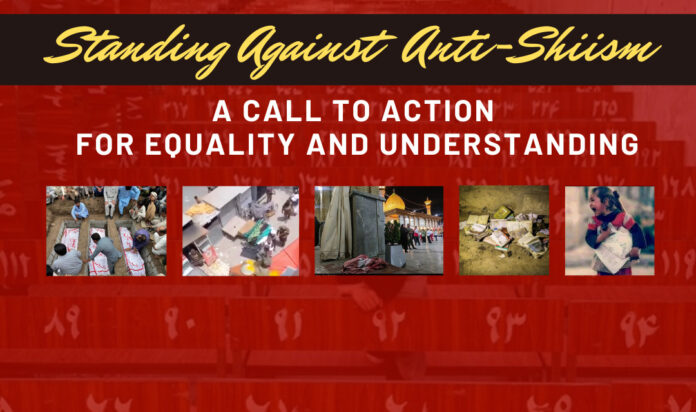
Anti-Shiism: A Call to Action for Equality and Understanding

Antishiism

In today’s diverse global society, the pursuit of understanding and acceptance across different cultures and religious practices is more important than ever. Unfortunately, one of the challenges we continue to face is anti-Shiism – the prejudice and discrimination against Shia Muslims. This issue not only undermines the principles of religious freedom and tolerance but also poses a significant barrier to peace and social cohesion.

Anti-Shiism, simply put, is the bias and hostility targeted at Shia Muslims due to their religious beliefs and practices. This form of discrimination manifests in various aspects of life, including in employment, education, and within social and religious communities. It can range from subtle biases and exclusion to overt acts of violence and aggression. The impact of anti-Shiism is profound, affecting the dignity, rights, and lives of millions of Shia Muslims worldwide.

One of the primary concerns with anti-Shiism is its ability to go unnoticed or unacknowledged in mainstream discussions about religious tolerance. This lack of recognition not only perpetuates ignorance but also allows such prejudices to thrive unchecked. The first step towards combating anti-Shiism is raising awareness about its existence and the forms it can take. By educating ourselves and others, we can begin to dismantle the stereotypes and misconceptions that fuel such discrimination.

In addition to awareness, active engagement and dialogue are crucial. Interfaith and intercultural dialogues create platforms for understanding and empathy. These dialogues help dispel myths and foster a sense of shared humanity. Participating in community events, educational forums, and workshops can significantly contribute to bridging divides and building inclusive communities.

Legal frameworks also play a pivotal role in addressing anti-Shiism. Advocating for robust anti-discrimination laws and policies at both national and international levels is essential. These laws must not only exist but also be actively enforced, ensuring that acts of discrimination and violence against Shia Muslims are duly recognized and addressed.

Furthermore, the role of media and social platforms in shaping perceptions cannot be overstated. Advocating for fair and balanced representation of Shia Muslims in media narratives is vital. This involves challenging biased reporting and encouraging media outlets to present stories that accurately and respectfully represent the Shia community.

Action Plan:

As an organization dedicated to defending the rights and dignity of Shia Muslims, we propose the following action plan:

1. Educational Campaigns: Launch awareness campaigns to educate the public about Shia beliefs and practices, debunking common stereotypes and misconceptions.

2. Community Dialogues: Organize interfaith and intercultural dialogue sessions to foster understanding and empathy between different communities.

3. Policy Advocacy: Work with lawmakers and human rights organizations to advocate for stronger anti-discrimination laws and policies.

4. Media Engagement: Engage with media outlets to promote fair and balanced representation of Shia Muslims, challenging stereotypes and biases.

5. Support Networks: Create support networks for Shia Muslims facing discrimination, providing legal aid, counseling, and community support.

6. Global Solidarity: Build alliances with other organizations and communities globally to create a united front against religious discrimination.

Combating anti-Shiism requires a multifaceted approach encompassing education, dialogue, legal advocacy, media engagement, and community support. It is a collective responsibility to ensure that our societies are inclusive and respectful of all religious beliefs, including those of Shia Muslims. Let us stand together against discrimination and work towards a world where religious diversity is not just tolerated but celebrated.

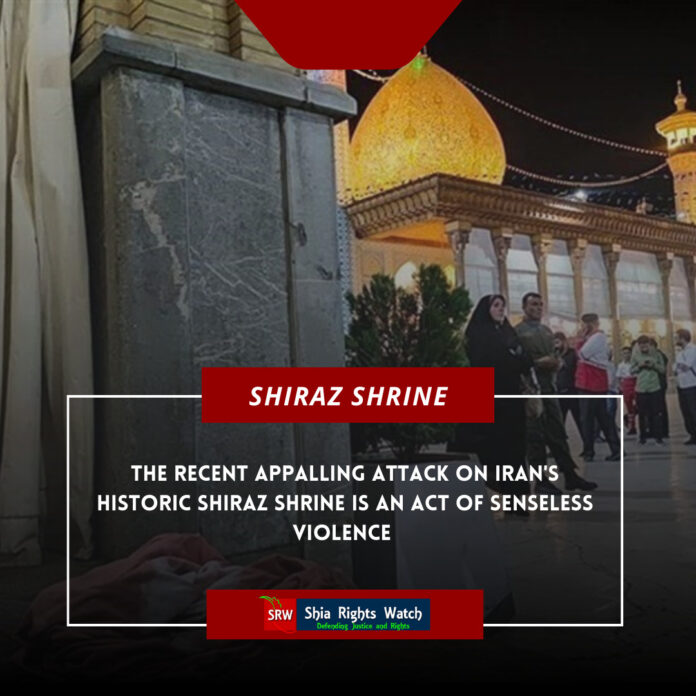
Attack on Shiraz Shrine

The reprehensible attack on Iran’s revered Shiraz shrine stands as a tragic testament to the depths of intolerance and hatred that threaten the fabric of our world. The sanctity of this site, brimming with historical and spiritual significance, should have been a beacon of shared humanity. Instead, it fell victim to an act of violence that not only defiles the principles of peaceful coexistence but also undermines the bonds that tie us together as a global community. This attack mirrors a broader pattern of anti-Shiism, wherein the followers of the Shia faith continue to face discrimination, marginalization, and targeted violence solely based on their beliefs. Such acts perpetuate a cycle of divisiveness that obstructs progress and undermines the very foundations of empathy and understanding that our society should uphold.

In unequivocal terms, the Shia Rights Watch organization condemns this brutal attack on the Shiraz shrine, as well as the broader trend of anti-Shiism that engulfs vulnerable communities. The targeting of a site of religious worship and cultural importance is a direct affront to the principles of religious freedom and human rights. This incident underscores the pressing need for education and awareness to combat the prejudice that fuels such acts. The organization calls for collective action to address these insidious forms of discrimination and violence, emphasizing that true progress can only be achieved when societies embrace diversity, foster respect, and uphold the right of every individual to practice their faith without fear of persecution or harm.

Hacked

Dear valued followers,

We sincerely apologize for the recent inconvenience and distress caused by the unfortunate hacking incident that has affected our Facebook page (facebook.com/shiarightswatch). We want to inform you that an anti-Shia group has gained unauthorized access to our page, resulting in the loss of control over its content and our ability to post.

We want to assure you that no personal information has been compromised during this breach. However, we understand the gravity of the situation, and we are taking immediate action to rectify it. Our team is working closely with Facebook to regain control of the page and restore its normal functioning as soon as possible.

The safety and security of our community are of utmost importance to us, and we are committed to providing a platform that fosters positive engagement and meaningful discussions. We appreciate your understanding and patience during this challenging time, and we promise to keep you updated on our progress.

Once again, we deeply apologize for any inconvenience caused and thank you for your continued support and trust.

Sincerely,

Shia Rights Watch

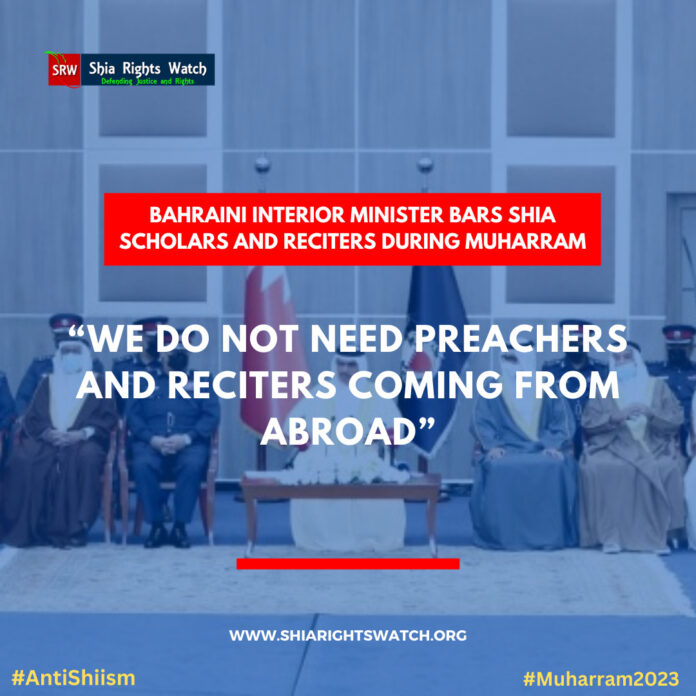
Bahraini Interior Minister Bars Shia Scholars and Reciters During Muharram

Bahrain’s Interior Minister is preventing Shia scholars and religious reciters from entering Bahrain during Muharram.
1. According to Sheikh Rashid, Bahrain is not considered a religious tourism destination, especially for gatherings during Ashura/Muharram, which attracts Shia Muslims from neighboring Gulf countries and abroad.
2. Sheikh Rashid emphasized that Bahrain has a sufficient number of its own preachers and reciters, expressing the view that there is no requirement for foreign preachers and reciters to come to the country.
Bahrain’s government has been violating the rights of the Majority Shia population, imprisoning activists, scholars, educators, and medical staff who follow Shia Islam. Until now more than 1300 shia muslim activists, scholars, medical staff, and educators are in Bahrain prison for demanding equal rights.

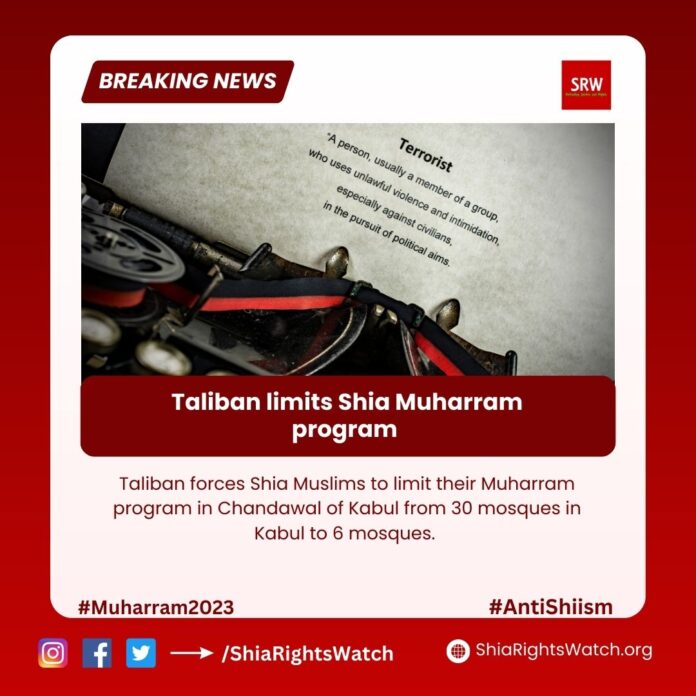
Taliban restrict the Muharram program for Shia Muslims

Taliban restrict the Muharram program for Shia Muslims

Shia Muslims in Afghanistan constitute a significant minority within the predominantly Sunni Muslim population. Shia communities in Afghanistan have historically faced various challenges and forms of discrimination. Under the rule of the Taliban, who adhere to a strict interpretation of Sunni Islam, Shia Muslims have often experienced significant suffering.

The Taliban’s extremist ideology and intolerance towards religious diversity have led to systematic persecution and marginalization of Shia communities. They have been subjected to targeted violence, including deadly attacks on religious gatherings, mosques, and prominent Shia figures. Additionally, Shia places of worship and religious sites have been destroyed, further exacerbating the suffering of the Shia population in Afghanistan.

It is important to note that the situation of Shia Muslims in Afghanistan is complex and has varied over time. While the Taliban’s promised Shia Muslims to be safe during the current regime, the prosecution of Shia was not limited only to activists, scholars, and students. Still, it prevented Shia Muslims from worshiping without Taliban involvement.

During this holy month of Muhramm, 2023 Taliban’s head of the religious committee visited many Shia mosques and Hussainia, especially in the town of Chandawal in Kabul, to order them to limit their programs from 30 mosques to 6.

Shia Muslims have been protecting their programs and often asked the Taliban government to provide them with either security or allow them to have Shia law enforcement protecting Shia worship centers. Still, the Taliban have refused to do so or limited the protection to one person to only control who is entering the program rather than preventing any violence against Shia Muslims.

Muharram 2023

Late July 2023 coincides with the Holy month of Muharram. Shia Muslims face heightened rates of human rights violations this month as their open and visible rituals make them targets for anti-Shiism.

In advance of Muharram 2023, threats of arrest and detainment of mourners have been announced by authorities in nations like Saudi Arabia, Bahrain, Pakistan, and Afghanistan.

Every year, Shia Rights Watch issues an advisory for members of the Shia Muslim community and law enforcement who actively seek to reduce anti-Shiism.

Moreover, the public is encouraged to report anti-Shiism to authorities and use #Muharram2023 and #Antishiism to share the experiences and perceptions they face as they practice their faith.

Muharram Advisory

To the Shia Community; 

Know your Rights

  • As constituents of your nation, you have civil liberties. Familiarize yourself and your community with your nation’s defined human rights and freedom of religion and take advantage of them.

Build a relationship with your community law enforcement   

  • Approach your community law enforcement and communicate your observations for the month of Muharram.
  • Seek consultation from your local police department on the placement of security measures such as camera systems and alarms.
  • Ask for increased security. In many communities, police can provide protection for your institution, given your coordination. Keep in mind that increased security measures must be requested in advance.
  • If needed, obtain the necessary congregation permits in advance.

Reach out to Government Representative

  • Meet with the governor and mayor of your town. Have a conversation about your concerns. Reach out and open a line of communication.

Be cognizant of your non-practicing community.

  • Recognize that you are part of a broader community that may or may not commemorate Muharram.
  • Respect local regulations.
  • Reach out and communicate an increase in activity to neighbors and surrounding institutions.
  • Prepare and provide brochures or pamphlets, educating others on the significance and relevance of Muharram.

In case of a human rights violation, Know Your Resources!

  • In case of an emergency, contact your local police immediately.
  • Contact Shia Rights Watch to inquire about rights-based counseling and broadcast.
  • We understand sharing your thought might be hard, share your thoughts and situation with social media for broader exposure of violations via #Muharram2023 and #Antishiism


To national and local authorities: 

Be aware of the increased risk of anti-Shiism and increase security measures

  • The congregation and religious expression are critical in Muharram rituals. Increased visibility and dense populations of Shia ease anti-Shia violence, and thus, Shia communities are at a higher risk of abuse.
  • Extremist organizations are willing to target Shia Muslims at the cost of civilian and non-civilian lives – Protecting Shia Muslim lives is protecting everyone.
  • Organize increased security according to Shia distribution in the area.

Include Shia community leaders in civil planning

  • Reach out to community leaders in the preparation of security measures and possible changes in traffic patterns
  • Leaders within Shia communities have first-hand knowledge of the rituals and concerns of their respective communities. Including them in civil planning can reduce the cost of additional measures.
  • The inclusion of local communities allows for cohesion and is linked with increased bi-directional cooperation in policy.

Provide training to non-Shia members of the security enforcement

  • Access implicit bias and train against discrimination in law enforcement
  • Educate law enforcement about Shia beliefs and rituals
  • Members of law enforcement are not exempt from discriminatory cultures in the larger society. Local and National authorities must address implicit bias within their security personnel to ensure the law is carried out unbiased.


Incidents of Anti-Shiism, March 2023

Shia Rights Watch (SRW) released its monthly report detailing the most prominent human rights violations committed against Shia Muslims worldwide for March 2023.

The report highlights several terrorist attacks by extremist groups against Shia Muslims and the oppression and persecution they experience from some governments and regimes based on their religious beliefs.

SRW stresses that the current report contains information based on its reliable sources and the network of local freedoms and human rights activists in the countries subject to these violations.

 SRW has refrained from including certain violations or incidents that might have occurred in its report due to the absence of concrete evidence.

 SRW stresses that its activities are not motivated by political objectives or financial gains but aim to achieve justice and equality.

The countries are listed in alphabetical order:

 Afghanistan

On March 14th, IS-K (Islamic State – Khurasan Province) detonated a ‘parcel bomb’ targeting a group of journalists who had gathered for a ceremony at a Shiite Tebyan Cultural Centre in Mazar-e-Sharif, capital of Balkh province, left at least three journalists dead and 30 wounded, including children.

On March 20th, A roadside bomb hit a passenger bus killing six people and wounding others, as it traveled through the western province of Ghor.

 Bahrain

On March 3rd, the authorities in Bahrain canceled a number of industrial high school students exam results considering them to have failed their year after finding them allegedly guilty of rallying on school campus

On March 5th, security forces arrested four citizens, including two women, citing human rights sources, for demanding the release of their sons detained on sectarian charges in regime prisons.

On March 6th, security forces arrested Ali Hussein Abbas from the Bilad Al-Qadeem area, allegedly due to his civil activity.

On March 6th, Three family members were arrested: the security authorities arrested Mrs. Fadilah Abdul Rasoul, her husband Mr. Al-Sayed Redha, and her brother Mr. Al-Sayed Jafar Al-Sayed Musa allegedly due to their civil activity.

On March 7th, the security forces allegedly arrested Mustafa Al-Sayed Mohammed, a young man from southern Sehla town, due to his civil activities.

On March 8th, security authorities allegedly arrested Sayed Haider, a young man from Buri town, due to his civil activities.

On March 8th, the security authorities arrested Mohammed Mirza, a young man from Karzakan town, allegedly due to his civil activities.

On March 8th, the administration of Bahrain’s Notorious Jau Prison, citing human rights sources, continues depriving the political prisoner Abdulhadi Al-Khawaja of his right to medical treatment despite his deteriorating health condition, ignoring international calls to treat him.

On March 10th, the security authorities arrested Hassan Khalid Khamees from Sanabis town upon returning to holy shrines in Iraq.

On March 11th, security authorities allegedly arrested three social media activists, Ibrahim Al-Manai, Qassim Al-Hajeri, and Ali Hasan, along with human rights activist Ibrahim Khalil, during the Union Conference in Manama due to their human rights activities on social media.

On March 12th, the security authorities arrested the juvenile boy Mahdi Mitham from the village of Al-Murkh as part of their arbitrary crackdown against Shia citizens.

On March 15th, the security authorities arrested the juvenile boy Ahmad Al-Sayed Raed Al-Mousawi from the village of Al-Deraz as part of their oppressive practices against Shia citizens.

On March 14th, the administration of Bahrain’s Notorious Jau Prison, citing human rights sources, continues depriving the political prisoner’s Sheikh Mohammad Habib Al-Muqdad and Sheikh Mirza Al-Mahrous of their right to medical treatment despite their deteriorating health conditions.

 Iraq

On March 1st, ISIS kidnaps and kills herders in Karbala: The terrorist organization ISIS executed two herders by burning them alive after kidnapping five herders in the city of Nukhayb in Karbala province. The fate of three of the abductees is still unknown.

On March 3rd, Deaths and injuries in a bombing in Diyala: A roadside bomb planted by terrorists in the village of Al-Haziniya in Diyala province resulted in the killing of five people and the injury of three others.

On March 7th, One person was killed and two injured in a bombing in Amerli: A roadside bomb planted by terrorists in Amerli resulted in the killing of one person and the severe injury of two others.

On March 8th, One person was killed and another injured in Tuz Khurmatu: An attack by ISIS on the town of Tuz Khurmatu resulted in the death of one person and the injury of another.

On March 10th, ISIS attacked near Muqdadiyah: The terrorist organization attacked light and medium machine guns in the village of Al-Binkani near Muqdadiyah.

On March 29th, One person was killed and three injured in Diyala: An attack by ISIS on a village on the outskirts of Al-Khalis in Diyala province resulted in the killing of one person and the injury of three others.

 Saudi Arabia

On March 1st, Arrest of a human rights activist during her Umrah: Human rights activists revealed that Saudi security authorities arrested the Egyptian Shia activist Rania Al-Asaal during her Umrah due to, allegedly, her continuous criticism of the Saudi-led war in Yemen.

On March 1st, a Lebanese citizen revealed the details of his arrest and torture in Saudi prisons: The Shia Lebanese engineer Ali Ahmad Mazid revealed that Saudi authorities detained him for a year and a half on sectarian grounds, concealing his fate unknown to his family and subjecting him to torture and arbitrary interrogation, before releasing him due to the lack of evidence of any crime or offense being committed by him.

On March 7th, Execution of Shia opinion prisoner Haider Al-Tuhayyifah by Saudi authorities: The security authorities executed the Shia opinion prisoner Haider Al-Tuhayyifah from Al-Qatif allegedly due to his human rights activities. Moreover, The authorities refused to hand over his body to his relatives and banned them from holding funeral services.

 Syria

On March 4th, extremist groups attacked in Syrian Deir ez-Zor, a convoy of buses taking Iraqi Shia pilgrims on their way to the sacred sites in the neighbouring country, resulting in serious injuries that required some of them to be sent to Al-Bukamal hospital.

UN Complaint