Welcome to Shia Rights Watch

spot_imgspot_imgspot_imgspot_img
Home Blog Page 29

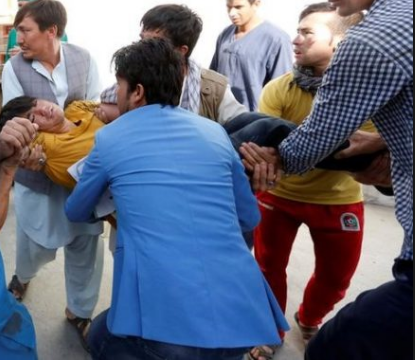
SRW Stands in Solidarity with Afghan Hazara Community


Shia Rights Watch strongly condemns recent attack to Afghan Shia community this Saturday as 80 people were killed and more than 260 were wounded.

Although life has never been easy for Shia minority, Afghan Shia have suffered more than many of their fellow Shia in neighboring country. Afghanistan has been under harsh and inhumane influence of Taliban, mother of number of other terror groups and as usual minorities such as Shia suffered the most.   Hazara, minority group that resides in Balochistan, Pakistan and Karachi are overwhelmingly Twelver Shia Muslims and make up the third largest ethnic group in Afghanistan. This population have lost many members due to targeted killings and bombings, yet their unfortunate news barely make it to the news outlets.  Advocacy for Afghan Shia has not been easy as well as this population have been under so much pressure that do not feel safe to stand up for their rights and echo their voice. As it is proven by history, every time this population stand up, protest and demand their rights to security, a bombing suppress them even more.

SRW staff and members stand with solidarity with those how lost loved ones due to Shia rights violation in Afghanistan and elsewhere.


Shia News Wire # 76

July 15th to 22nd, 2016

Iraq

Violence continues in Baghdad against the Shia population during this third week of July.  52 people have lost their lives to gunfire, IED’s, and car bombings.  ISIS claimed the car combing in Northeastern Baghdad which left 11 people dead and 32 wounded.  Meanwhile in Baiji, 2 children lost their lives to thirst as their families where trying to flee the ISIS controlled area.  Temperatures in the area have been soaring and above normal for quite some time.

Bahrain

Human rights activist Nazeeha Saeed was banned from work and travel on 20 July.  This is not the first time the Bahraini government has imposed travel bans on her.  Saeed was first arrested and then in 2011 for covering a pro-democracy movement that was spreading throughout the country.  Nazeeha Saeed is a human rights correspondent for Radio Monte Carlo and France 24.

تمّوز / يوليو

8/7 جماعة تكفيرية تغتال محاميا شيعيا في باكستان: قامت عناصر تكفيرية بعملية ارهابية عندما اغتالت محاميا شيعيا في مدينة “ديره اسماعيل خان” الباكستانية.

وقالت مصادر باكستانية مقربة من القتيل شاهد شيرازي انه كان يشرف على ملفات كبيرة في الدولة، وهو عضو نشط في حزب سياسي ديني للشيعة في باكستان.

ولم يتبنى أي جهة مسؤولية العمل الاجرامي، ولكن اتهم شيعة باكستان جماعة “جند الصحابة” الضالة التكفيرية، حيث تحمل بصامات الحادث الارهابي.

14/7 اغتيال ممثل الشيعة في حزب الشعب الباكستاني: قتل ممثل الشيعة في حزب الشعب الباكستاني في باراتشينار “حامد حسين توري”، بعد تعرضه لضربات، وإطلاق رصاص من قبل أشخاص مجهولين.

وصرح مسؤول محلي بإن القتيل حامد توري بعد أن اتصل هاتفياً بشخص مجهول من قرية شبلان ذهب إلى منزله في سوق باراتشينار، وتم اغتياله من قبل أشخاص مجهولين.

وأفادت بعض التقارير، إن مقتل ممثل حزب الشعب الباكستاني جاء بإصابة طلقة نار في رأسه، كما وأن هناك آثار للتعذيب ظاهرة على جسده.

19/7 السلطات الباكستانية تختطف رجلا دينيا شيعيا بسبب مواقفه السياسة: اختطفت السلطات الباكستانية الشيخ “عقيل حسن خان” اثناء قيامه بمهمة التبليغ بولاية بنجانب، بسبب مواقفه”.

وفقاً لمصادر خاصة فان السلطات الباكستانية قامت باختطاف رجل دين شيعي أثناء قيامه بمهمة التبليغ في شهر رمضان المبارك خلال سفره الى ولاية بنجاب الباكستانية.

Women for their Rights

A very wise lady once said, “As women, we must stand up for ourselves. As women, we must stand up for each other. As women, we must stand up for justice for all.”

Within each minority rests their strongest subgroup, and for the Shia, one can say women are the strongest subgroup. While being a minority within a minority, women have the power to elicit change through their encouragement and voice.

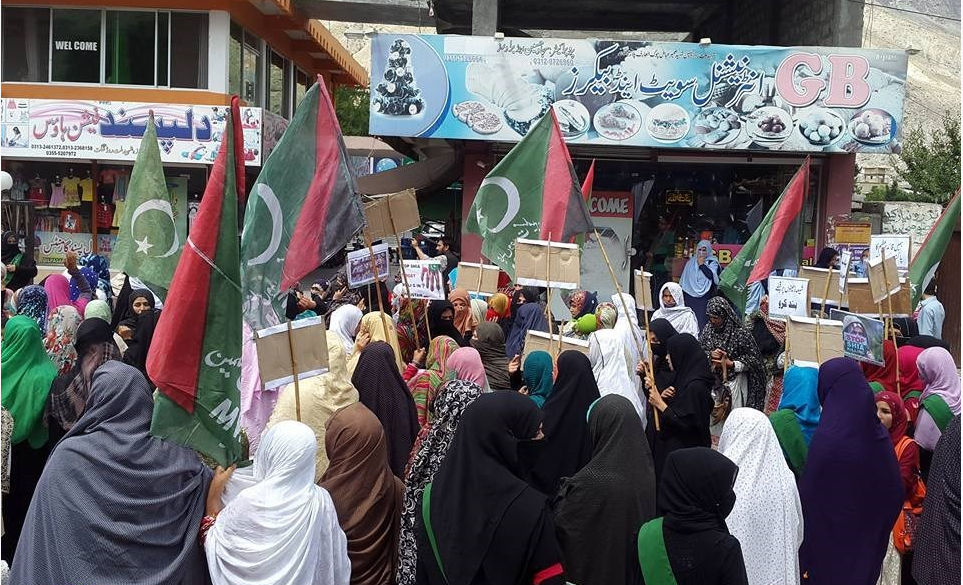
In Pakistan, the Muslim women have come together in protest of the ever-growing Shia casualties. They have stormed the streets in peaceful protest in cities of Islamabad, Nawabshar, Khairpur, Nasirabad, Matli, Sukkur, Sujuwal, Hyderabad, Karachi, and most recently Gilgit-Balistan, expressing their demands of safety.

Terror organizations such as LeJ and SeS have targeted Shia Muslims all over Pakistan, and with growing corruption and anti-Shia sentiment, many ant-Shia crimes go unpunished. Thus, Shia mothers and wives are left with uncertainty that their sons or husbands will never return home from a day’s work. To that, the women of Pakistan have taken it upon themselves to create change- they have become the change they want to see in the world.

The Muslim women of Pakistan serve as a symbol of advocacy and a beacon of hope for the global Shia community.

Shia News Wire #75

Week of July 8-15


Iraq

Retaliation for the ISIS loss of ground in Iraq continues through bombings in population dense areas. This week, an explosion in a vegetable market in Rashidiya, Baghdad left 25 dead and dozens of others injured. The ISIS bombing of civilian occupied areas of Iraq has left the nation’s citizens living in fear.

In the month of June, the UN Assistance Mission in Iraq announced a death toll of over 660 and wounding of 1457 civilians. As the death count in July has reached past 400, the trend of increased Shia targeting does not seem optimistic. The future of Shia Muslims is a matter of particular concern as they have historically been the target of extremist, anti-Shia sentiment.

Iraq’s death count for the past week totals 66 with tens of others being wounded. The number of injured civilians cannot be reported in full as there is no way to accurately account for all wounded patients admitted to local hospitals.


Saudi Arabia

Anti-shia sentiment fostered in Saudi Arabian government continues as yet another Shia cleric, Sheikh Mohammed Hassan al-Habib, has been detained. With him, three of his companions were also detained in the Safavi region of Qatif.

Despite centrally living in the most oil-rich portion of the Saudi Arabian Kingdom, Shia muslims have lived a life of poverty and discrimination by the government. For decades, the Saudi government has overlooked the concerns and worries of this minority group, and has further prosecuted them for their demand for freedom of religion, assembly and expression.

Notwithstanding international denouncement, Saudi officials continue their unjust demeanor towards minority groups within their border.


Pakistan

Sentiments of anti-shiism have left the lives of tens of Pakistani Shia in danger. Early this week, the home of Saghee Ahmed Saifi, a Shia cleric in Bani Gala, Islamabad, Pakistan was attacked by unknown gunmen in late hours of the night.

Late Saturday night, 3 armed assailants entered the Saifi home. They opened fire using a 30-bore pistol on Sobia Saifi (Saifi’s wife), and then on Saifi himself as he rushed to answer his wife’s screams. Sobia Saifi died on the spot; Saifi himself was left alive but injured. While investigations are in way, Saifi himself believe the assailant to be motivated by their aim of occupying the religious seminary of Masjid Gulestan-e-Ahle Bait in which Saifi instructs.

Anti-Shia sentiment has displayed an increased trend in the recent years as hate-crime has increased towards minority religious and ethnic groups. The government’s lack of follow-up and prosecution of assailants has allowed for the encouragement of these sentiments.


Bahrain

Anti-Shiism continues in Bahrain as yet another academic has been banned from travel outside the Kingdom. Mohammad al- Tajeri, a lawyer, is one of 19 professionals (doctor, lawyer, professor, etc.) is that have been issued travel bans.

Travel bans by Bahraini officials serve as means to limit the freedom of Shia professionals and  prohibit them from contacting foreign humanitarian aid.

Shia Rights Watch_Antishiism July 2016

[gview file=”http://shiarightswatch.org/wp-content/uploads/2017/07/Shia-Rights-Watch_Antishiism-July-2016.pdf”]

SRW Urges Rebuilt of Jannat al- Baqi

Shia Rights Watch
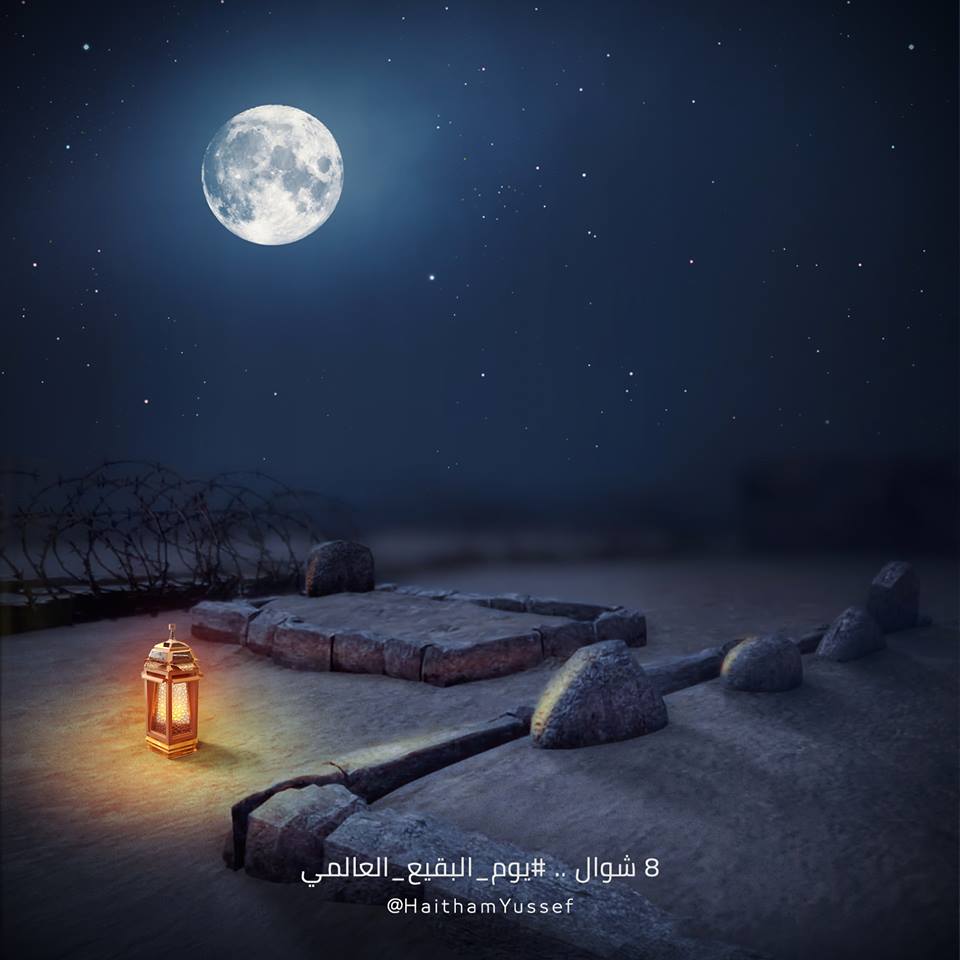
Picture by Haitham Yussef

This 13th of July marks the 8th of Shawwal, the 91st anniversary of the demolition of Jannat al- Baqi cemetery in Medina. Shia Rights Watch condemns and holds in commemoration this day as Jannat al-Baqi is home to the resting place of numerous Shia notables, including Prophet Mohammad’s children and loved ones.

Since its demolition by Saudi officials in 1925, Baqi has become a symbol for the dishonored heritage of Shia Muslims by global terror organizations and human rights violators. For centuries, Shia Muslims have lived under repression, especially in Saudi Arabia, and their demands of democracy and freedom has been met with violence and increased suppression.

Shia Rights Watch (SRW) urges the Saudi government to rebuild Jannat al-Baqi cemetery. Further, SRW encourages members of the Shia community and all historic and human rights based advocacy organization to increase their efforts in raising awareness in regards to minority heritage sites and promote grounds for peace-building dialogue.

Shia News Wire # 74

July 1st to 8th, 2016

Iraq

The first week of July has consisted of relentless violence. In addition to the daily improvised explosive devices in Shia populated areas of Baghdad, numerous suicide bombings have left over 350 people dead. The first major incident occurred on the 2nd of July as a vehicle packed with explosives was detonated at a local Shopping center in Karrada, Iraq after midnight, a time with the highest density of shoppers preparing for Eid al-Fitr. The explosion was the unset for dozens of fires in and around the shopping city, leaving dozens of bodies burned beyond recognition. This incident was reported to be the deadliest terror attack in Iraq since 2003. The most recent reports show the loss of 292 lives as a result of the Karrada bombing.

The second largest attack was the result of consequent bombings in Balad, Iraq in the shrine of Sayed Mohammad bin Imam Ali- Hadi. Initially, a suicide bomber detonated his vest in the crowded marketplace leading to the entrance of the shrine. Then a gunmen stormed the shrine and shot with little discrimination. A third terrorist was shot dead before being able to detonate his vest. The city of Balad is located 25 miles north of Baghdad. As a result of the attack, 35 were killed and 50 others were injured.

Attacks targeting Shia in Iraq have more blatant than ever. Both Karrada and Balad are pre-dominant Shia cities. Thus far, Shia deaths in Iraq have totaled 385.

Bahrain

Tension continues to boil as Unethical treatment of Bahraini citizens continue in the Kingdom by government officials. Shia Muslims continue to live under oppression as their rights are constantly undermined and their beliefs are brought under question by limitations in expression.

On July 5th, 16 Shia Bahraini were sentenced to a conjoined detainment period of 92 years in prison over their rights to assembly.

There remains no new development in the case of Shaikh Isa Qasem, a prominent scholar in the Bahraini Shia community. Further, local sources report that internet connections and cellular coverage have been disabled in the town of Diraz, Qassems home town. In addition, checkpoints have been put in place surrounding the town, checking entrance and exit of commuters. In protest of the lack of development in the case of Sheikh Isa Qassem, the council of Shia mosque Imams announced that while Eid prayers were going to be held, there would be no celebratory program for Eid in Shia mosques.

Saudi Arabia

Days following bombings in Medina, two explosions occurred in the city of Qatif outside a local mosque. Qatif is home to one of Saudi Arabia’s largest Shia density.

The first bomb was a car bomb and the second a suicide bomber. Sources report no casualties as a result of the bombs, which may have been because the attack occurred just before 7 pm, near iftar, as residents were indoors breaking their fasts.

While no terror group has claimed responsibility for the attack, one can infer that the attacks were the result of anti-Shia sentiment fueled by Wahhabism and aimed to incite fear in this religious minority.

Pakistan

A sign of continuing anti-Shia sentiment in the country (and region), Syed Shahid Shirazi was killed via shooting by members of Ahl-e-Sunnat-Wal-Jamaat  (ASWJ) on Multan Road in Dera Ismail Khan near University Wensam College. The lack of government action and continued targeting of Shia killing has incited protest by local Shia in Multan road.

Incidents of Anti-Shiism in June, 2016

Shia Rights Watch_ June 2016


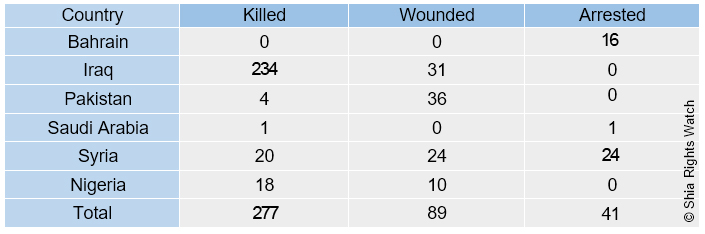
In the month of June, over 278 Shia lives were lost as a result of Shia targeted killings in countries such as Iraq, Saudi Arabia, Pakistan, Syria and Nigeria.  Revocation of citizenship and detainment on basis of pro-democracy efforts not only has been continued, but also increased in Gulf nations such as Saudi Arabia, Kuwait and Bahrain.

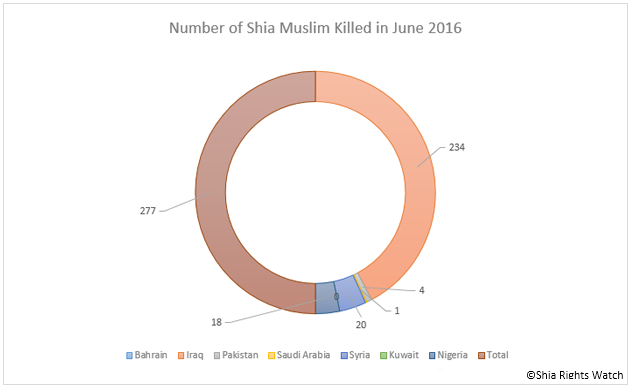
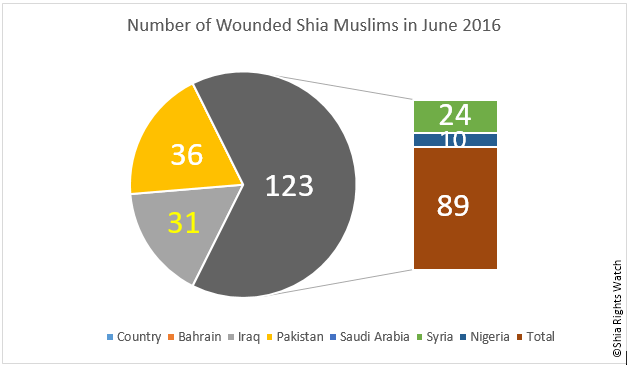
In the month of June, attacks in the nations of Bahrain, Iraq, Pakistan, Saudi Arabia, Syria and Nigeria have resulted in the death count of 277, wounded count of 102 and arrest count of 41.
Shia-Rights-Watch_June-2016


Bahrain

Arrests in Bahrain top the charts. In comparison the month of May, the number of arrests have doubled. Further, the number of citizenship revocations have increased extensively.

The month of June coincided with the Muslim Holy month of Ramadhan. However, there was no sign of peace in Bahrain. In fact, tensions rose as Bahraini officials aimed to control affairs of Shia communities.

Despite his pardoning, Nabeel Rajab was detained. Sources state Rajabs deteriorating health as a result of unethical conditions under which he is held in.

On the 19th of June, the al- Khalifa regime announced a statement to religious authorities in the country that khoms, a Shia religious taxation, must be announced to the government. Shia leaders and scholars have strongly denounced said statement by the government and condemned the official’s involvement with the group’s religious affairs. Khoms consists of 20% of Shia individuals savings and is donated to leading Shia scholars to be used for public use (ie. reduce poverty, increase education availability, etc).

A day later, Bahraini officials renounced the citizenship of Shaikh Isa Qasem, a prominent Shia leader and scholar. Following Qasems arrest, hundreds gathered in the streets of Diraz, Qasem’s home town, and protested this injustice.

The congregation of Shia mosque Imams ceased Friday prayers at their mosques, citing a lack of safety and security for members of their service.

In order to quell pro-democracy efforts, Bahraini officials have increased their pressure on the Shia Muslim community by arrested and revoking citizenship of senior members of this community.  Which has failed in its efforts, and has increased tension among masses.

Iraq

Over 84% of Shia casualties were results of targeted attacks occurring in Iraq- the majority in Baghdad, the capital of Iraq. As a result of regional turmoil, and Iraq’s lack of strong central government authority, there is little security.

The largest and most alarming attack occurred on June 7th, on which a car bomb detonated five kilometers away from the two holy shrines central to the city of Karbala, 80 kilometers southwest of Baghdad. Eight people were killed and 24 others were wounded. While not the largest in magnitude, this attack caused unparalleled fear as the two shrines are held central to the Shia faith.
Pakistan

As anti-Shia sentiment continues to thrive in Pakistan, four are killed and 36 others are left wounded. The largest of attacks occurred in Quetta by an explosive device left on a bicycle in the Almo Chowk marketplace. The explosion caused extensive damage to nearby stores and homes. This bomb was strategically placed in the marketplace as it targeted civilians who would be preparing for eid al-fitr festivities as the month of Ramadhan comes to an end.

It must be mentioned that one other bomb was found before its detonation in a separate event. In comparison to previous months, attacks targeting Shia population of Pakistan continues steadily with little signs of reduction.

Saudi Arabia

Structural violence in Saudi Arabia becomes direct as a Shia individual lost his life as a result of raids in the Eastern province. The Eastern Province is home to the largest Shia density in Saudi Arabia.

Abdul-Rahim al-Faraj was shot by Saudi forces raided his home in late June. The al-Faraj family have been prominent pro-democracy activists- Abdul-Rahim was the fifth of his extended family to be killed by forces since the initiation of the Arab Spring in 2011.

In addition, Shiakh Jafar Sweileh, a prominent cleric in Qatif was arrested and detained for his pro-freedom of speech and religion writings.

Systemic violence against Shia Muslims have become out right. For decades, Shia Muslims have been treated as second class citizens and have been denied their rights to fair education and job opportunities. Any form of dissent has been met with direct violence.

Syria

Since April 2016, Shia death in Syria have increased by at least 25%. The environment of entropy in this nation as a result of revolution the war against ISIS has led to the death of millions of civilians. This environment of chaos has allowed for less accountability for crimes against religious minority, and thus has led to an increase in targeted killing of populations such that of the Shia minority.

Since the beginning of the Syrian crisis, the town of Zainabiya, located outside of Damascus has been the target of attack as it is the central- most Shia dense area of Syria. Further, this location is the destination of many religious pilgrims as they visit the shrine of Sayida Zainab, Prophet Muhammad’s granddaughter.

June’s largest casualty incidents was on the 11th, when two suicide bombers and one car bomber detonated their explosives in a busy street in Zainabiya. This incident lead to the death of 20 and the wounding of over 24 others.
Shia Rights Watch_ June 2016

Nigeria

Nigeria is home to one of the largest and fastest growing Shia populations in the African region of the world. Along with expansion, however, has been an increase in targeting of this religious minority. Anti-Shia sentiment fueled by the Wahhabist ideology has spread throughout the nation and its officials.

In 2015, Shaikh Zakzaky was ruthlessly detained and hundreds of his followers were killed and disposed of in a shallow unmarked grave. Since then, the targeting of Shia pockets in Nigeria has continued and in some cases has escalated. While extremist groups do exist, many of the acts against Shia have been carried out by government forces.

Conclusion

Over six months into the year 2016, Shia targeting does not seem to slow down. All over the world, Shia Muslims are sought out, and targeted on the basis of their religious belief systems. Shia Rights Watch (SRW) condemns any and all attacks against Shia Muslims as well as any acts against humanity.

Shia Rights Watch asks all governments to promote religious education and tolerance. This NGO also urges them to take necessary steps in order to prevent future Shia rights violations.


Iraq’s Deadliest Attack Since 2003, Over 292 Killed

Shia Rights Watch_Karrada2016
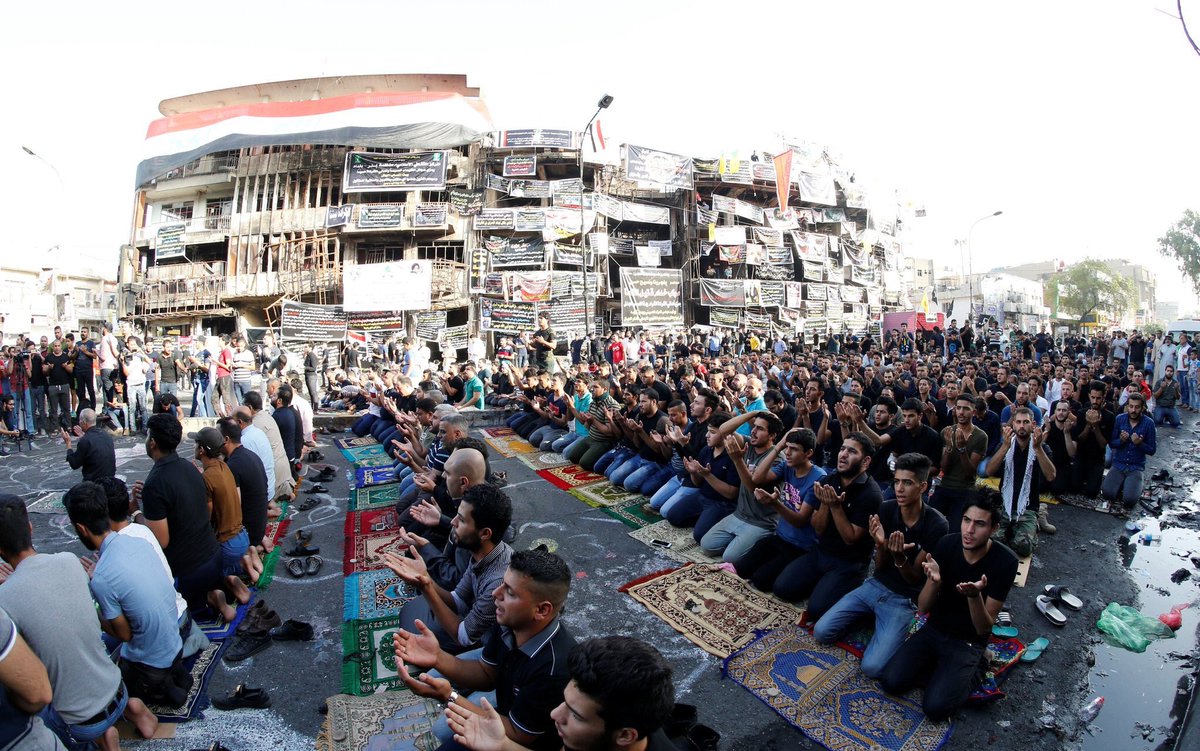
Shia Rights Watch condemns in the strongest terms the July 3rd ISIS bomb attacks which have resulted in over 200 deaths of innocent civilians in Karrada, Iraq. With a death count of over 215, the events of July 3rd were the deadliest attack since 2003. A truck bomb detonation set of fires which took down one of Baghdad’s most prominent shopping centers.
  SRW conveys its deepest sorrows for the family members of victims of this inhumane violence and stands with Christians, Shias, and non-Shia alike who have been affected by this tragedy. SRW mourns the death of the lives lost in preparation of Eid festivities in Karrada, Iraq and further urges the Iraq government to revisit it’s security plans.
Iraq has the highest Shia causality rate in the entire world as the government fails to protect this population.
Iraqi government must immediately check the effectiveness of bomb detector devices, put in place prevention strategies and increase staff training in order to stop high human causality in this country as  right to life is the most basic right of any human being.
 Update:
According to Iraqi officials Sunday’s death toll rose to 292 and so far 20 people are missing. death tole is expected to increase due to severity of the attack. private investigators report the attack took place near Leith shopping mall as families visited to shop for Eid, as the result most of the victims are women and children. It is also reported that the bombs contained chemical components that caused immediate death. Further more, what adds to the mystery of the attack is that the entrance door of the mall found lucked and according to witnesses none of the fire extinguisher worked at the time of the attack. Most bodies found burned to the point is it impossible for the  officials to identify them and inform their families.
Update:
Five days after July 3rd attack, three suicide bombers attacked a Shia shrine in Balad north of Baghdad, killed 26 and wounded 52 others. anger and disappointment raises as Iraqi forces fail to protect people, especially in Shia populated area.
UN Complaint