Welcome to Shia Rights Watch

spot_imgspot_imgspot_imgspot_img
Home Blog Page 91

Bahrain Police run over 17 years old Shia citizen, Ali al-Kassab

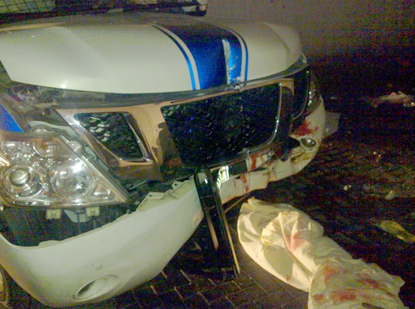
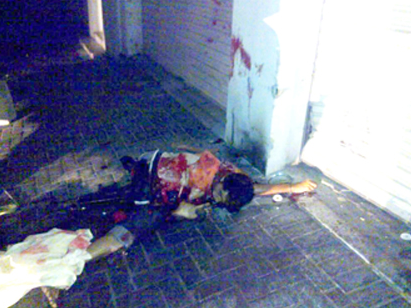
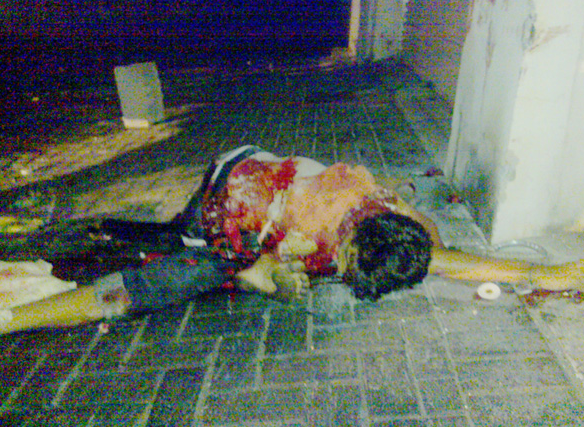
shiarightswatch.org_Ali_Yousif3._11.19.2011Ali al-Kassab, a 17 years old Shia, was killed on Thursday after he was run over by a police car in Abu Saiba town near the capital, Manama.

At least 12 other Shia were injured in the Saudi-backed regime crackdown on peaceful demonstrations in several towns and villages.

Security forces also detained nine other Shia, including a prominent human rights activist.

This is the second Shia who has been run over by car since last month. Bahrain government are trying to change the way that they kill the shia and blame local incidents.

Shia infant died with Tear Gas

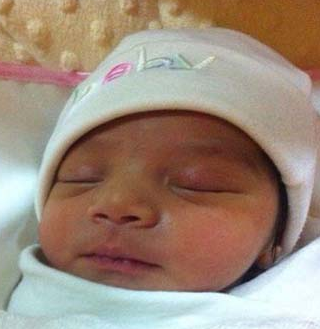
shiarightswatch.org-infantA Bahraini infant has died in a poison gas attack carried out by regime forces in a residential area. Bahraini activists said the six-days-old baby died of asphyxia from inhaling tear gas fired on protesters in a residential area near the capital Manama on Thursday.

Saudi-backed Bahraini forces continue attacks on anti-regime demonstrators in towns and villages across the country.

Bahrain poloce take another Shia citizen life

shiarightswatch.org_Ali_Yousif3._11.19.2011The 27-year-old woman, identified as Zahra Saleh, was injured in the forehead by an iron rod hurled by Saudi-backed Bahraini troops during an anti-regime protest in the village of Daih on November 18.

The young protester, who had been hospitalized with serious injuries, died early on Wednesday. Some reports suggest that she was not participating in the protest and that she was a passerby when regime troops attacked protesters.

Bahraini officials have denied reports blaming security forces for her death, saying that the iron rod was hurled by a vandal. Rights activists, however, say they have a video showing security forces carrying rods during the crackdown in Daih.

Another Shia child dies on universal children’s day

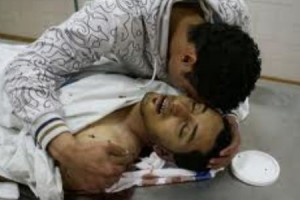
shiarightswatch.org_Ali_Yousif1._11.19.2011A day before the Universal children’s day, 19 November 2011, Ali Yousif Baddah, of 16 years, was purposely run over by Bahrain security force while suppressing a peaceful protest in Juffair[5] . MOI confirmed the cause of death[6] . Photos of Ali after being hit are very graphics due to severity of injuries. Ali’s funeral procession and mourners were attacked by rubber bullets and teargas, more injuries were caused.

To date, no one has been held accountable for the death of Ali or other children, although an investigation has been conducted but no action taken against the responsible parties in the government.

shiarightswatch.org_Ali_Yousif2._11.19.2011 shiarightswatch.org_Ali_Yousif3._11.19.2011

Elderly Shia ‘beaten to death’ by Bahraini police

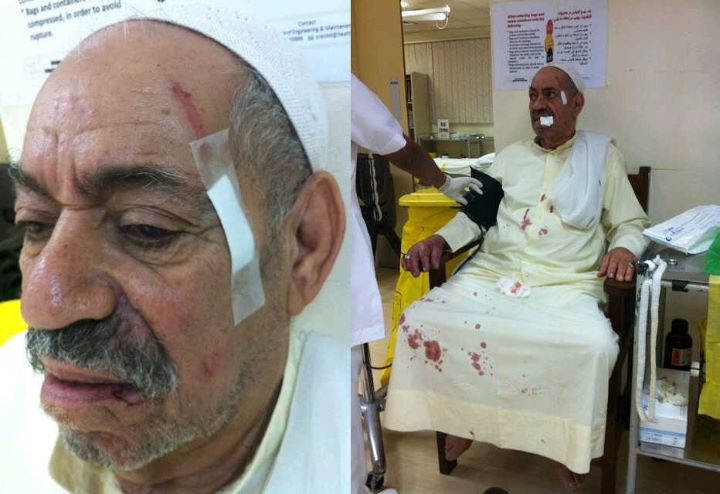
BA-04The Shia group Al-Wefaq declares the death of one of its prominent leaders after a police force attack, one of many aggressions committed by the Sunni regime against the opposition Shiite. The elderly father of the second in command of Bahrain‘s largest Shiite opposition group Al-Wefaq died of his injuries on Thursday after riot police attacked him a day earlier, the organisation said. “Ali Hasan al-Dehi, 70, was attacked by riot police forces Wednesday evening,” and died early Thursday, Al-Wefaq’s website reported.

His son, Hussein al-Dehi, is deputy head of Al-Wefaq. The statement said the elder Dehi had told one of his sons, who had arrived home to find him on the floor, that “he had been beaten by riot police.” Al-Wefaq member and former MP Sayed Hadi Moussaoui told AFP police were dispersing a protest in the western village of Dehi, when the man was attacked. Moussaoui said members of Dehi household were harassed several times by the authorities, adding that the dead man’s wife had been “insulted” in the past without giving further details.

Earlier this year, Bahrain’s Sunni monarchy crushed pro-democracy protests, spearheaded by the majority Shiites, with the help of troops from other Gulf states, such as Saudi Arabia. Twenty-four people died during the crackdown between mid-February and mid-March, according to official figures from Manama. Four protesters have since died in custody. The Gulf kingdom is awaiting a report by an independent commission of inquiry into the crackdown, which is expected on November 23. Though mass protests have ended, tensions remain high as the trials of dozens of opposition figures and protesters continue in the capital.

Source: bahrainrights.org

Bahraini woman doctor tells of jail abuse

A Bahraini female doctor has detailed the humiliations and beatings she suffered after being arrested on suspicion of supporting anti-government protests. Roula al-Saffar says her interrogators tried to force her and other medical staff to confess to plotting to overthrow the Manama regime.
Saffar said that she was tortured by electric shocks and beaten by cables. She also said that she heard the screams of inmates who were being tortured by interrogators in other cells.

Her remarks came days after another female Bahraini doctor, Nada Dhaif, recounted mistreatment at the hands of government’s forces. Dhaif was sentenced to 15 years behind bars for treating injured anti-regime protesters at Salmaniya hospital.
”It was 03:00 a.m., when they broke into my house. I was taken away blindfolded and handcuffed. I didn’t know that they were security forces,” she said adding that ”They were in civilians clothes. So, I thought I was actually being kidnapped”.
Dhaif said, ”I was thinking that I was being taken to an unknown place. Later on, I came to know that they were from the Central Investigation Department (CID)”.
”Immediately after I was taken away…I was treated with beating and cursing”. She said the torturers had even touched her face, using ‘electrocuters.’
”I was crying and I lost consciousness two or three times during this time in the military clinic.”
Many of those released from jails in Bahrain have accused the Manama regime of serious abuse. Some also claim that a member of Bahrain’s royal family named Sheikha Noora bint Ibrahim Al Khalifa beat prisoners with sticks and rubber hoses and gave them electric shocks.
Several Bahraini prisoners have died under torture.

Bahrain: 21 Shia freedom seekers in sentence

Once again, Shia are discriminated against due to their freedom seeking spirits and faith. The Arab Spring has concluded to an unfortunate court hearing which resulted in heart breaking news for family, friends, neighbors, and millions of Shia around the world. This event has been covered by hundreds of media and humanitarian organizations globally.

On September 27th 2011, a Bahraini court sentenced eight Shia activists to life in prison and issued long jail terms for 13 others. They were charged with trying to overthrow Bahrain’s monarchy and of having links to “a terrorist organization abroad.” Fourteen of the 21 convicted are in custody while the rest were sentenced in absentia.

Among those convicted include prominent Shiite political figures Hassan Mushaima and Abdul Jalil al-Singace, human rights activists Abdulhadi Al Khawajah and Saleh Al Khawajah–relatives of popular blogger Zainab Al Khawajah, and pro-reform activist Ibrahim Sharif, the only Sunni among the suspects. Two of the convicted hold European passports. The sentences can be appealed within 15 days. A full list of the convicted and their sentences is provided below:

1. Abdul Wahab Hussain Ahmad (Life Imprisonment)

2. Hassan Ali Hassan Mushaima (Life Imprisonment)

3. Mohammed Habib Al Safaf (Al Muqdad) (Life Imprisonment)

4. Ibrahim Shareef Abdulrahim Musa (5 years sentence)

5. Abduljalil Radhi Mansoor Maki (Al Muqdad) (Life Imprisonment)

6. Abduljalil Abdulla Al Sankees (Life Imprisonment)

7. Saeed Mirza Ahmad (Al Noory) (Life Imprisonment)

8. Abdulhadi Abdulla Mahdy Hassan (Al Mukhodher) (15 years sentence)

9. Abdulla Isa Al Mahroos (15 years sentence)

10. Abdulhadi Abdulla Habil Al Khawajah (Life Imprisonment)

11. Saleh Abdulla Habil Al Khawajah (5 years sentence)

12. Mohammed Hassan Mohammed Jawad (15 years sentence)

13. Mohammed Ali Radhi Esmaeel (15 years sentence).

14. Al Hur Yousif Mohammed Al Sumayekh (2 years detention)

The Court also issued the following verdicts in absentia:

1. Saeed Abdulnabi Shehab (Life Imprisonment)

2. Sayed Aqeel Ahmad Ali (Al Sary) (15 years sentence)

3. Abdulraoof Abdulla Ahmad Al Shayeb (15 years sentence)

4. Abbas Abdulaziz Nasser Al Umran (15 years sentence)

5. Ali Hassan Ali Mushaima (15 years sentence)

6. Abdulghani Isa Ali Khanjar (15 years sentence)

7. Ali Hassan Abdulla Abdulemam (15 years sentence)

According to Ireland-based human rights organization Front Line condemned the verdicts. Mary Lawlor, executive director of the organization said, “the fact that the trial took place before a military court whose procedures fall far short of internationally recognised fair trial standards underlines the determination of the Government of Bahrain to secure a conviction at any cost.”

Pakistani police torturing prisoners in Bahrain Jails

Ba-03The Bahraini Center for Human Rights has expressed grave concerns about the increased use of torture against the political detainees in the country.

There is no doubt about the government’s official supervision over the torture. Even some members of the ruling family personally take part in torturing detainees. Now it is also revealed that most of Paksitani police force are torturing jailed prisoners, despite being unawareee of the Arabic language. They continue torturing innocent shia prisoners in torture cells.

Some detainees have been killed under torture. Beating and electronic shocks are the most common methods of torturing in Bahrain’s prisoners.

One of jailed prisoners, Munir Al-Sheikh said that he was subjected to torture by Khalid a Pakistani policeman because of his Surname Al-Sheikh.

Pakistan had dispatched mercenaries to Bahrain to help Al Khalifa regime’s crackdown on anti-government protesters in the Persian Gulf state.  According to agreement 2500 Pakistani were deployed in Bahrain. This agreement was signed during the one day visit of President  of Pakistan Asif Ali Zardari on 17 August 2011.

Iran has already warned Pakistan that diplomatic relations between the two neighbors would be effected if Islamabad fails to stop recruiting Pakistani military forces in aid of Bahraini army crackdowns.

Bahrain’s Sunni-dominated government has arrested hundreds of Shia activists since mid-August, ahead of last month’s parliamentary elections, accusing them of having links to terrorists and conspiring to overthrow the Bahraini government.

According to human rights groups, the Shia detainees have been mistreated and tortured during interrogations. They also were forced to make false confessions.

Bahrain’s ruling Sunnis reportedly abuse detained Shiite women and girls

BA-01MANAMA, Bahrain — Empowered by a six-week-old state of emergency, the Sunni minority government of Bahrain has arrested scores of Shiite women teachers and schoolgirls, held them for days in prison and subjected them to physical and verbal abuse, according to victims, human rights advocates and a former member of parliament.

In the fast-expanding catalogue of widespread and systematic mistreatment of Shiites here, some observers say the red line will be the sexual abuse of women detainees, a step that if taken could provoke violence between the two Muslim sects. The security forces appear to be at the brink of crossing it.

At least 150 women have been arrested, and at least 17 remain in custody, according to al Wefaq, the moderate Shiite political organization. Nabeel Rajab, president of the independent Bahrain Center for Human Rights, thinks the number is a lot higher, but he said late last week that there were no reports of sexual molestation “as of this moment.”

Yasmeen, age 16 — McClatchy is withholding her real name to protect her from retribution — was ordered from her school on April 26 and held three days along with four other teenage girls. She told McClatchy that on the drive to police headquarters, police threatened to rape them and insulted them as not being true Muslims.

At the stationhouse, “they beat me on the head with a black rubber hose,” she told McClatchy in an interview. “They threw me against the wall. The policeman ordered me to remove my headscarf. He took my head and pulled my hair, pushed me against the wall, injuring my head,” she said.

They asked her if she’d been at the anti-government rallies at Bahrain’s Pearl Roundabout. She had been, but said she didn’t take an active part in the demonstrations. That was about the only serious question.

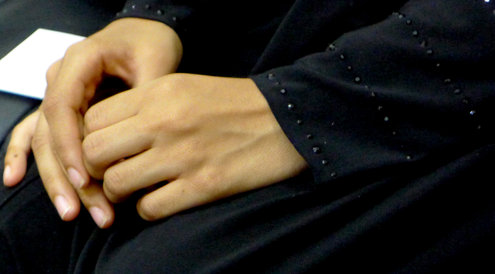
Yasmeen, who is slight of frame and wears a black abayah (a long robe-like dress) and headscarf, was interviewed at the offices of al Wefaq. The Shiite political organization had 18 of its members elected to the 40-member parliament. They quit, however, to protest the current crackdown.

One crude threat to Yasmeen referred to Hassan Mushaima, a militant opponent of the monarchy, whom the government, to the surprise of many observers, allowed back in the country at the height of protests last February. “We are going to do to you what Hassan Mushaima did to you in a tent,” the police interrogator said, Yasmeen remembered. He also accused her of being a “muta,” or “temporary wife” and of walking on a picture of King Hamad bin Isa Al Khalifa, the Sunni king of this small Gulf island state.

They “played with our psychology,” Yasmeen said. She said that they threatened to turn the girls over to the Saudi military, which now has 1,500 troops on the island. “They will manage your case,” she recalled her captors saying. “We were under stress. I fainted,” she recounted. “I could not imagine I would be taken there.”

According to Mattar al Mattar, one of the Shiite members of parliament, there were at least seven or eight cases in which police rounded up schoolchildren. The authorities arrested Mattar on May 1 and are holding him on unknown charges.

A schoolteacher from a village near Manama told McClatchy that nine teachers in her school had been hauled out of their classrooms in mid-April and held for at least nine days. Security authorities charged that they’d shouted “Down with Hamad.” They, too, were beaten with black rubber hoses. “They had to stand for more than 10 hours, facing the wall,” she said. McClatchy is withholding the identity of the schoolteacher to protect her from retaliation.

The U.S. Embassy declined to comment specifically on the treatment of women. But the State Department provided a statement to McClatchy expressing concern: “We remain extremely troubled by reports of ongoing human rights abuses and violations of medical neutrality in Bahrain, and think that these actions only exacerbate frictions in Bahraini society. As we have said many times, we do not believe that security measures will resolve the challenges faced by Bahrain. We also continue to urge the Bahraini government to take steps to facilitate the return to serious engagement with all sectors of society on a political dialogue.”

For Yasmeen, those are just words. Despite what she’s been through, or perhaps because of it, she’s angry. “After I was released, I was proud. If there is a chance for another demonstration, I would go. All of us came out stronger,” she said.

By Roy Gutman | McClatchy Newspapers

Ruling Sunnis in Bahrain detain Shiite teachers and students

Ba-flgMANAMA, Bahrain — Empowered by a six-week-old state of emergency, the Sunni minority government of Bahrain has arrested scores of Shiite women teachers and schoolgirls, held them for days in prison and subjected them to physical and verbal abuse, according to victims, human rights advocates and a former member of parliament.

In the fast-expanding systematic mistreatment of Shiites here, some observers say the red line will be the sexual abuse of women detainees, a step that if taken could provoke violence between the Muslim sects. The security forces appear to be at the brink of crossing it.

At least 150 women have been arrested, and at least 17 remain in custody, according to al-Wefaq, the moderate Shiite political organization that had 18 of its members elected to the 40-member parliament. They quit, however, to protest the current crackdown.

Meanwhile, Bahrain’s king set a fast-track timetable to end martial law-style rule in a bid to display confidence that authorities have smothered a pro-reform uprising, even as rights groups denounce the measures. The announcement to lift emergency rule two weeks early on June 1 came hours after the start of a closed-door trial accusing activists of plotting to overthrow the gulf state’s rulers.

UN Complaint