Welcome to Shia Rights Watch

spot_imgspot_imgspot_imgspot_img
Home Blog Page 94

Six Shia Muslim killed in Pakistan

Once again, Anti Shia terrorist take the life of six Shia in Pakistan.

The atrocity was merely responded by silence from authorities.

Shia rights watch condemn the attack and contacted the Pakistan ambassador Rehman, seeking an answer regarding the government silence toward Shia killing.

SRW also urged the ambassador to accept SRW recommendations in solving the issue.

The recent incident in Pakistan was a roadside bomb ripped through a passenger bus carrying Shia Muslim pilgrims in southwestern Pakistan on Tuesday, killing six people and wounding about a dozen.

Earlier security sources said that four people were killed by the attack, but Deputy commissioner Mastung confirmed the killings of only two people. As of now, informed sources  declare the death of six people.

The blast took place in the Mastung district, about 25 kilometres south of Quetta, the capital of insurgency-hit Balochistan province.

“The bus caught fire after the blast,” he said adding that initial reports said “at least two people were killed and about a dozen wounded”.

The injured, some of them in serious condition, have been taken to a hospital in Quetta.

According to Quetta authorities, the names of Shia who killed in blast include:

1.Saddiqa Bibi 42 years

2.Sakina 18 years

, 3.Hussain Ali 50 years

4.Jan Ali 28 years

5.Rajab Ali 13 years

6.Neroz Ali 28 years.

Bahrain in the Month of September

Bahraini Shia are still facing oppression and discrimination from their government. September has been a month full of violations.

Ongoing violations in Bahrain resulted in 88 arrests in the first two weeks of September according to reliable sources. Local activists reported 87 men and one woman were arrested by authorities during this period. The forces also arrested 16 minors, injured 10 and raided 87 homes of Shia Muslims. The sources also reported 121 collective punishments and attack to a Shia cemetery.

Although ongoing violations in Bahrain are not covered by media outlets, they are escalating. Shia Muslims of Bahrain have been under violent pressure by the Bahraini government because they demand democracy and freedom. SRW has published two detailed reports to highlight the violations. The reports include a separate section dedicated to violations to children’s rights.

Attack to Shia Muslim Mosque

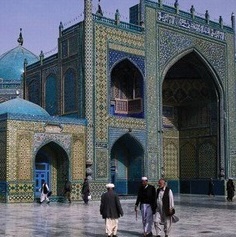
afghanAn attack to Shia Muslim mosque in Kabul, Afghanistan increases concerns of Shia Rights Watch. SRW is concerned about the security and safety of Shia Muslims of Afghanistan after two gunmen holding Pakistani passports attacked the people in the mosque using gun and knife. The attackers were arrested by local people.

As Shia rights violations continue in Middle East more and more Shia, in different countries, are facing violence and attacks to their communities. SRW urges Afghani government to secure Shia populated areas and prevent all violence that threatens its citizens. Prevention strategies are critical to assure security and stability of the country.

59 Shia Died in Terrorism Explosion

(Reuters) – A suicide attack killed dozens of Shi’ite Muslims at a crowded Kabul shrine on Tuesday, and four others died in a smaller blast in a key northern city, in the worst sectarian violence Afghanistan has seen since the fall of the Taliban.

The Kabul bomb was the deadliest in the capital since 2008, and punctured any lingering sense of optimism from a conference on Monday where Western allies made firm but not specific promises to support Afghanistan after troops leave in 2014.

Bodies and blood were scattered down a street in the heart of old Kabul where a crowd of hundreds had gathered to mark the festival of Ashura, with chanting, and self-flagellation. At least 55 were killed and 160 wounded, some critically.

Afghans, who have previously been spared the large-scale sectarian attacks that regularly trouble Iraq and neighboring Pakistan, now face the grim prospect of a new type of bloodshed being added to the dangers of daily life.

“This is the first time on such an important religious day in Afghanistan that terrorism of that horrible nature is taking place,” Afghan President Hamid Karzai told journalists in Germany, where the conference on Afghanistan’s future was held.

Outside a Kabul hospital, mourners cried near a pile of bloody clothes and shoes. A woman in a dark headscarf clutching a bloodstained sports shoe said her son, in his early 20s, had died. “They killed my son … this is his shoe,” she wailed.

No one immediately claimed responsibility for the attacks in Kabul and northern Mazar-i-Sharif. The Taliban strongly condemned the bombings and blamed “invader enemies.”

Afghanistan has a history of tension and violence between Sunnis and the Shi’ite minority. But since the fall of the Taliban the country had avoided the large scale sectarian attacks that have troubled neighboring Pakistan.

“Afghanistan has been at war for 30 years and terrible things have happened, but one of the things that Afghans have been spared generally has been what appears to be this kind of very targeted sectarian attack,” said Kate Clark, from the Afghanistan Analysts Network.

“We don’t know who planted the bomb yet and it is dangerous to jump to conclusions but if it was Taliban, it marks something really serious, and dangerous, and very troubling.”

ACROSS THE COUNTRY

Shortly after the Kabul blast, a bicycle bomb exploded near the main mosque in northern Mazar-i-Sharif city, killing four, injuring 17 others, and sparking a fight at a university mosque where Shi’ites and Sunnis were both praying.

“Enemies wanted to target the Muslim precession attending prayer, but because of tight security they failed,” the city’s senior police detective Abdul Raoof Taj, told Reuters.

Four people were injured in the mosque scuffle, which broke out when worshippers began arguing about the blast.

Police later defused a mine, found near the site of the explosion and likely intended to target rescuers and security forces attending to victims of the bomb.

A motorbike bomb also appeared to be aimed at Shi’ite worshippers in southern Kandahar city, the Taliban’s spiritual home and centre of a strong push by NATO-led troops to push the insurgents out of their stronghold.

It exploded prematurely, injuring two policemen and three civilians, but causing no deaths.

“We cannot say for certain who the bomber’s target was, but it was probably the Ashura (ceremonies),” said Kandahar police chief Abdul Raziq.

“We have 100 per cent security. The enemies cannot enter the prayer sites. With such actions they want to show they exist.”

The Shi’ite Muslim festival of Ashura marks the martyrdom of the Prophet Mohammad’s grandson Hussein in the battle of Karbala in Iraq in the year 680.

Ashura is the biggest event in the Shi’ite Muslim calendar, when large processions are vulnerable to militant attacks, including suicide bombings. Pakistan has deployed tens of thousands of paramilitary soldiers and police during Ashura.

Blood has spilled between Pakistan’s majority Sunni and minority Shi’ite militants for decades.

Sectarian strife has intensified since Sunni militants deepened ties with al Qaeda and Pakistani Taliban insurgents after Pakistan joined the U.S.-led campaign against militancy after the September 11 attacks.


20 Shia muslim killed and 80 injured in Parachinal attack

Shahid Hussain, Salman Ali, Muntazir, Shariff, Sardar Hussain , Irshad , Hidayat Hussain, and his son Muhammad, Manzar Hussain, and Said Gul.

This are the names that could be identified among the 20 Shia Muslims who were killed and 80 wounded in the same attack targeting Shia. The attack took place on September 10, 2012 at 2:40pm.

According to authorities, a suicide bomber drove his explosive-laden vehicle into Kashimir Square and detonated it in the middle of the market were many are from the Shia community.

The violence in Pakistan is getting worse and government still continues to be silent toward Shia Muslims who are targeted on a daily bases.

Shia Rights Watch has sent the letter to the Pakistani ambassador, urging the government to take action in saving the minority Shia Muslim and bringing the people involved to justice.

Embassy of The Islamic Republic of Pakistan

Embassy of The Islamic Republic of Pakistan

Letter Number: 352

The Honorable Sherry Rehman

Dear ambassador Rehman,

On behalf of Shia Rights Watch, I am writing to highlight the on-going human rights violations toward Shia in Pakistan and to ask for immediate action to end the violations in this country.

Sectarian violence has killed hundreds of Pakistanis in recent years. Pakistani Shia are facing public massacre in Pakistan and very little action is taken by the Pakistani government to stop the violence. Those behind targeted Shia killings are rarely caught or punished, and brought to justice.

As you are aware, the number of Shia killings is increasing every day in Pakistan.

On May 2012, Nasir Ali alias Kallu, Ahsan Abbas Naqvi, Syed Zia Mehdi and poet Dr Shabihul Hassan Rizvi were killed in Anti-Shia terrorist attacks in Lahore and Karimabad.

On July 2012 Syed Qamar Raza, a 55 yaers old Shia, the director of Pakistan’s IB Security Agency and the Secretary to Haidery Scouts, was ambushed and killed in Sharifabad.

On August 2012, 25 Shia were killed near Gilgit.

On September 10, 2012, 12 Shia killed in a car bomb explosion in the town of Parachinar in the Kurram region, and 45 people were wounded.

One September 11, 2012, 20 Shia Muslims were killed and 80 were wounded is a car bomb explosion near Parachinar.

These are only a few incidents that report the violations toward Shia in Pakistan. SRW urges the Pakistani government to take necessarily actions to end violence and to prevent extremists from taking disadvantage of the situation. Based on international law, the government is responsible to protect the human rights of all its citizens and investigate the targeted killings.

SRW stands in solidarity with Shia in Pakistan and urges the government to accept our recommendations to promote human rights. To this end, SRW recommends the Pakistani government to:

  •  Investigate the targeted killings of Shia immediately,
  • Increase security forces in Shia populated areas; protect all Shia, especially women and children, against human rights violations
  • Cooperate and consult with human rights organizations to end the violations,
  • Condemning the violations in the country’s official media,
  • Initiate trainings to increase tolerance among citizens and especially authority forces.


Embassy of The Islamic Republic of Pakistan

Letter Number: 352

The Honorable Sherry Rehman

Dear ambassador Rehman,

On behalf of Shia Rights Watch, I am writing to highlight the on-going human rights violations toward Shia in Pakistan and to ask for immediate action to end violations in this country.

Sectarian violence has killed hundreds of Pakistanis in recent years. Pakistani Shia are facing public massacre in Pakistan and very little action is taken by the Pakistani government to stop the violence. Those behind targeted Shia killings are rarely caught or punished, and brought to justice.

As you are aware, the number of Shia killings is increasing every day in Pakistan.

On May 2012, Nasir Ali alias Kallu, Ahsan Abbas Naqvi, Syed Zia Mehdi and poet Dr Shabihul Hassan Rizvi were killed in Anti-Shia terrorist attacks in Lahore and Karimabad.

On July 2012 Syed Qamar Raza, a 55 yaers old Shia, the director of Pakistan’s IB Security Agency and the Secretary to Haidery Scouts, was ambushed and killed in Sharifabad.

On August 2012, 25 Shia were killed near Gilgit.

On September 10, 2012, 12 Shia killed in a car bomb explosion in the town of Parachinar in the Kurram region, and 45 people were wounded.

One September 11, 2012, 20 Shia Muslims were killed and 80 were wounded is a car bomb explosion near Parachinar.

These are only a few incidents that report the violations toward Shia in Pakistan. SRW urges the Pakistani government to take necessarily actions to end violence and to prevent extremists from taking disadvantage of the situation. Based on international law, the government is responsible to protect the human rights of all its citizens and investigate the targeted killings.

SRW stands in solidarity with Shia in Pakistan and urges the government to accept our recommendations to promote human rights. To this end, SRW recommends the Pakistani government to:

  •  Investigate the targeted killings of Shia immediately,
  • Increase security forces in Shia populated areas; protect all Shia, especially women and children, against human rights violations
  • Cooperate and consult with human rights organizations to end the violations,
  • Condemning the violations in the country’s official media,
  • Initiate trainings to increase tolerance among citizens and especially authority forces.


HRW: Pakistan Should Protect Shia Community

NEW YORK- In the wake of recent incidents of sectarian violence in Balochistan, the Human Rights Watch (HRW) has urged the government to provide protection to the Shia community and hold accountable those responsible for targeted killings.

The statement came in response to a recent attack in which unidentified gunmen riding on motorbikes stopped a bus carrying 20 passengers who were headed to work at a vegetable market and opened fire on them, killing 13 Shia Muslims and wounding six others.

A similar incident took place in Mastung on September 19 when gunmen opened fire on a bus carrying Shias to Iran for their holy pilgrimage and killed 26 of them. The banned militant organization Lashkar-e-Jhangvi claimed responsibility for the September attack.

“The targeted killings of Shia are a barbaric attempt at sectarian and ethnic cleansing,” said Brad Adams, Asia director at Human Rights Watch. “The government’s failure to break up the extremist groups that carry out these attacks calls into question its commitment to protect all of its citizens.”

HRW advised the federal and provincial government of Balochistan to direct the military and the FC to ‘actively protect those facing attack from extremist groups.’

“National and provincial authorities should make all possible efforts to quickly apprehend and appropriately prosecute those responsible for the September 19 and October 4 attacks and other crimes targeting the Shia population,” the report said.

“President Zardari needs to understand that the will of the government to protect ordinary people is measured by action,” Adams said. ”As far as protecting the Shia is concerned, Pakistan’s government has been all talk and no action.”

Source: abna.i

Updates on Shia Rights Violations in Syria

Syria is among the number countries whose unrest aimed initially to gain peace and freedom yet transformed to a war against Shia Muslims. Many Shia Muslims were kidnapped, tortured and abused by terrorist groups. Shia Rights Watch aims to inform the FSA and Syrian government about the unfair and inhumane situation of Shia in this country and to convince them to issue a statement condemning the violence against Shia Muslims. Unfortunately the safety of innocent residents comes second to the tension between the opposing sides. 

Each side of the war should issue a statment and condemn any violence toward minority groups such as Shia.

Shia Muslim seems to be the main target terrorism in this country. There are many incidents reporting Shia being killed because their faith. The following are some of many incidents.

• As of the beginning of the unrest in Syria, Shia houses were marked by Anti-Shia groups, and households were savagely tortured and slaughtered at night time.

• Many Shia families had to flee from cities such as Halab and Edlib. They were mostly from Iraq, Afghanistan and Syria.

• Shrine of Sayeda Zainab and Ruqiya, two very important Shia role models, were attacked several time and the attacks resulted in killing of two of the shrines’ Shia gaurds.

•  In the cities such as Az-Zahra around 120 Shia were kidnapped. Terrorist groups asked for bulks of bullets in return for the release of each kidnapped indivdual. 

• Shia in villages such as Nebbol and Az-Zahra’ and in Edlib there Foo’a فوعة and Kafariyya, were abandoned without food and water for days.

• Families and scholars who aimed to protect the Shia were identified by terrorist groups and abused or killed.

• Recently there were two young Shia men, Ali Taha and Hussein Ibrahim, who were kidnapped, tortured and then slaughtered; their bodies were found after couple days behind the town of Al-Hijjera. (picture re available in our Shia rights watch web site).

The mentioned incidents are among many others in which Shia Muslim’s human rights were violated. Shia Rights Watch monitors the situation in Syria with daily updates. Please visit our web for more information.

SHIA WOMAN BEATEN TO DEATH IN SOUTHERN CALIFORNIA

A 32 year old Shia Iraqi-American female, Shaima Al Awadi, was severely beaten in her rented home in El Cajon, California, on Wednesday, March 21, 2012. She was taken off of life support three days later. At the crime scene, a threatening note was found which, according to the victim’s eldest daughter, Fatima, read, “Go back to your country, you terrorist”  Prior to the murder, a similar threatening note had been left at the residence, but was dismissed by the family as a prank. The assailant has yet to be caught.

The attack happened in the morning after the victim’s husband, Kassim al Hamidi, left the house to drop their children off at school. Their 17 year old daughter found Shaima lying unconscious after being struck in the head multiple times. The sliding glass door to the home was broken, but there was no burglary, which further leads the family to suspect that the incident was a hate crime.

The El Cajon police are still investigating and are not ready to confirm the incident as a hate crime. They have not released the contents of the note, but did say that it was threatening in nature. Chief of El Cajon police, James Redman, said that they are not restricting the extent of the investigation to that of a hate crime and are considering other possible motives. At the moment the police are calling the murder an isolated incident and reassuring the community that there is no cause for alarm. The FBI has stepped in to aid the local El Cajon police with the investigation.

Al Awadi had just recently moved into El Cajon, near the San Diego area, where there is a large population of Iraqi immigrants. She fled Iraq with her family in the 1990’s during a period of Shia persecution under Saddam’s regime. Al Awadi and her husband lived in a refugee camp in Saudi Arabia before moving to America. They have five children aging 8 to 17.

A memorial for Al Awadi was held at the Imam Ali ibn Abi Talib Center in Lakeside, California on Tuesday. The husband made a statement which was translated by son, Mohammed, at the service saying, “We want to let everyone know how innocent our mother, this woman, was”. He also asked the killer, “What are you getting out of this, and why would you do this? A representative from Shia Rights Watch respectfully attended the service.

Al Awadi’s body will be transported to Najaf, Iraq for burial.

UN Complaint