

Welcome to Shia Rights Watch

spot_imgspot_imgspot_imgspot_img
Home Blog Page 11

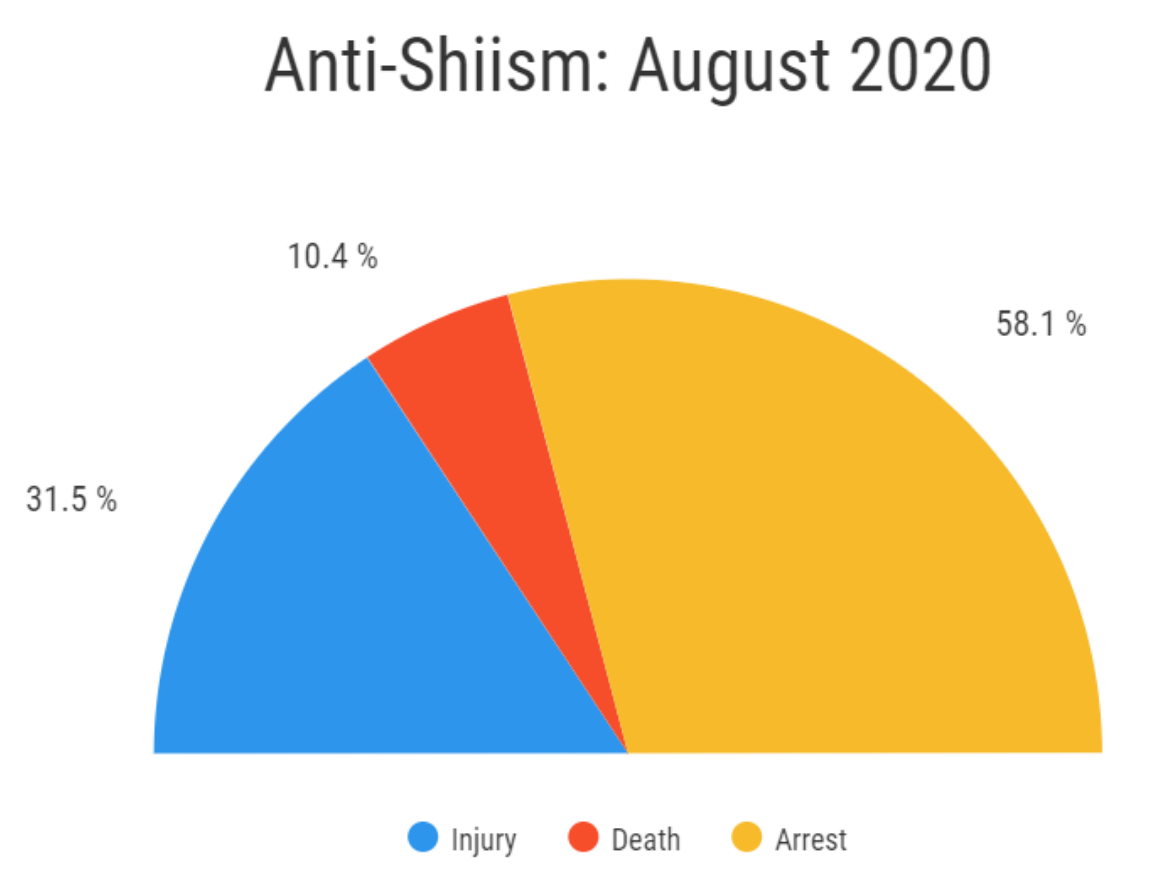
Incidents of Anti-Shiism, August 2020

shia rights watch_Antishiism August 2020

In August 2020, Shia Muslims faced a total of 356 incidents of anti-Shiism. As a result of violence, 112 individuals were injured, 37 killed, based on their faith. 

Shia Rights Watch notes the recorded incidents are only cases of direct violence. Cultural and systemic forms of anti-Shiism cannot be quantified in nature. None-the-less, they are prominent and influential in Shia Muslims’ safety and security all over the world.
Afghanistan

Authorities thwarted violent attempts on the tenth day of Muharram in Kabul; local authorities apprehended nine people. Along with those arrested, forces discovered six hand grenades and numerous explosive belts. 

Shia Muslims in Afghanistan exist as a minority religious group and are disproportionately targeted by extremist groups. 

Shia Muslims in Kabul live in constant fear of being targeted by radical extremism. In 2019, a significant percentage of those killed in terror attacks were Shia Muslims, deliberately targeted for their faith. 

Pakistan

Targeted killings of Shia Muslims in Pakistan remain prominent in August. Attacks take the form of bombings within districts with dense populations of Shia presence and armed shootings of individuals recognized as Shia Muslims. In total, 33 people have been wounded, and seven others lost their lives.

On the 9th of August, unidentified shooters targeted Syed Mukhtar Hussain Shah, 52, a caretaker of the Imambargah Chah Roshan Shah Malana, a congregation hall Shia commemorations, as he returned home from the market. Shah lost his life at the hospital. 

A day later, a bomb on a motorbike detonated in Chaman’s border city, resulting in the death of 6 and the injury of 20 others. Local law enforcement noted a high prevalence of extremist violence that target Shia communities in the province.  

The city of Quetta is another location in Pakistan with a high volume of anti-Shia violence. On the 13th of August, anti-Shia instigators threw a grenade in a market place wounding and killing nine civilians. Among those killed was a child. 

In addition to direct violence, Shia Muslims in Pakistan face derogatory language and labeling. In Karachi, homes of Shia Muslims have been marked with words translating to “Shia Infidel.” Agents of anti-Shiism consider Shia Muslims to be outside of Islam’s religion of Islam, thus a dehumanized target of violence. The markings are dangerous and heighten insecurity in the country. 

Indonesia

Early in the month, over 100 members of the Troops of Mojo Kenteng and Mojolaban gathered outside a Shia couple’s wedding, shouting anti-Shia slogans. Three family members were injured as a result of being bombarded with stones. 

The research director of Setara Institute for Democracy and Peace responded to the attack, stating, “Intolerance, discrimination, and persecution against religious minorities in this country do not only violate the law but also go against our national motto of unity in diversity.”

None-the-less, the assailants responsible for the attacks have yet to be charged. 

Later in Solo, Java Island, a dinner welcoming a Shia Muslim leader to the community came under attack- two youth obtained bone fractures amidst the violence. 

Anti-Shiism in Indonesia is propagated through derogatory hate-speech. Shia Rights Watch notes the existence of speech labeling Shia Muslims as infidels. 

Bahrain

Shia Rights Watch logs 15 incidents of direct violence against Shia Muslims in August. Incidents of violence were in the form of arrests, summonings, and raids of prominently active communities. 

Those arrested include but are not limited to Ali Abdul Hussain al-Jishi, Jawan Riyadh, and Fadhil Musa, Fadel Abbas Khudairi, Mahmoud Abbas Mansi Muhammad Abbas Mansi.

The term of orator Sheikh Abdul Mohsen al-Jamri was upheld this month despite international unrest. Al-Jamri was summoned and arrested counter to global freedom of speech and religion standards. 

Numerous mosques and religious centers were closed in August as the government attempted to halt the congregation related to Muharram processions. Before the beginning of the holy month, authorities summoned religious leaders, orators, and administration, communicating o them that arrest and detainment were consequences of participation and hosting of spiritual practice in the Holy month. 

Nigeria

Shiism in Nigeria is one of the fastest-growing religious identities. None-the-less, Shia Muslims live in the country as a minority and face relentless targeting in the hands of local authorities. 

On the 25thof August, in congruence with Muharram’s 10th day, an attack by armed forces in Kaduna resulted in the death of two and the injury of 30 others. 

In response to the killings, members of the Islamic Movement of Nigeria have expressed their concerns. 

Despite claims against discrimination, Shia Muslims face constant threats from the hands of local and state authorities. Violence against this group has gained the notice of international human rights groups. 

Iraq

In August, 23 incidents of violence across Iraq led to 26 Shia Muslims’ death and the injury of 34 others. 

The cities of Basra, Baghdad, and Diyala faced the highest frequencies of violence. Separate shootings and targeted bombings were frequently used to attack Shia individuals. 

ISIS assailants claimed the majority of violence committed against Shia Muslims. In line with warnings of security officials, Iraq has seen a rise in ISIS activity as security forces have been reorganized to combat the Coronavirus pandemic. 

The lack of forces, moreover halts investigations against extremism in the country. In mid-August, a mass grave was discovered in Yusufiaya. The seven bodies therein are expected to be victims of violence in the hands of Daesh. More information is to be expected from authorities. 

India

Police in Kashmir arrest dozens of protestors on the 29th of August and injured 40 Shia Muslims in the process. 

In the wake of the Holy month of Muharram, local authorities restricted Muharram related processions. 

Srinagar, Badgam, Baramulla, and other areas were restricted by authorities to stop people from taking out Muharram processions. Lal Chowk, the valley’s commercial center, and the adjoining regions of Srinagar were completely sealed. Troops and police personnel were deployed across the occupied territory, who blocked main roads by putting up barricades. None-the-less, dozens of people took to the streets in demand of freedom of religious expression. 

Police arrested approximate 200 individuals. Numerous of those arrested reported that Srinagar police promised their release if they pledged not to attend Muharram processions. 
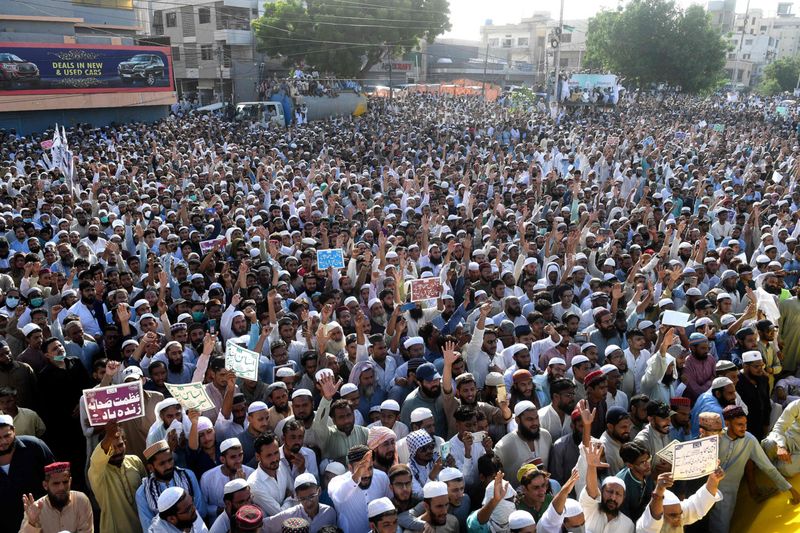
Anti-Shia protests in Karachi, Pakistan

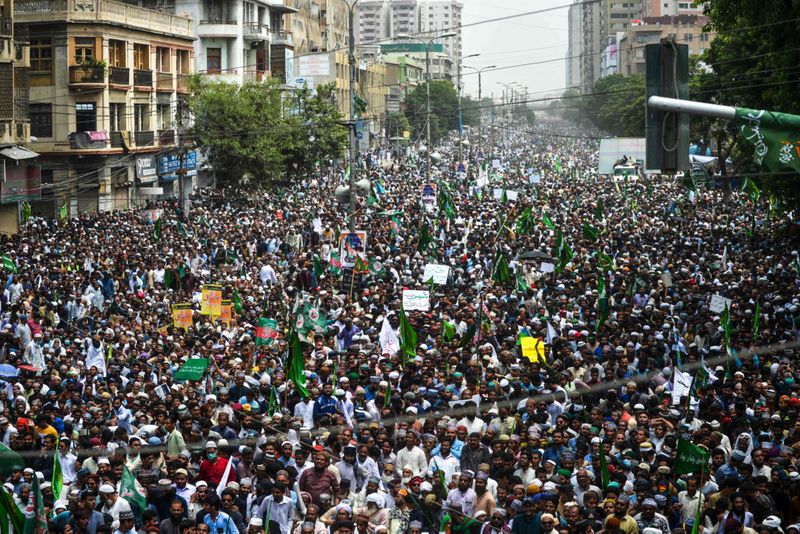
Shia Rights Watch expresses immense concern in regards to recent anti-Shia protests in Karachi, Pakistan.

Within the rally, affiliates of Sipah-e-Sahaba and Tehreek Labbaik Pakistan waved flags and shout derogatory slurs against Shia Muslims, calling them “infidels” and damaging not only identified Shia property but also the city’s public infrastructures.

Shia Muslims in Pakistan exist as a minority population. For years, the group has faced uncontrolled violence in the hands of extremists who consider them outside of the faith of Islam. Labels such as “infidels” and “rejecters” are frequently used to ostracize Shia Muslims and justify killing them.

The most recent justifications of anti-Shiism included the Coronavirus, which some have labeled the “Shia Virus,” scapegoating the population for the countries pandemic. While it would be expected that the presence of deadly disease would overpower biases, incidents of religious discrimination highlight the extent of dehumanization that fuels cultural violence in Pakistan. In Islamabad, anti-Shiism in a layperson was deep enough to justify watching a countryman die as he retracted willingness to donate blood when he discovered the recipient to be Shia Muslim.

Pakistan has seen a stark increase in violence against Shia Muslims starting at the beginning of the Arabic month of Muharram.

Shia Muslims face heightened rates of human rights violations in this month as their open and visible rituals make them targets for anti-Shiism. None-the-less, the recent incidents of anti-Shia rallies in Pakistan are unprecedented.

Since then numerous Shia Muslims have reported that their homes and businesses were vandalized with derogatory labels, making them visible targets of violence. Shia congregations are met with mobs and their congregation halls are damaged by rocks and pellets. The killing of Shia Muslim individuals in Karachi occurs in broad daylight with little to no intervention by authorities.

Among the most recent acts of violence is the brutal death of Qaiser Imran in Kohat, an attack on a procession in Okara, and the desecration of an Imambargah in the Lines Area.

In response to the attacks, Shia Pakistani’s have taken to Twitter to share their experiences as Shia Muslims in the country.

Sara B. Haider (@Bohotsaara) responded to the inquirer @ghazi_taimoor, “I was 12 when a bunch of girls in our class started calling me and another Shia classmate “kafir,” “ganday log,” and other things. I never mentioned anything about my faith, my name said it all. Told our teacher, she said: “You all should treat ‘non-Muslims’ kindly.”

Khadija Zaidi-Rashid (@Khadija_zaidi) wrote, “I was 8 when classmates told me you get a house in Paradise for each Shia you kill.”

Wasif (@wasifmoin) stated, “It started in 6th grade. So as time went by I just hid the fact I was one but those who openly expressed that they were Shia were often humiliated and I had to sit quietly and watch my fellows get the same treatment. A never-ending cycle of pain.”

Shia Muslims in Pakistan spend their days in the margins of the country they help build. They feel endangered, so much so that many choose to practice their faith in secret.

Shia Rights Watch urges Pakistani authorities to institute justice for Shia Muslims in the country. We denounce the most recent rallies against Shia Muslims along with the complete lack of regard from the local and national authorities.

Bahrain’s Counterproductive Covid-19 Measures

Shia Rights Watch raises concerns for the state of human rights in the Holy Month of Muharram. 

In advance of the Holy Month, Bahraini authorities announced restrictive measures in religious congregation and public organizations expressing Muharram commemorations. 

Prominent organizers of mourning rituals have been summoned and threatened with detention. 

Some religious centers have been warned that they will be fined and shut down for three years in case of hosting Muharram rituals.

Furthermore, social propaganda criminalizing Shia Muharram rituals have been put forward across the country. 

The banning of ritualistic congregations occurs while commercial complexes and businesses thrive with little to no health provisions. The contrast in treatment is a point of grievance for Shia Muharram mourners. 

Prominent leader, Ayatollah Isa Qasim stated, 

With regards to the issue of the opening and closure of obsequies between us and the other side, whether it be an official, health-related or religious authority, tell us is it reasonable that gatherings in malls under specified conditions can prevent Coronavirus, while obsequies are deemed an attracting environment to the virus?

He further noted, “Allowing the opening of commercial complexes, markets, swimming pools, and sports halls, while denying the commemoration of Ashura means: We do not want Al-Hussein, Al-Hussein must be expelled, and the war is against Al-Hussein.


The words of Ayatollah Qasim echos the mass perception of measures taken by the government. Because Shia rituals and religious congregation are disproportionately targeted by what the government calls “health precautions” compared to businesses, many Shia Muslims feel that the new restrictions are not a function of health precautions but active attempts by the authorities to thwart religious expression. 

Bahrain is a nation in which a minority non-Shia leadership leads a majority Shia constituent population. Despite their numbers, Shia Muslims in Bahrain face hardships and discrimination on the basis of their faith. The long history of anti-Shiism in the country is now serving counterproductive in quelling the propagation of Covid-19, thus endangering the lives of all residents of Bahrain. 

Shia Rights Watch emphasizes that criminalization of faith-based congregation unsuccessful in reducing transmission of Covid-19. Restrictions imposed by the government that hindered religious expression in Iran and now in Bahrain lead to public outcry and protests in larger congregations (than they would be in traditional rituals). 

Counter to current measures, Shia Rights Watch calls for the facilitation of rituals by authorities in conjunction with local religious entities. The government of Bahrain must provide resources and health provisions that defeat the transmission of COVID-19, and local spiritual entities must adopt measures to protect Muharram mourners from illness.

For instance, existing infrastructure such as gaming stadiums and leisure camps can be adapted for Muharram’s duration. Moreover, sites of Shia Muslim congregation can be used as mediums of education and enforcement of health precautions and testing. 

Shia Rights Watch invites all entities to explore the Muharram 2020 Advisory and Individual and Community Guides Against Covid-19 available on ShiaRightsWatch.org


Muharram 2020 Advisory

Late August 2020 coincides with the Holy month of Muharram. Shia Muslims face heightened rates of human rights violations in this month as their open and visible rituals make them targets for anti-Shiism. 

In advance of Muharram 2020, threats of arrest and detainment of mourners have been announced by authorities in nations like Bahrain. In Iran, religious entities have been told they cannot hold processions while major markets and businesses remain open with little to no COVID-19 precautions.  

Every year, Shia Rights Watch issues an advisory for members of the Shia Muslim community and law enforcement who actively seek to reduce anti-Shiism. 

Moreover, the public is encouraged to report anti-Shiism to authorities and use #Muharram2020 to share their experiences and perceptions they face as they practice their faith. 


Muharram Advisory

To the Shia Community; 

Know your Rights

  • As constituents of your nation, you have civil liberties. Familiarize yourself and your community with your nation’s defined human rights and freedom of religion and take advantage of them. 

Comply with Health Measures Against COVID-19

  • Protect your community and practice through complying with health measures. 
  • Meet your local, state and national  COVID-19 regulations
  • Read and implement  Shia Rights Watch Muharram 2020 Guidelines Against COVID-19. 

Build a relationship with your community law enforcement   

  • Approach your community law enforcement and communicate your observations for the month of Muharram.
  • Seek consultation from your local police department on the placement of security measures such as camera systems and alarms.
  • Ask for increased security. In many communities, police can provide protection for your institution, given your coordination. Keep in mind that increased security measures must be requested in advance.  
  • If needed, obtain the necessary congregation permits in advance.

Reach out to Government Representative

  • Meet with the governor and mayor of your town. Have a conversation about your concerns. Reach out and open a line of communication.

Be cognisant of your non-practicing community.

  • Recognize that you are a part of a broader community that may or may not commemorate Muharram.
  • Respect local regulations.
  • Reach out and communicate an increase in activity to neighbors and surrounding institutions.
  • Prepare and provide brochures or pamphlets, educating others on the significance and relevance of Muharram.  

In case of a human rights violation, Know Your Resources!

  • In case of an emergency, contact your local police immediately.
  • Contact Shia Rights Watch to inquire about rights-based counseling and broadcast.


To national and local authorities: 

Be aware of the increased risk of anti-Shiism and increase security measures

  • Congregation and religious expression are critical in Muharram rituals. Increased visibility and dense populations of Shia ease anti-Shia violence, and thus, Shia communities are at a higher risk of abuse. 
  • Extremist organizations are willing to target Shia Muslims at the cost of civilian and non-civilian lives – Protecting Shia Muslim lives is protecting everyone. 
  • Organize increased security according to Shia distribution in the area. 

Include Shia community leaders in civil planning

  • Reach out to community leaders in the preparation of security measures and possible changes in traffic patterns
  • Allow open-air venue options and health provisions for mourners to reduce transmission of COVID-19. 
  • Leaders within Shia communities have first-hand knowledge of the rituals and concerns of their respective communities. Including them in civil-planning can reduce the cost of additional measures. 
  • Inclusion of local communities allows for cohesion and is linked with increased bi-directional cooperation in policy. 

Provide training to non-Shia members of the security enforcement

  • Access implicit bias and train against discrimination in law enforcement
  • Educate law enforcement about Shia beliefs and rituals
  • Members of law enforcement are not exemptions to discriminatory cultures in the larger society. Local and National authorities must address implicit bias within their security personnel to ensure the law is carried out unbiased. 


Muharram 2020: Individual and Community Guides Against Covid-19

While millions of dollars have been spent on COVID-19 vaccinations, not much has been done to address mental health dilemmas related to the pandemic. As necessary as public health actions such as social distancing are, they leave people feeling isolated and alone. The lack of face-to-face communication and reduced social interactions add on financial and non-financial burdens that augment stress and anxiety levels. 

Previous to COVID-19 social isolation measures, many social systems were in place that allowed relief and support against mental health disparities. The most significant social networks were religious centers where people congregated with others from the same faith and spiritual background. 

Amidst COVID-19 developments, many authorities in the global community called for the closure of religious centers as attempts to reduce transmission rates across their constituents. Despite their initial goal, not only did transmission rates not fall, they rose as masses took to the streets in protest of the government’s failure to sufficiently address safety needs. 

Moreover, compliance with safety measures was reduced as morale declined, and rates of depression, anxiety, and hopelessness plagued communities. 

As the holy month of Muharram begins, Shia Rights Watch reaffirms a need for spaces in which communities can congregate and express solidarity. 

Shia Muslims spend the first ten days of the holy month of Muharram in ritual mourning commemorating the death of Hussain, son of Ali, grandson of the Prophet Mohammad.

Rituals within this month aim to educate masses on the importance of standing against human rights violations and campaigning against human rights abuses. 

Gathering together is at the heart of Muharram rituals. This year, Shia Rights Watch emphasizes compliance with health and safety measures within Muharram congregations as a means of protecting Shia Muslim communities and promoting the right to religious expression. 

Shia Rights Watch dedicates its efforts to protecting and promoting the rights of Shia Muslims all over the world.

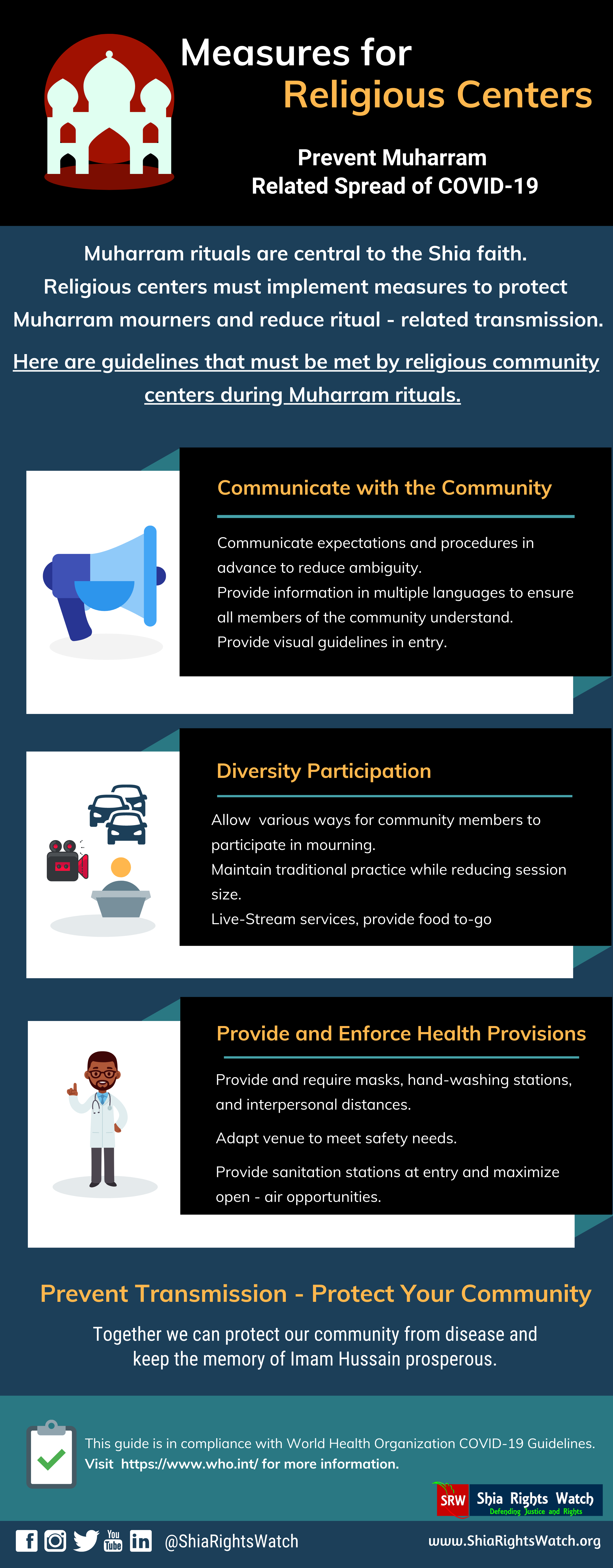
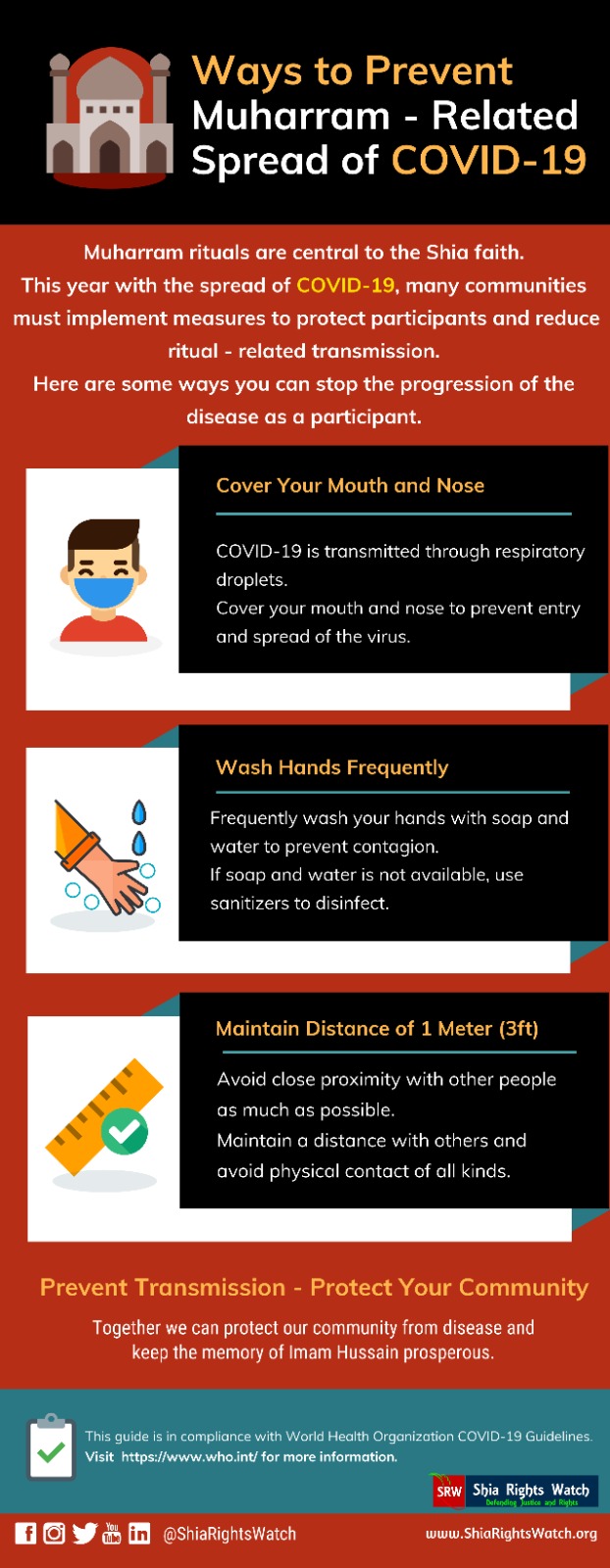
In advance of Muharram, Shia Rights Watch has published two guides for Shia Muslim communities. The guides can be used to promote community health and safety amidst Muharram-related congregations.

Guide A. calls for individual action to reduce transmission of COVID-19.

Guide A.

Guide B. offers suggested measures for religious centers as they prepare for Muharram congregation. These measures are aimed to reduce the probability of COVID-19 transmission among ritual participants. 

Guide B.

Shia Rights Watch encourages individual communities to adopt and adapt suggested measures to address their unique needs. 

We invite individuals and organizations to visit guides created by the Center for Disease Control and the World Health Organization for more information. 


International Youth Day, 2020

Shia Rights Watch observes August 12 as the International Youth Day. 

Designated by the United Nations in 1999, International Youth Day celebrates young people’s actions and engagement in political, economic, and social processes. 

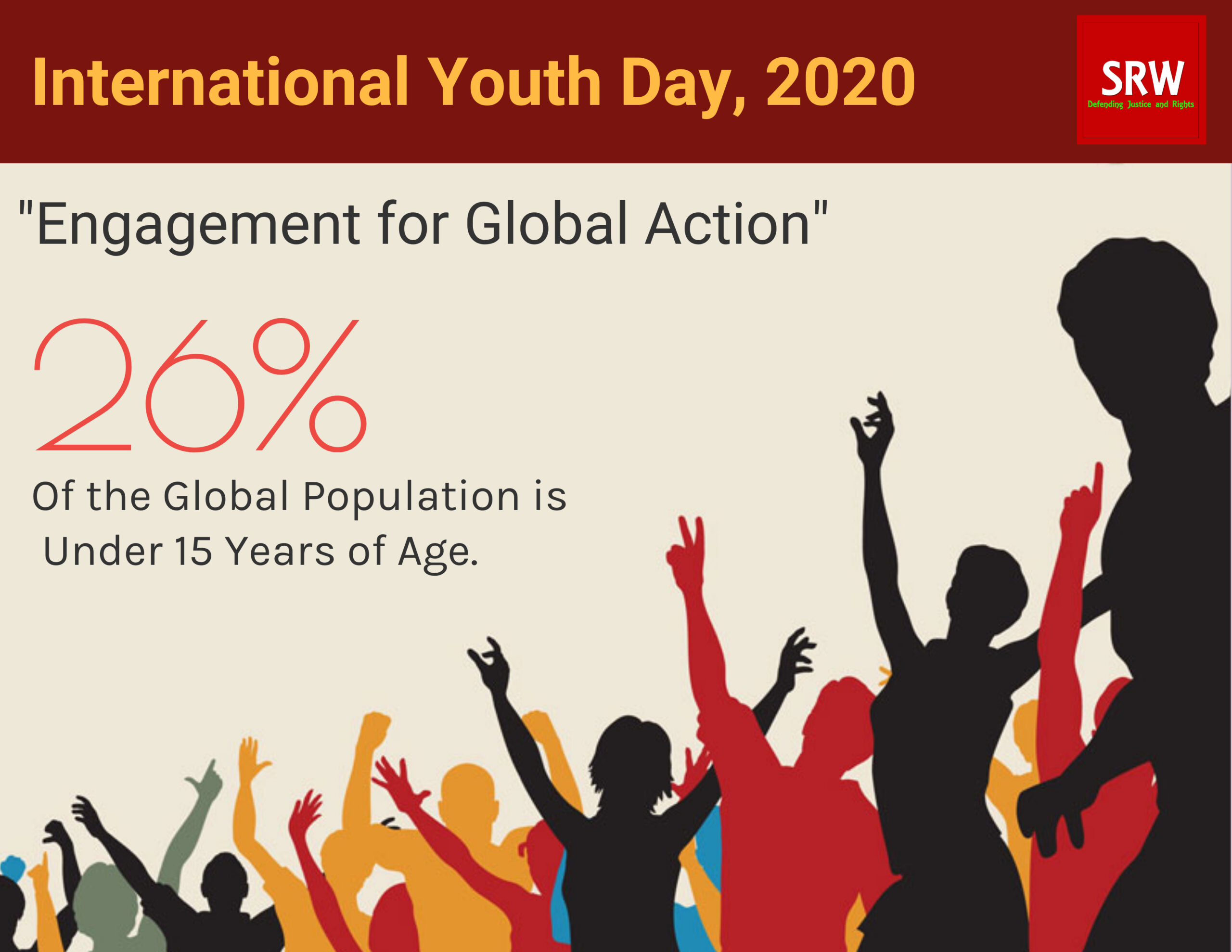
Approximately 26% of the international population is under the age of 15, yet the group is underrepresented in policy making and enforcement. 

Shia Rights Watch recognizes youth as the architects of tomorrow. Engaging youth in social processes strengthens existing systems, creates opportunities for citizenship, and bridges the gap between the present and the future. 

Youth from minority groups face increased barriers. Many Shia Muslim youth report feeling marginalized and limited in opportunities when identified in faith.  Those who live in climates of violence face constant threats to their lives and others who practice as minorities face discrimination daily. 

All youth deserve protection- regardless of their religious identity. 

On this International Youth Day, Shia Rights Watch commits to building a better tomorrow. We acknowledge the needs of young people, especially those with minority status, and call on all constituents of the international community to promote a future without violence and discrimination. 


Happy Eid al-Ghadeer

Shia Rights Watch expresses warm wishes to observers of Eid al-Ghadeer. 

Eid al-Ghadir calls for respect for all religions and sects. It promotes democracy and freedom for all segments of the people and in all countries of the world. It is a day that guarantees the realization of social justice for all.

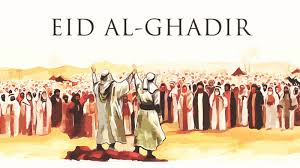
Eid al-Ghadeer in an occasion that commemorates the sermon given by Prophet Mohammad after his final Hajj, or the “Farewell Pilgrimage” as noted by historians. The Prophet stood upon a pulpit made of rocks and toolings and spent an approximate 3 hours speaking to his constituents of the basics of the religion. On that day, the Prophet repeated nearly 100 verses of the Holy Quran and emphasized the weight of deeds in the future 73 times.

The event of Ghadeer is marked in both Shia and Non-Shia history. 

Shia Muslims use the day of Ghadeer as an occasion to reflect on the final words of the Prophet and serves as a reminder of Islamic values. On this day, Shia Muslims gather in unison, shaking hands and taking an oath of camaraderie. 

Shia Rights Watch congratulates observers of this auspicious occasion and promotes social justice for all. 

Incidents of Anti-Shiism, July 2020

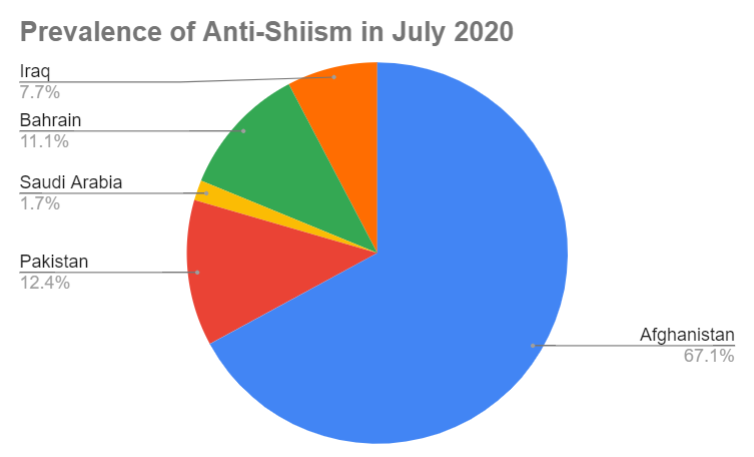
The month of July stood witness to 406 individual incidents of violence, mainly in the countries of Afghanistan, Pakistan, Saudi Arabia, Bahrain, and Iraq. 

Shia Rights Watch emphasizes that reports of anti-Shiism serve as the tip of the iceberg. Many cases of Anti-Shiism are not reported due to fear of violence. Moreover, incidents of direct violence have a higher degree of reporting in comparison to systemic or cultural anti-Shiism. Shia Rights Watch notes that detriments caused by anti-Shiism are wave-like, influencing families and communities, beyond the individual.

Afghanistan

Over 67% of violence reported in July took place in the nation of Afghanistan. Explosions across Ghazni, Samangan, Ghor, Baghlan, and Kabul left 157 individuals dead or injured. Many of those deceased were women and children. 

All of the reported incidents of violence were initiated by Taliban enforcers and were designed to inflict maximum loss of life to civilians identified as Shia Muslims.   

The attacks in Ghazni, Samangan, Baghlan, and Kabul consisted of car bombs or roadside detonations targeting travelers. 

In late July, the United Nations reported an overall 13% decline in violence against civilians in Afghanistan compared to the first six months of 2019. Nonetheless, anti-Shia violence remains prominent and at a higher rate compared to violence targeting the general public. 

Moreover, while the reduction of violence is promoted as a function of the peace agreement between Shia Rights Watch highlights the reduction of the congregation and social activity related to the COVID-19 pandemic as the main reason for the decline reported by the United Nations. 

Pakistan

Two mass anti-Shiism incidents were reported to Shia Rights Watch in July, one in Quetta and another in the Parachinar. The incidents resulted in the loss of life and injury of 29 Shia Muslims. 

The detonation of a bomb on the 21st lead to the death of seven and the injury of one in Quetta. Quetta, the capital of the Baluchistan province,  is home to a dense population of Shia Muslims, many of which are members of the Hazara community.   

On the 23rd of July, a bombing in an open-air market in Parachinar, a majority Shia populated town in the Khyber Pakhtunkhwa province which borders Afghanistan. The bomb resulted in the injury of 28 Shia Muslims. Many of those injured are in critical condition.  Parachinar was the target of extremist violence on numerous occasions in 2019 based on its dense Shia population. 

In recent years, efforts have been by the Pakistani government to apprehend perpetrators of direct violence against Shia Muslims. None-the-less, authorities have failed to recognize Shia Muslims as a group with a higher rate of targeting by terror organizations, and anti-Shia rhetoric remains prominent across the country. 

Saudi Arabia 

In July, raids in Shia dominant neighborhoods in Saudi Arabia have been prominent forms of anti-Shiism. 

Several individuals were also arrested amidst the raids, one of whom was Ali Abdul Wahid Taqi. Another from the town of Safwa was shot and injured by government forces. 

Raids in the Kingdom have long been used as forms of intimidation. Shia Muslims live as inferior citizens and are frequently limited in religious expression. 

Bahrain

Despite being a Shia – majority nation, the Kingdom of Bahrain is plagued with anti-Shia sentiments. Shia Muslims live as second class citizens and are limited in expression and free speech. 

In the month of July, raids, arrests, and the thwarting of protests against death sentences were prominent in Bahrain. 

Authorities have upheld the death sentence for 12 pro-democracy activists. More than a dozen groups have signed open letters in protest, and 19,000 tweets and online posts have been made, calling on the King to commute the sentences on accounts of torture, extractions, and lacking due process. 

The letter called for commuted death sentences for Mohammed Ramadhan and Hussain Ali Moosa, stating, 

“We, the undersigned organizations, urge you to commute the death sentences of Mohamed Ramadhan and Hussain Ali Moosa, who have exhausted all legal remedies available to them after the Court of Cassation upheld their death sentences,”

Ramadhan and Moosa, along with ten others, await ratification from the King after exhausting all legal avenues. Their sentences are based upon confession extracted after torture, including but not limited to threats to family members and being suspended by the limbs for days.  

Across the month, the towns and neighborhoods of Jid Hafs, al-Bilad al-Qadim, Akkar, Abu Saiba, and al-Musalla were raided by authorities. Locals report raids as attempts to intimidate against activism. 

Iraq

Nine individual incidents of anti-Shiism have led to the injury and death of 18 Shia Muslims. Consistent with previous months, Baghdad and Diyala were locations with higher frequencies of direct violence. 

Anti-Shiism in Iraq was in the form of explosions and targeted shootings. Officials have identified ISIS assailants as perpetrators of bombings targeting travel routes and Shia neighborhoods. 

Iraq continues to struggle to quell ISIS re-expansion amidst the reorganization of forces in efforts to enforce COVID-19 quarantine requirements. Iraq’s fast action to limit the spread of COVID-19 was successful largely due to the support of the countries military. Meanwhile, however, researchers have noted an increase in the number of ISIS activities during the first six months of 2020. Given the recent rise in the spread of the virus, concerns of feeble efforts against ISIS activity grow. Military officials have announced the resurrection of ISIS power, noting increased complexity in attacks and an increase in improvised explosive device attacks and targeted shootings. 


Best Eid al-Adha Wishes

Shia Rights Watch expresses best wishes on the occasion of Eid al-Adha. 

Eid al-Adha, or the Festival of Sacrifice, is an international occasion marked by all Abrahamic religions. Traditionally, Muslims celebrate in communion and charitableness. Young and elderly join together, expressing the promotion of global citizenship. 

This year, Muslim communities worldwide practice with respect to efforts to reduce the spread of the novel Coronavirus. Many cities have adopted online and virtual platforms to ensure the safety of their immediate neighbors, a value which aligns with Eid al-Adha: prosociality.  

As an organization dedicated to the advocacy of human rights and the promotion of sustainable peacebuilding, Shia Rights Watch observes Eid al-Adha with the remembrance of sacrifices made by activists worldwide. 

Thus far, in 2020 alone, 1374 incidents of Anti-Shiism have been reported. Despite its vastness, the reported number is not believed to reflect the real hardships Shia Muslims face as communities, and social infrastructures battle the Coronavirus pandemic. Many Shia communities now have to battle discrimination and prejudice within health management services, in addition to the constant threat of direct violence which plagues their countries. 

Shia Rights Watch notes that values central to Eid al-Adha are not a one-day observance.  This day serves as a reminder that we are all members of a singular global community and calls for the renewal of year-round prosocial efforts. 

Shia Rights Watch congratulates observers of Eid al-Adha and looks forward to another year in pursuit of international peace. 

Incidents of Anti-Shiism, June 2020

Shia Rights Watch presents a monthly analysis of the trends of Anti-Shiism, as reported by activists and survivors. Anti-Shiism, direct and indirect, crosses international borders. Shia Muslims all over the world face unique hardships based on their religious identity.

In June, Shia Muslims in the countries of Azerbaijan, Bahrain, Iraq, Nigeria, and Pakistan reported Anti-Shiism. The nature of violence is unique to each state and chronicled below.

Moreover, this report highlights several happenings in the pursuit of justice, including but not limited to the release of Nabeel Rajab in Bahrain, reparations for wrongful brutality in Nigeria, and the discovery of a mass grave in Iraq.

Azerbaijan

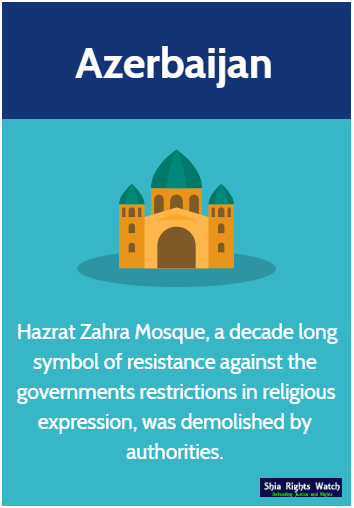
In late June, Azerbaijani officials destroyed Hazrat Zahra Mosque in Baku. In 2008, a demolition attempt was made in 2008. However, with the steadfast demonstration of activists, the demolition was postponed. Since then, many of the activists have been detained by the Republic.

Natives report that the mosque was a symbol of resistance against anti-religion policies. With the recent successful demolition, the government signaled an ongoing country-wide offensive against religious expression. 

Bahrain

Early in June, activist Nabeel Rajab was released under the Alternative Penal Code. In a statement, his family announced, “God blessed us today with the release of our dear brother Nabeel Rajab from prison, under the umbrella of the alternative penal code, where he will serve the remaining three years of his sentence in an alternative sentence defined by legal controls.”

A prominent human rights activist and an active influencer of the 2011 protests, Nabeel was arrested and sentenced to a five-year term in 2018. 

In June, 22 incidents of Anti-Shiism were reported to Shia Rights Watch. Violations against detainees and deprivation of fundamental rights made up a significant portion of reported cases of anti-Shiism. 

Much of the limitations were in correspondence with days of religious significance. Prison officials tried to prevent religious expression and thwarted proclamations of faith. 

Prisoners faced physical violence, including torture. 

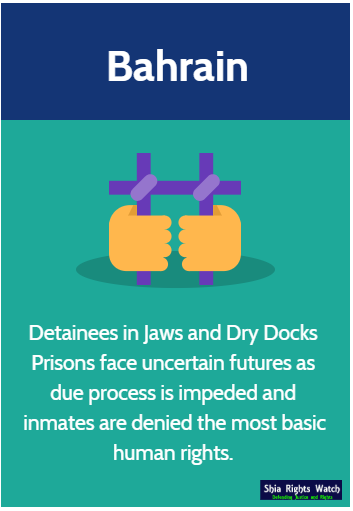
Shia detainees in Jaws Prison and Dry Docks Prison face uncertain futures. Many are left with debilitating conditions and no medical attention. The family of 17-year-old Sayed Ahmed Sayed Majeed Mahdi Fadhl report denial of treatment. His mother stated, “How can we bear this and be reassured about our children’s [conditions], as they have been deprived of living among their families, of freedom and education?! Is there someone that understands their suffering and our suffering due to separation from our children?'” 

Fadhl was arrested three years ago and sentenced to 10 years and six months. He is currently serving time in the juvenile section of Dry Dock Prison. 

Iraq

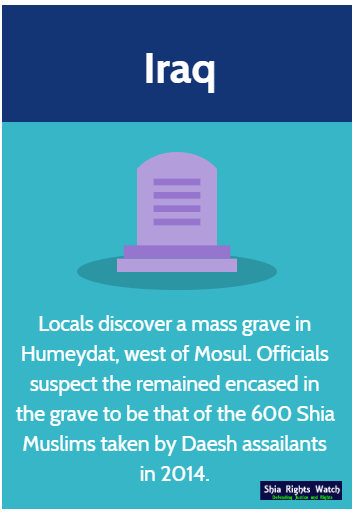
Late in the month,  a mass grave was unearthed in the village of Humeydat, west of Mosul. While the exact number of bodies remains to be identified, officials suspect victims to be that of the 600 Shia individuals taken from the local Badoush Prison in 2014. According to witnesses, Daesh assailants rounded up 1,500 inmates and separated the Shia Muslims, killing and burying them, while setting the non-Shia free. 

The investigation into the mass grave has been slow and limited by the plague of Coronavirus in the country. 

Apart from the mass grave, 24 incidents of anti-Shiism have been reported to Shia Rights Watch. 

Violence is prominent in northern cities of the country and takes the form of explosive devices, mortar shells, and targeted shootings. Local authorities have expressed concern that the reduction of available forces due to Coronavirus containment efforts across the country may allow for increased violence by Daesh assailants. None-the-less attempts to identify and disassemble terror organization cells across the country continue. 

Nigeria 

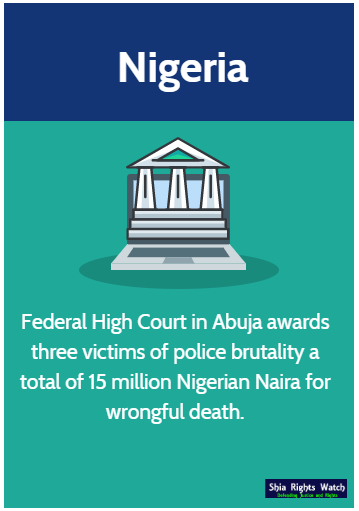
The Federal High Court in Abuja awarded a total of 15 million Nigerian Naira to three members of the Islamic Movement of Nigeria over wrongful death. Justice Taiwo Taiwo ordered the National Hospital to release the bodies of Suleiman Shehu, Mahdi Musa, and Bilyaminu Abubakar Faska and their families to be paid 5 million Nigerian Naira each. Shehu, Musa, and Faska were among four killed by police on July 22, 2019. The body of Askari Hassan, the fourth in the case, is kept in Asokoro District Hospital. 

The case brought forth also asked for an official and formal public apology in the media; the judge did not grant the request. 

Pakistan

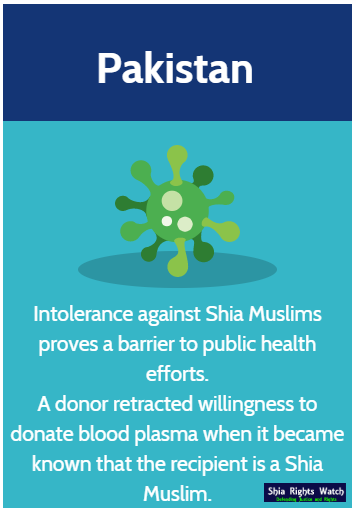
Intolerance against religious minorities, specifically those who follow the Shia faith, stood as a barrier to public health efforts. 

Anzala Zahra Kazmi reported first-hand that a donor sought to give blood plasma for a COVID-19 positive individual, retracted willingness to give plasma once he became aware the recipient was a Shia Muslim. 

Kazmi said, “I’ve come across many absurdities with respect to donors’ approach towards donation, but neither me nor my team had expected a refusal based on the faith of the recipient. The reason why I don’t want to name the donor is that my intention wasn’t to bash an individual, but to highlight the intolerant mindset sadly prevalent in our society.”

Early in the month, a minor was killed after his identity as a Shia Muslim was revealed. The assailant is yet to be apprehended. 

UN Complaint